 How-to
How Long Does Freeze-Dried Food Last? 7 Storage Rules
Last Updated: November 21, 2026
Quick Summary
Most properly packaged freeze-dried food holds its quality for about 20 to 30 years, depending on packaging, storage, and food type. The 25-year label on a can means little if the can sits in a hot garage. An unopened package stored cool and dry typically lasts 20 to 30 years.
- Fat is the shortener: meats and dairy sit at the bottom of every shelf-life range because fat oxidizes.
- Freeze-dried food in thick, airtight Mylar bags with an oxygen absorber lasts about 20 to 25 years.
- Without oxygen absorbers, freeze-dried food often lasts closer to 5 to 15 years depending on the food.
- Home freeze-dried food lasts about 1 to 5 years when fully dry, sealed in Mylar with an absorber, and stored cool.
- Storage below about 70°F supports the long end of shelf-life ranges, while above 80°F can cut usable life by years.
Table of Contents
- The Real Shelf Life of Freeze-Dried Food: 20 to 30 Years, With Conditions
- Shelf Life by Food Type and Packaging
- How Long Does Freeze-Dried Food Last Unopened?
- How Long Does Freeze-Dried Food Last in Mylar Bags?
- How Long Will Freeze-Dried Food Last Without Oxygen Absorbers?
- How Long Does Homemade Freeze-Dried Food Last?
- Storage Conditions That Shorten or Extend Shelf Life
- Stocking Your Pantry With Freeze-Dried Food That Fits Your Storage
- Frequently Asked Questions
The Real Shelf Life of Freeze-Dried Food: 20 to 30 Years, With Conditions
How long does freeze-dried food last? Most properly packaged freeze-dried food holds its quality for about 20 to 30 years, depending on packaging, storage, and food type.
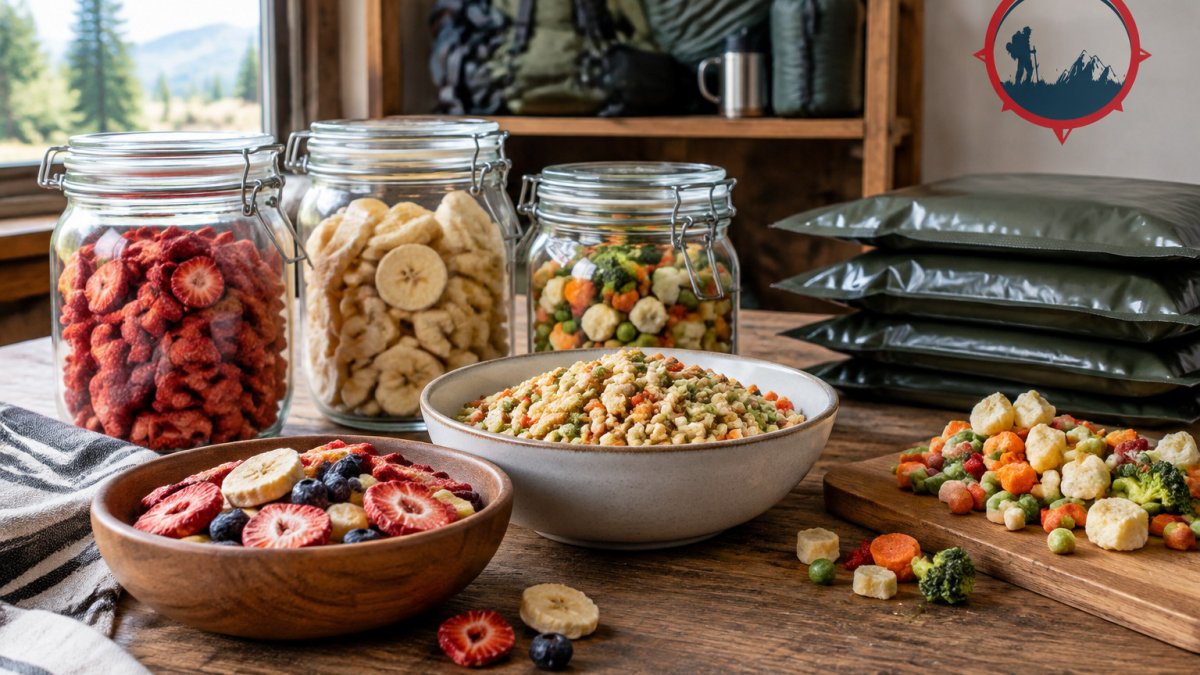
Freeze-dried food is food that has had its water removed under low temperature and pressure, leaving a light, shelf-stable product that rehydrates with hot water.
But most guides get this wrong: they quote a single number for every product.
Why the 25-Year Number Only Applies to Properly Packaged Food
The 25-year figure is a packaging claim, not a food claim. It assumes an airtight barrier, a low-oxygen interior, and cool, dry storage. Break any of those and the clock speeds up.
Three things protect freeze-dried food:
- An oxygen barrier. Oxygen slowly degrades fats and colors. An oxygen absorber inside a sealed barrier bag handles this.
- A moisture barrier. Any humidity that gets in undoes the drying process.
- Stable, cool storage. Heat accelerates every chemical reaction that ages food.
Get all three right and long storage is realistic. Get one wrong and you are gambling.
Shelf Life by Food Type and Packaging
Not all freeze-dried food ages at the same rate. Fat content, sugar content, residual moisture, and the barrier around the food all shift the clock.
| Food Category | Manufacturer Best-By (typical) | General Estimate, Sealed Barrier + Absorber | General Estimate, No Absorber | Best Packaging | Why It Ages This Way |
|---|---|---|---|---|---|
| Freeze-dried fruit | 10-25 years | 15-25 years | 5-12 years | Mylar bag, number 10 can | Sugar and acid slow oxidation; low fat keeps rancidity low |
| Freeze-dried vegetables | 15-25 years | 20-25 years | 8-15 years | Mylar bag, number 10 can | Very low fat and low sugar make vegetables the most stable category |
| Freeze-dried meats | 10-20 years | 10-20 years | 3-8 years | Number 10 can, thick Mylar | Fat oxidizes and turns rancid; oxygen is the main enemy |
| Freeze-dried dairy | 10-15 years | 10-15 years | 3-6 years | Number 10 can | Milk fat and lactose are moisture- and oxygen-sensitive |
| Freeze-dried full meals | 10-25 years | 15-25 years | 5-10 years | Pouch or can | Sauce and fat content drive the range; higher-fat entrées sit at the low end |
| Home freeze-dried batches | Not published | 1-5 years | 6 months-2 years | Thick Mylar with absorber | Dryness and seal quality vary batch to batch |
General Estimate, Sealed Barrier + Absorber
A few patterns are worth pulling out of the table:
- Fat is the shortener. Meats and dairy sit at the bottom of every range because fat oxidizes even in a low-oxygen package. Low-fat vegetables sit at the top.
- Packaging type moves the estimate more than food type does. The same freeze-dried chicken in a number 10 can with an absorber and in a thin resealable pouch are not the same product after five years.
- Home batches do not inherit commercial claims. A manufacturer's 25-year figure assumes controlled drying, verified residual moisture, and a factory seal. A home batch has none of those by default.
Use the table to set expectations, then verify against the package you actually bought. If the label says 25 years and the can is dented at the seam, the label is not the number that matters.
How to Verify a Home Freeze-Dried Batch
Home freeze-drying is a distinct use case, and commercial shelf-life claims do not transfer to it. A home batch is only as good as its dryness and its seal, and both can be checked before storage.
- Confirm dryness by feel and sound. Fully dry food feels light and crisp and never cool or damp. Break a piece: it should snap, not bend.
- Weigh before and after. Record the starting weight, dry the batch, and record the finished weight. A batch that stops losing weight has stopped giving up moisture.
- Condition the batch before sealing. Let the finished food sit in a sealed jar for a day or two, then check for fogging or damp spots. Any moisture that migrates to the surface means the batch was not fully dry.
- Seal with a correctly sized absorber. Match the absorber to the bag volume, press out excess air, and heat-seal a flat, wrinkle-free seam.
- Keep a batch record. Write the food type, dry weight, seal date, and absorber size on every bag so you can rotate stock and judge freshness.
Watch out: a home batch that feels dry but was sealed with a weak seam or an undersized absorber will fail years earlier than the table suggests, often showing up as a soft bag rather than an obvious smell.
How Long Does Freeze-Dried Food Last Unopened?
An unopened package of commercially freeze-dried food typically lasts 20 to 30 years when stored cool and dry.
The expiration or best-by date is the maker's estimate under ideal conditions, not a hard safety cliff.
What most guides miss: "unopened" only helps if the seal is intact. A pinhole in a Mylar bag or a dented can seam lets moisture in over years.
Store unopened packages:
- Off the floor, on shelves or in food-grade buckets
- Away from heat sources like furnaces and water heaters
- Out of direct sunlight
How Long Does Freeze-Dried Food Last in Mylar Bags?
Freeze-dried food in Mylar bags lasts about 20 to 25 years when the bag is thick, sealed airtight, and paired with an oxygen absorber.
The bag is only as good as its seal.
A common mistake is sealing food into a thin bag and calling it done.
Watch out: a Mylar bag sealed with a household iron and no absorber can still fail early.
How Long Will Freeze-Dried Food Last Without Oxygen Absorbers?
Freeze-dried food stored without oxygen absorbers lasts a shorter time, often closer to 5 to 15 years depending on the food.
The food may still be safe to eat, but quality fades first. Fatty foods like meats and dairy show it soonest. Low-fat vegetables and fruits hold up better.
If you skipped absorbers, you can still improve the odds:
- Reseal the food in an airtight container
- Add a fresh oxygen absorber if the food is still dry and intact
- Keep the container cool and dark
Think of no-absorber food as your short-term layer, not your 20-year reserve.
How Long Does Homemade Freeze-Dried Food Last?
Home freeze-dried food lasts about 1 to 5 years when it is fully dry, sealed in Mylar with an absorber, and stored cool. It rarely matches commercial shelf life because home sealing and drying are less consistent.
The biggest variable is dryness. Food that still holds moisture spoils even in a good bag. So does food sealed with a weak seam.
How to check a home batch:
- Feel for cold spots. Fully dry food feels light and crisp, never cool or damp.
- Break a piece. It should snap, not bend.
- Weigh before and after. A kitchen scale confirms moisture is gone.
- Seal with an absorber. Use a bag sized to the batch.
- Label the date. Write the food type and seal date on every bag.
Home batches are best used within a few years. Rotate them into meals and replace as you go.
Storage Conditions That Shorten or Extend Shelf Life
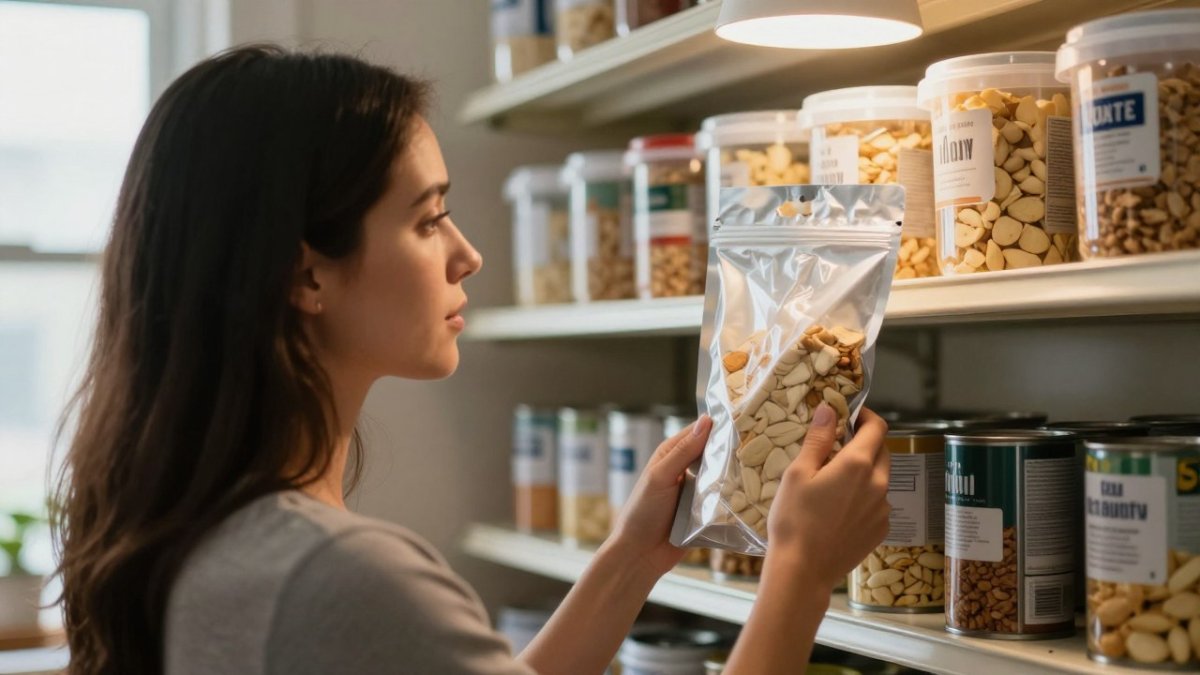
Storage conditions decide whether freeze-dried food reaches its full shelf life. Cool, dark, and dry extends it. Heat, humidity, and light cut it short.
The woman is American.
Temperature Ranges and the Effect of Fluctuations
Temperature is the biggest lever on shelf life. Storage below about 70°F supports the long end of the ranges in the shelf-life table, the 70-80°F band shortens quality life noticeably, and storage above 80°F, a hot garage, an attic, a shed, can cut usable life by years rather than months.
Fluctuations matter as much as the average. A room that swings hot and cold pushes moisture around inside the package and can drive condensation onto the food, which is worse than a steady warm room.
A simple rule set:
- Keep storage below room temperature when you can, and aim for a stable number rather than a low average.
- Avoid rooms that swing hot and cold, including uninsulated garages and sun-facing sheds.
- Keep packages dry and off concrete floors, which wick moisture.
Humidity and Light Exposure
Moisture is the enemy of anything dried. Any humidity that gets in undoes the drying process, and a package that takes on moisture loses quality faster than one exposed to heat alone.
Light exposure fades colors and breaks down some nutrients. Opaque containers, number 10 cans, food-grade buckets, dark Mylar, protect better than clear jars or thin pouches on an open shelf.
Packaging Failure and Oxygen-Absorber Troubleshooting
Check your stock at least once a year. A failed seal caught early saves the food; one caught late wastes it. Most failures fall into a few recognizable patterns.
- Punctures and pinholes. A Mylar bag pressed against a sharp can edge or a rough shelf can develop a pinhole that lets moisture in over years. Store bags inside a second container or bucket so a puncture does not become a total loss.
- Failed heat seals. A wrinkled or incomplete seam leaks. Run a thumb along every seam and feel for gaps; reseal any bag with a suspect seam and a fresh absorber.
- Swollen or puffy containers. A swollen bag or bulging can lid means gas is building inside, which points to microbial activity or a failed absorber. Do not open and taste to check, treat a swollen package as compromised.
If a package fails, use the food soon or discard it. Do not mix suspect food back into your long-term stock. For container options that protect against spoilage, see our guide to long term food storage containers.
Food Safety Versus Quality and Nutrition Over Time
A printed shelf-life estimate is not a guarantee of safety or of unchanged taste, texture, and nutrients. The date on a can is the maker's quality estimate under ideal conditions, not a safety cliff. Food stored past that date is often still safe but may lose flavor, texture, and some nutritional value, and fatty foods show the decline first. Discard food that is swollen, damp, moldy, or off-smelling regardless of the date.
Stocking Your Pantry With Freeze-Dried Food That Fits Your Storage
The right amount of freeze-dried food is the amount your storage can actually protect.
Start with your space and conditions. A cool closet supports long storage. A warm garage does not.
Then build in layers:
- A long-term reserve in Mylar or number 10 cans
- A working layer you open and rotate
- A short-term layer for power outages and trips
If you want to browse options that fit a real pantry, our long term food storage collection is a good place to start. Families choosing household-sized picks can compare family freeze-dried food options, and shoppers ready to buy can review the best emergency food storage options. Budget-minded buyers can check our guide to affordable long term food storage kits.
Survive Nation offers outdoor and emergency preparedness gear, and you can check current prices and availability on our website.
The hardest part of food storage is not buying it.
Frequently Asked Questions
Do freeze-dried foods actually go bad?
Yes, eventually. Freeze-dried food is shelf-stable because the water content is low enough that bacteria and mold cannot grow, but quality still declines over time. Oxygen, moisture, heat and light slowly break down fats and vitamins, so flavor, texture and nutritional value drop before the food becomes unsafe. Commercially packaged freeze-dried food in an unopened can or Mylar bag typically holds quality for 20 to 30 years. After opening, treat it like any dry pantry food and use it within weeks to months.
How long does freeze-dried food last after opening?
Once a can or bag is opened, the oxygen barrier is gone. Plan to finish the contents within 6 to 12 months for best quality, and reseal it in an airtight container with an oxygen absorber if you cannot. Keep the container in a cool, dark place. If the food picks up moisture, it will lose its crunch and rehydrate unevenly. Write the opening date on the lid so you are not guessing later.
How long does freeze-dried food last in Mylar bags?
Mylar bags with a sealed seam and an oxygen absorber are one of the best setups for long-term storage. Combined with food-grade buckets and a cool storage spot, Mylar-packed freeze-dried food commonly reaches 20 to 25 years. The bag itself is only part of the equation: the seal must be complete, the absorber must be fresh, and the bag must stay out of heat and sunlight. Inspect bags for punctures before you stack them.
What are the disadvantages of freeze-dried food?
The main drawbacks are cost, water requirements and texture. Freeze-dried meals cost more per serving than canned goods or rice and beans, and you must add water before eating, which matters in an emergency where clean water is limited. Some items, like certain fruits, soften or crumble after rehydration. Storage also takes planning: heat, humidity and damaged packaging cut shelf life fast. Buy in quantities you can store properly rather than stockpiling more than your space allows.