 How-to
Fixing a Jammed Sleeping Bag Zipper: A Step-by-Step Guide
Last Updated: November 21, 2026
Quick Summary
To fix a jammed sleeping bag zipper, stop pulling and unload the bag, then check the slider from both sides to find the cause. Clear trapped fabric by pulling the fabric away from the slider, not the slider away from the fabric, and only clean and lubricate once it moves freely by hand.
- Diagnosis takes about thirty seconds and comes down to four common failures.
- Never lubricate over a snag, because lubricant on trapped fabric tears the zipper tape.
- Move the slider in the direction of least resistance, usually back the way it came.
- A soft toothbrush clears grit from the bottom corner better than fingers can.
- Avoid petroleum jelly, cooking oil, and WD-40 as zipper lubricants.
Table of Contents
- Why Sleeping Bag Zippers Jam and How to Diagnose the Problem
- A Safe, Ordered Troubleshooting Flow Before You Force Anything
- The Fabric Stuck in Zipper Hack: Freeing Trapped Shell and Lining
- How to Fix a Sleeping Bag Zipper That Came Off the Track
- How to Fix a Double Zipper on a Sleeping Bag
- When the Zipper Is Jammed at the Bottom
- Cleaning, Lubricating, and Field Repair in Cold or Wet Conditions
- When to Repair and When to Replace Your Sleeping Bag
- Frequently Asked Questions
Why Sleeping Bag Zippers Jam and How to Diagnose the Problem
A jammed zipper almost always comes down to one of four causes: fabric caught in the teeth, grit packed into the track, a bent slider, or teeth that have slipped out of alignment. Learning how to fix a jammed zipper on a sleeping bag starts with figuring out which one you're dealing with, because the wrong fix makes things worse. Most ruined zippers, in our experience of how zippers fail, were damaged by impatience rather than wear.
Here's the good news: diagnosis takes about thirty seconds.
The Four Common Zipper Failures
- Fabric in the teeth: the shell or lining is pinched between the teeth. The slider stops hard and won't budge.
- Debris in the track: sand, pine needles, or dried mud clog the coil. The slider moves stiffly or skips.
- A bent or damaged slider: the pull moves but the teeth won't mesh behind it.
Look closely before you pull. A flashlight helps in a tent. If you see fabric bunched at the slider, stop pulling immediately.
A Safe, Ordered Troubleshooting Flow Before You Force Anything
Work through these steps in order, and stop as soon as the zipper frees up. Forcing a stuck slider is the single most common way campers turn a five-minute fix into a replacement purchase. The sequence matters because each step rules out a cause before you move to the next, cleaning a track that still has fabric pinched in the teeth just grinds grit into the shell.
- Stop pulling and unload the bag. Set it down flat, empty it, and lay the zipper run straight. A bag under tension from bedding or a stuff sack hides the actual snag point.
- Look at the slider from both sides. Fabric caught on the inside of the shell is invisible from the outside, and the lining side is where most mummy-bag jams start.
- Identify the cause using the four failures above. If you cannot see fabric or debris, assume a bent slider or an off-track tooth and go to the inspection step rather than pulling harder.
- Clear fabric first, debris second. Never lubricate over a snag, lubricant on trapped fabric lets the slider travel farther into the fold and tears the zipper tape.
- Move the slider in the direction of least resistance, usually back the way it came. A slider that will not reverse is a sign of a bent slider body, not a fabric snag.
- Clean, then lubricate only after the zipper moves freely by hand through the jammed zone.
- Test the full length of the track before you pack up, and zip it closed and open twice. A zipper that frees at the snag but skips teeth two inches later has a damaged coil, not a clean track.
A stuck zipper is a symptom. Treat the cause, not the pull tab.
Reading the Slider Before You Touch It
A quick inspection tells you whether you are in field-fix territory or heading for a repair bench. Hold the slider up to light and look at the gap between the top and bottom plates.
Run a fingernail along the coil on both sides of the slider. A coil that feels flattened, kinked, or missing a tooth is damaged, and forcing the slider past it will spread the damage.
Stop Conditions: When to Quit in the Field
Stop and switch to a temporary closure if any of these are true: the slider will not reverse at all, the zipper tape is pulling away from the seam, a tooth is visibly missing, or the slider gap is wide enough to see through. In those cases, close the bag as far as it will go, secure the opening with a cord or a small carabiner through the pull, and plan the repair for a bench with good light.
REI's guide to sleeping bag care and repair
Work through the fixes in this order, stopping as soon as the zipper frees up.
| Step | What to do | Why it matters |
|---|---|---|
| 1 | Stop pulling and unload the bag | Tension hides the actual snag point |
| 2 | Look at the slider from both sides | Inside shell snags are invisible from outside |
| 3 | Identify the cause among the four failures | Wrong fix makes things worse |
| 4 | Clear fabric first, debris second | Lubricant on trapped fabric tears the tape |
| 5 | Move the slider in the direction of least resistance | No reverse movement signals a bent slider |
| 6 | Clean, then lubricate | Only after the zipper moves freely by hand |
| 7 | Test the full length of the track | Skipping teeth later means a damaged coil |
The Fabric Stuck in Zipper Hack: Freeing Trapped Shell and Lining
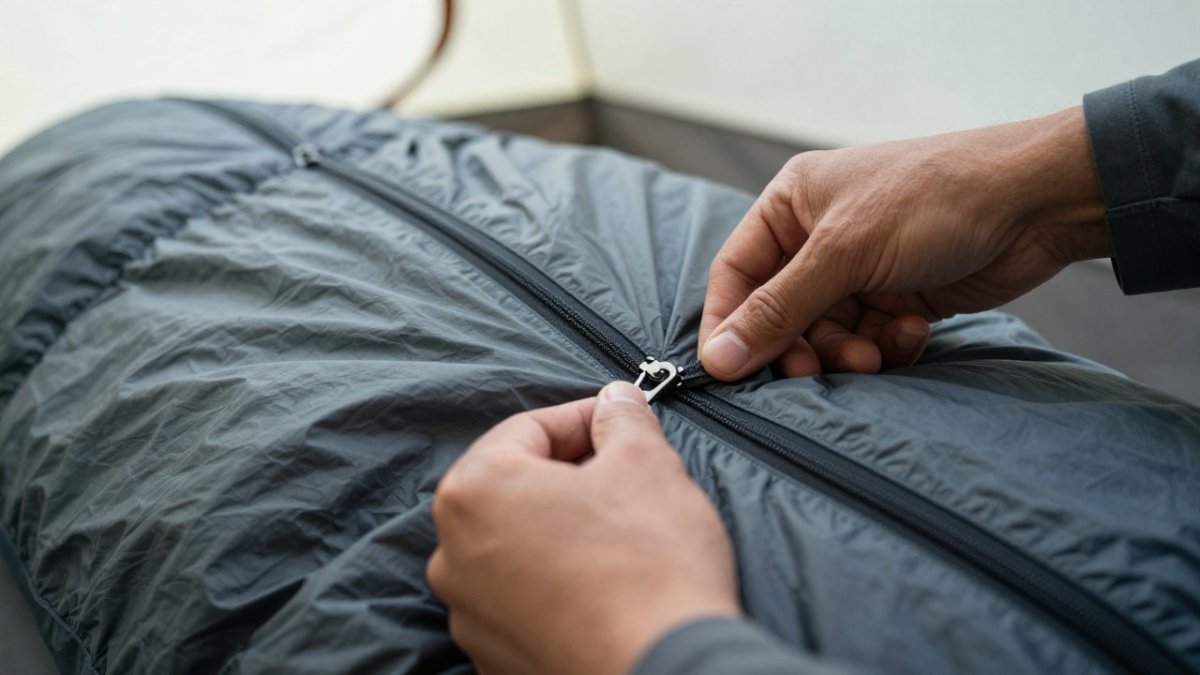
The fabric stuck in zipper hack is simple: pull the trapped fabric away from the slider, not the slider away from the fabric. This one habit protects your shell, your lining, and your insulation all at once.
Pulling Fabric Away From the Slider
Grip the fabric on both sides of the snag and pull it outward, away from the teeth. Hold it taut with one hand.
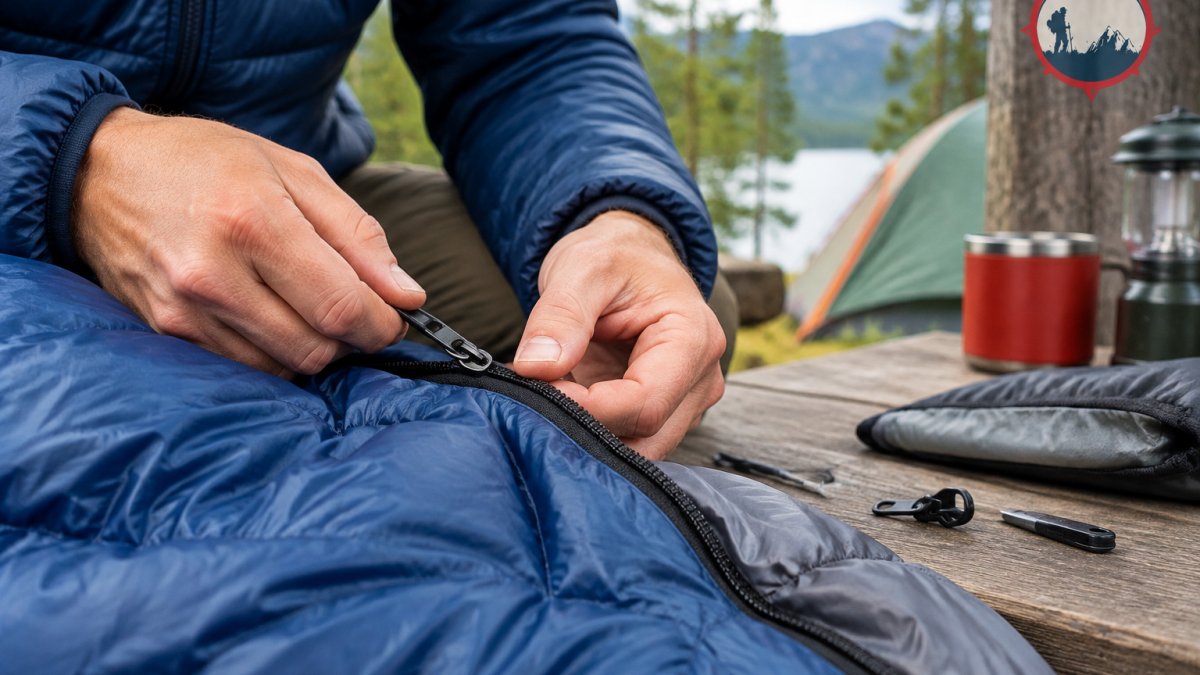
If the fabric won't release, try rocking the slider gently rather than pulling harder. A pair of tweezers or needle-nose pliers lets you grip a stubborn fold of fabric without pinching the teeth.
Watch out: pulling the slider forward through trapped fabric stretches the shell and can tear the zipper tape loose from the seam.
How to Fix a Sleeping Bag Zipper That Came Off the Track
An off-track zipper means the teeth have left the slider channel on one side. The fix depends on where it happened.
If the slider came off at the very end of the track, you can usually rethread it.
For a separating zipper, check that both sides start at the same height before you zip. Misaligned starts are the most common cause of a zipper that pops open mid-trip.
How to Fix a Double Zipper on a Sleeping Bag
Double zippers have two sliders, and they jam for the same reasons single ones do, plus one extra: the sliders meet in the middle. When they jam against each other, back both sliders away from the meeting point before you try anything else.
Check each slider separately. If one moves freely and the other doesn't, the problem is isolated to that slider or the teeth right beside it. Clean that section, then test both sliders through the full track.
When the Zipper Is Jammed at the Bottom
A zipper jammed at the bottom is usually a fabric problem, not a teeth problem. The bottom corner is where the shell bunches most, especially on mummy-style bags.
If the slider sits right at the bottom stop and won't move at all, check for a bent stopper or a wad of fabric wedged in the corner seam. A soft toothbrush clears grit from that tight corner better than fingers can.
Cleaning, Lubricating, and Field Repair in Cold or Wet Conditions
Cold and wet conditions make zippers stiff, and stiff zippers jam. The mechanism is simple: nylon coil and the zipper tape both stiffen as temperatures drop, while moisture and grit freeze or pack into the track. A zipper that runs smoothly in a warm room can feel locked at 25°F. The fix is usually less about force and more about warming the track, clearing it, and using a lubricant that stays functional when cold.
Cleaning the Track Without Soaking the Bag
Brush first, always. A soft toothbrush or a dedicated zipper brush lifts sand, pine needles, and dried mud out of the coil better than fingers can, and it works on both the coil and the tape seam where grit hides.
If the track is muddy or salty, wipe it with a barely damp cloth and dry it immediately. Do not soak the zipper tape or the shell, water that wicks into the tape seam and into down or synthetic fill is far more damaging than the dirt you are removing.
Lubricant Choices and Materials to Avoid
Match the lubricant to the zipper and the temperature.
Paraffin wax or a wax-based zipper stick works well on metal-tooth zippers and is a common field choice, but wax stiffens in hard freezing and can leave a residue on dark shell fabric.
Avoid these: petroleum jelly, cooking oil, olive oil, and general-purpose grease. They attract dirt and sand, can stain shell and lining fabric, and can migrate into the zipper tape and insulation.
Watch out: never apply lubricant to a zipper that still has fabric caught in the teeth.
Field Repair in the Dark, Cold, or Wet
In the field, keep it minimal: warm, brush, ease, and go. Cup the slider in your hands or breathe on the track to warm it before you try to move it, a stiff cold zipper often frees with warmth alone.
If the zipper will not close and the night is cold, do not keep fighting it. Close the bag as far as it will go, tuck the opening closed, and add a layer or a liner to stay warm.
For broader fixes in bad weather, our guide to repairing survival gear in the field walks through the techniques that hold up when you're miles from a workbench. If you're camping cold, our cold-weather camping gear guide covers the equipment that keeps zippers and insulation working.
Leave No Trace guidance on gear care outdoors
When to Repair and When to Replace Your Sleeping Bag
Repair makes sense when the shell, insulation, and seams are sound and only the zipper has failed.
A bag with failing insulation won't keep you warm no matter how well the zipper works.
If you're leaning toward replacement, browse our Kamperbox goose down sleeping bag or the lighter Kamperbox ultralight down sleeping bag. For a full comparison before you commit, our buyer's guide to camping sleeping bags breaks down fill types and temperature ratings.
American Camping Association resources on gear maintenance
A jammed zipper shouldn't end a trip. With a little patience and the right order of steps, most sleeping bag zippers come back to life in minutes.
Frequently Asked Questions
How do you unjam a sleeping bag zipper that is stuck and will not move?
Stop pulling the moment it binds. Hold the sleeping bag flat, then pull the shell fabric and lining away from the slider on both sides so no cloth is pinched in the teeth. Rock the slider back and forth a few millimeters in the direction of least resistance rather than forcing it forward. If it still will not budge, clean grit from the teeth with a toothbrush and apply a small amount of zipper lubricant or paraffin before trying again. Forcing a stuck zipper is the fastest way to bend the slider or tear the zipper tape.
What is the best fabric stuck in zipper hack for a sleeping bag?
The safest fabric stuck in zipper hack is to never pull the slider against the trapped cloth. Instead, grip the fabric on each side of the slider and pull it outward and away from the teeth, then ease the slider backward off the snag. A pair of tweezers or needle-nose pliers helps you grip a thin edge of shell fabric or lining without tearing it. Work slowly, keep the bag flat, and avoid yanking the zipper pull, since the zipper tape and coil teeth on a sleeping bag are lighter than those on a jacket.
Can you fix a sleeping bag zipper that came off the track?
Often yes, if the slider is intact. Slide the slider back onto the zipper track at the base where the teeth are joined, align the coil or nylon teeth so they mesh evenly, and pull the slider forward to test the mesh. If the slider is bent or the teeth are missing, a zipper repair kit with a matching replacement slider is the practical fix. When the zipper tape itself is torn away from the shell fabric, that is a sewing repair, and a bag with a compromised zipper track may be better replaced than patched.
How do you fix a double zipper on a sleeping bag that jams at the bottom?
A double zipper has two sliders that meet in the middle, and a jam at the bottom usually means one slider has slipped past the zipper stopper or picked up fabric. Separate the two sliders by moving them apart, clear any trapped lining or shell fabric, and check that both sliders sit on the same side of the track. If one slider is off the track, rethread it at the base. Test the pair by zipping them together slowly. If the sliders no longer meet cleanly, replace the damaged slider rather than forcing the pair.