 how-to
How to Fix a Portable Water Filter Flowing Slowly
Last Updated: November 7, 2026
Quick Summary
A portable water filter flowing slowly is usually clogged, has trapped air inside, or has a kinked hose or closed valve. Run a timed-volume flow test, prime the filter until water runs steady, and inspect tubing and connections before buying a new cartridge. Clean only per your model's instructions, and replace the filter when cleaning no longer restores flow.
- Run a timed-volume flow test and compare results against the maker's stated flow rate.
- Air trapped inside is the most overlooked cause of slow flow in portable filters.
- Backflush only filters designed for it; many squeeze and straw filters are not.
- A new cartridge that feels clogged often just needs flushing and proper seating.
- Muddy, cold, and hard water clog filters faster, so pre-filter murky water with a cloth.
Table of Contents
- Why Your Portable Water Filter Is Flowing Slowly
- How to Fix Slow Water Filter Flow: A Step-by-Step Diagnosis
- Portable Water Filter Low Flow After Replacing Cartridge: What Went Wrong
- How to Clean a Portable Water Filter by Type
- How Often to Replace a Portable Water Filter
- Water Source, Temperature, and Other Factors That Slow Flow
- When to Stop Troubleshooting and Replace Your Filter
- Shop Reliable Portable Water Filters at Survive Nation
- Frequently Asked Questions
Why Your Portable Water Filter Is Flowing Slowly
A portable water filter that slows to a trickle is almost never broken. In most cases, the filter is clogged, air is trapped inside, or a hose is kinked.
Here is the good news. Nearly every slow-flow issue has a simple fix you can do in the field. The bad news?
Below, we'll show you exactly how to diagnose slow flow step by step.
CDC guidance on backcountry water treatment
How to Fix Slow Water Filter Flow: A Step-by-Step Diagnosis
Start with the simplest checks first. Most slow-flow problems trace back to one of three things: a clogged filter, trapped air, or a blocked line. Work through these steps in order before you spend money on a new cartridge.
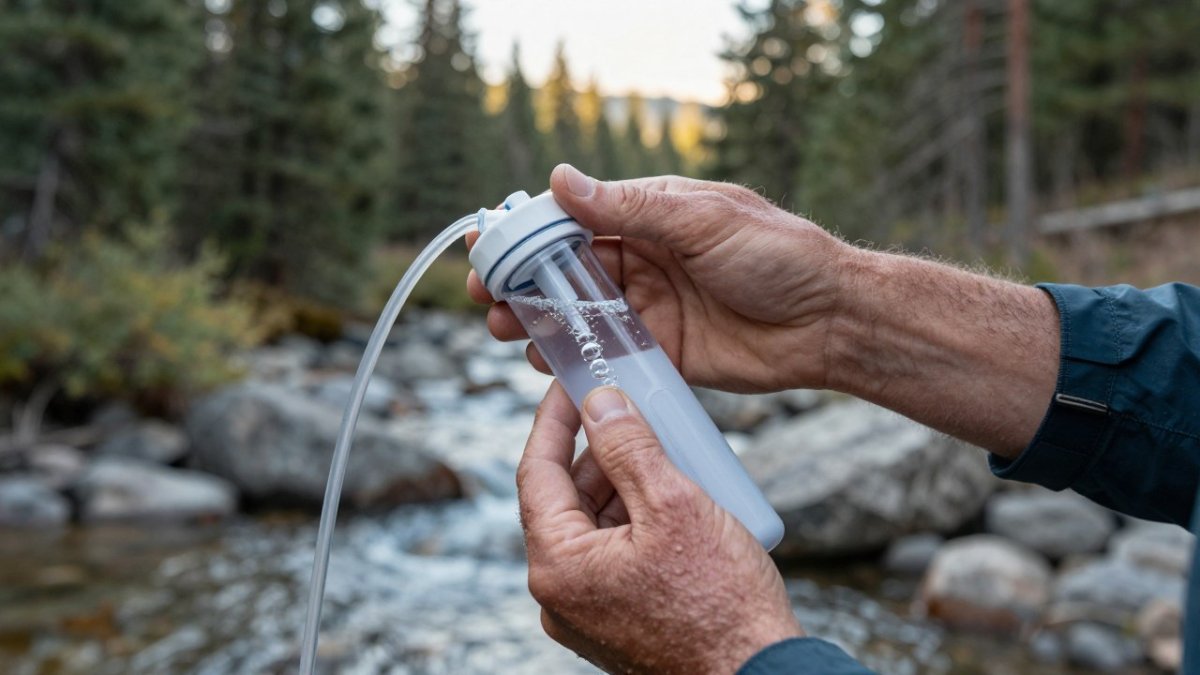
Step 1: Run a Timed-Volume Flow Test
Measure before you guess. Use a container with marked volume, a 1-liter bottle or a graduated measuring cup, and a phone timer.
Record two numbers: the volume collected and the time to collect it. Then compare against the maker's stated flow rate for that model. Most portable filter makers publish a flow rate in liters per minute or liters per hour, but those figures are typically measured with clean water at room temperature and a fresh cartridge.
A practical field benchmark, not a universal spec:
- Within about half of the maker's clean-water rating: flow is acceptable; look elsewhere for the problem.
- Roughly half to one-quarter of the rating: mild to moderate restriction; clean and re-test.
- Below about one-quarter of the rating, or a sputter instead of a stream: serious clog or air lock; stop and diagnose before pushing more water.
Watch out: do not squeeze or pump harder to hit a target number. Excess pressure can force water past a damaged membrane or push sediment deeper into the cartridge, and it can make a failing filter look fine for one more trip.
Step 2: Check for Air Trapped in the System
Air is the most overlooked cause of slow flow, and it is especially common in portable filters because they are drained, folded, and packed between uses.
The mechanism is simple: air compresses, water does not.
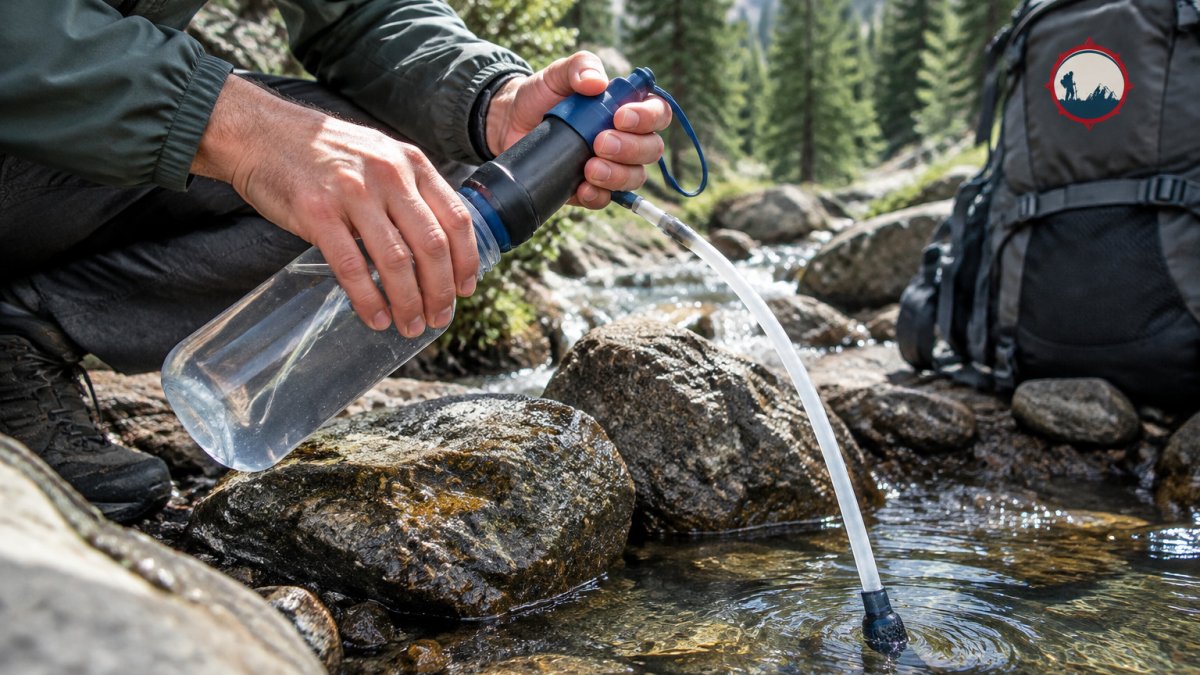
Fix it by priming. For gravity and pump filters, backflush or push clean water through with the outlet open. For squeeze and bottle filters, fill the housing, invert it, and squeeze gently until water runs steady.
Step 3: Inspect Tubing, Valves, and Connections
Look for kinks, closed valves, and loose fittings. A partially closed valve or a bent line cuts flow more than most people expect, and on portable systems the usual culprits are quick-disconnect fittings that are not fully seated and bite valves that are stuck.
- Straighten any kinked tubing and check the full run, including where it passes through a pack strap or lid.
- Open all valves fully, including any inline shutoff.
- Push quick-disconnect fittings in until they click or seat; pull gently to confirm.
Step 4: Isolate the Filter From the Rest of the System
If the first three steps do not restore flow, separate the filter from the bottle, bag, or tubing. Run the filter directly from a clean cup of water. If flow is normal, the restriction is in the line, valve, or container, not the cartridge. If flow stays slow, the problem is inside the filter and you can move to cleaning or replacement with confidence.
Step 5: Match the Next Step to Your Filter Type
Once you know the restriction is in the filter, the right fix depends on the design. Gravity and pump filters with a backflush port can usually be cleaned in the field. Many squeeze and straw filters are not designed to be backflushed and should be replaced or cleaned only per the maker's instructions.
Work through these checks in order before buying a new cartridge.
| Step | What to do | Key detail |
|---|---|---|
| 1 | Run a timed-volume flow test | Compare against maker's stated flow rate |
| 2 | Check for trapped air | Prime until water runs steady, not sputtering |
| 3 | Inspect tubing, valves, connections | Look for kinks, closed valves, loose fittings |
| 4 | Isolate filter from system | Run filter directly from a clean cup |
| 5 | Match next step to filter type | Backflush only if the model allows it |
Portable Water Filter Low Flow After Replacing Cartridge: What Went Wrong
A portable water filter low flow after replacing cartridge usually means one of two things: the new cartridge isn't seated right, or air is trapped inside. Both are easy to fix and neither means the filter is defective.
Check the cartridge orientation first. Many filters only fit one way, and an improperly installed filter blocks flow.
Next, flush the new filter. Fresh cartridges ship dry and need priming before they perform. Run water through until the flow steadies.
Watch out: skipping the flush is the most common mistake after a swap. A dry cartridge can feel clogged when it just needs water.
How to Clean a Portable Water Filter by Type
Cleaning methods differ by filter design, and using the wrong method can damage the media or shorten its lifespan. Before you clean anything, check the maker's instructions for your specific model. A filter that is not designed to be backflushed can be ruined by reversing flow, and a filter that is past its rated volume will not be restored by cleaning no matter how carefully you do it.
Gravity-Fed and Pump Filters
Many gravity and pump filters have a backflush port or allow reverse flow. To backflush, force clean water backward through the outlet and out the intake, carrying loosened sediment with it.
Watch out: backflushing pushes water through the media in the reverse direction, and on some hollow-fiber cartridges that is the intended cleaning method, while on others it can dislodge or damage the fiber bundle.
Squeeze Filters and Bottle Filters
Squeeze and bottle filters vary widely.
For bottle filters, remove the cartridge if the design allows, rinse the housing, and use a soft brush to clear grit from the intake screen. Do not scrub the filter media itself.
If you pair a filter with a bottle, a compatible 500ml retractable water bottle or a silicone collapsible telescopic water bottle makes field cleaning easier.
Straw Filters
Most straw-style filters are not designed to be backflushed in the field. The usual maintenance is to blow gently back through the straw to clear the immediate intake, rinse the exterior, and replace the unit when flow drops below a usable rate or the rated volume is reached. Do not disassemble a sealed straw filter.
Reverse Osmosis Membranes
RO systems need more care. A fouled membrane slows flow and needs flushing with clean water per the system instructions. Check the storage tank air pressure with a gauge and look for a damaged bladder. If flow stays low after flushing and the tank pressure is correct, the membrane may be spent. Do not attempt to clean a membrane with anything other than the maker's recommended flush.
Cleaning Limits and Contamination Safety
Cleaning restores flow; it does not reset the filter's contamination history. A filter that has processed water of unknown quality, or that has been used past its rated volume, should be retired rather than cleaned. Improved flow after cleaning is not proof that the water is safe, the media may still be compromised. Follow the maker's service-life guidance and the public-health advice for backcountry and emergency water treatment from CDC guidance on backcountry water treatment when deciding whether to keep using a filter.
Drying and Storage Between Trips
Store filters dry and clean between trips. Drain the housing, shake out excess water, and let the cartridge air-dry fully before packing. Do not freeze a wet cartridge, because ice can crack hollow fibers and housings.
How Often to Replace a Portable Water Filter
Replace a portable water filter when cleaning no longer restores flow, or when it reaches its rated lifespan.
Signs it's time to replace:
- Flow stays slow after cleaning and priming
- Water tastes or smells off
- The cartridge is past its rated volume
Store filters dry and clean between trips. Proper storage extends lifespan and keeps flow strong.
Water Source, Temperature, and Other Factors That Slow Flow
Muddy, silty, or cold water clogs filters faster. Sediment loads a cartridge quickly, and near-freezing water thickens and slows flow.
- Murky water: pre-filter with a cloth to cut sediment
- Cold water: warm the filter slightly or expect slower flow
- Hard water: mineral scale builds up, so clean more often
A reliable 2L water bag with suction nozzle lets you carry and dispense water without stressing the filter.
When to Stop Troubleshooting and Replace Your Filter
Stop troubleshooting when cleaning, priming, and inspection all fail to restore flow. At that point, the cartridge is likely spent. A damaged membrane or cracked housing also means replacement, not repair.
If you want to compare replacement options, our lightweight water filtration systems review breaks down what to look for. Our essential survival gear for beginners guide covers the basics of filter care.
Shop Reliable Portable Water Filters at Survive Nation
A slow filter is a solvable problem, not a dead end. Diagnose the cause, clean by type, and replace only when needed.
At Survive Nation, we offer outdoor and emergency gear. Shop with us for quality goods.
Ready to upgrade your water setup? Get started with Survive Nation and find reliable filtration gear built for the wilderness or your emergency kit.
Frequently Asked Questions
Why is my portable water filter flowing slowly?
The most common reasons a portable water filter flows slowly are a clogged cartridge, air trapped in the system, a partially closed valve, or kinked tubing. Sediment buildup in the filter pores is the top culprit, especially after filtering cloudy water. Cold water also thickens and passes through the filter more slowly. Start by checking for kinks and trapped air, then clean or replace the cartridge if flow does not improve. A safe flow-rate test helps you pinpoint the cause before you buy parts.
Can a clogged filter make water flow slowly?
Yes. A clogged filter cartridge is the single most common cause of slow flow in a portable water filter. As sediment, silt, and organic matter collect in the filter media, the pores narrow and water has less room to pass through. You may notice the flow dropping gradually over several trips or suddenly after filtering muddy water. Backflushing or cleaning the cartridge restores some flow, but if performance stays weak after cleaning, the cartridge is exhausted and needs replacement.
Why does my new water filter have low flow?
A new portable water filter often flows slowly because air is trapped inside the cartridge or housing. Prime the filter by soaking it in clean water and squeezing or pumping water through until bubbles stop. Check that the cartridge is seated correctly and that any O-rings or gaskets are not pinched. Also confirm valves are fully open and tubing is not kinked. If flow stays low after priming, the cartridge may be installed backward or the wrong model for your housing.
How do I know when a portable water filter needs replacing?
Replace your portable water filter when cleaning and priming no longer restore acceptable flow, when the cartridge reaches its rated liter capacity, or when water tastes or smells off. Most manufacturers rate cartridges between 100 and 1,000 liters depending on the model. Track your usage and replace before you leave for a trip rather than mid-hike. If you filter cloudy or sediment-heavy water often, expect to replace the cartridge sooner than the rated interval.