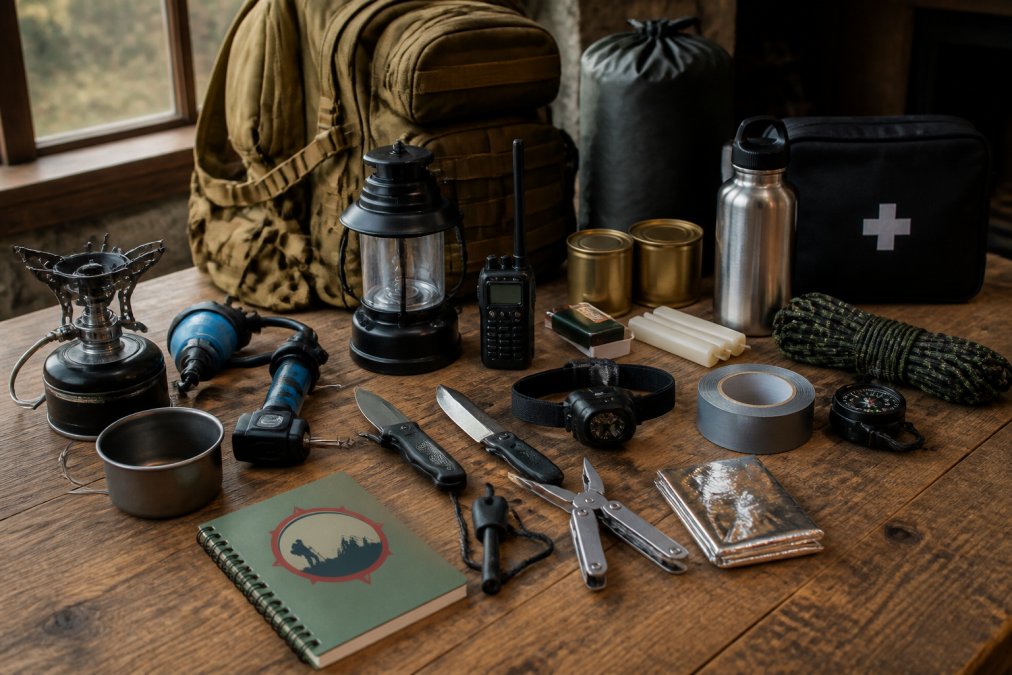
 blog
blog
Essential Survival Gear for Beginners: 2026 Guide
Table of Contents
- The 5 C's of Survival: Your Gear Framework
- Core Essential Survival Gear for Beginners
- Bug Out Bag Checklist for Beginners
- Best Survival Gear for Long Term Readiness
- Budget vs. Quality: What to Spend On First
- Maintenance and Skill-Building for New Gear Owners
- Conclusion
- Frequently Asked Questions
Last Updated: September 23, 2026
The 5 C's of Survival: Your Gear Framework
The 5 C's of survival are cutting tools, combustion, cover, containers, and cordage. This framework helps beginners decide what essential survival gear for beginners actually needs to include, without overspending on items they will never use.
Most beginners buy gear backward.
Here is the framework:
- Cutting: one quality fixed-blade knife
- Combustion: at least two fire-starting methods
- Cover: a shelter or space blanket
- Container: a metal bottle for boiling water
- Cordage: paracord or 550 cord for repairs and shelter
Get these five right before anything else.
Core Essential Survival Gear for Beginners
Essential survival gear for beginners is a small set of tools that covers water, fire, shelter, and first aid. Beginners should focus on five or six items they can carry and use, not a warehouse of unused gadgets.
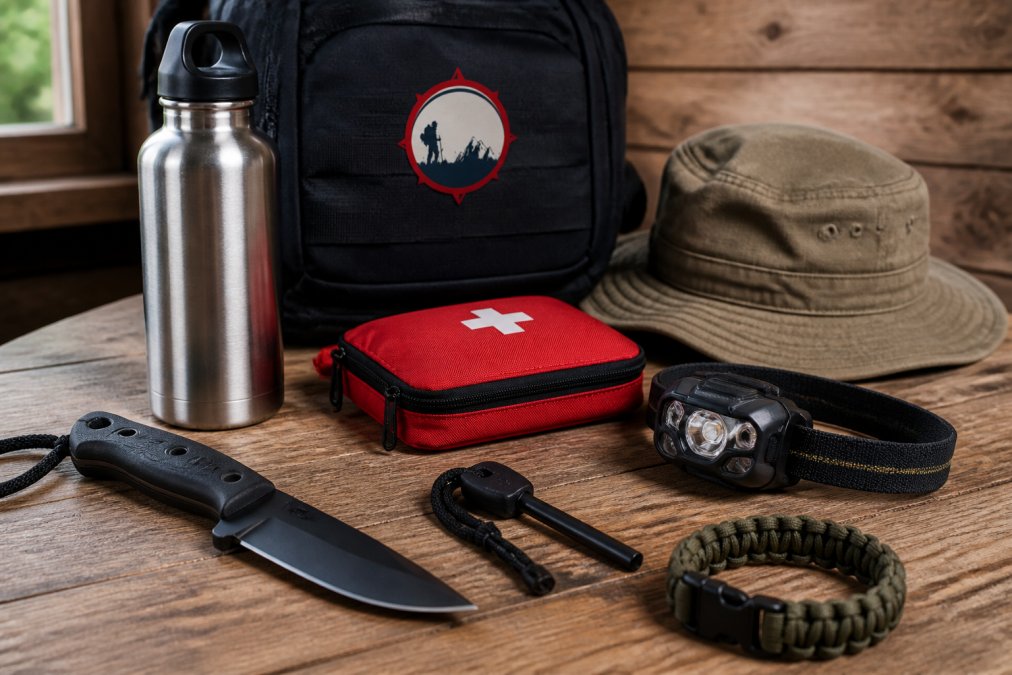
Start with the basics. Master them. Then add more.
Cutting Tools, Combustion, and Cover
Cutting tools matter most. A fixed-blade knife handles wood, food, and repairs. A folding knife is a backup, not a primary.
Fire starters come in three main types:
- Ferrocerium rod: works when wet, lasts for years
- Flint and steel: traditional, needs dry tinder
- Waterproof matches: easy, but limited in number
Container, Cordage, and First Aid
A container is a stainless steel bottle. You can boil water in it over a fire. Plastic bottles melt. Skip them for cooking.
A first aid kit should include:
- Adhesive bandages in several sizes
- Antiseptic wipes
- Gauze pads and medical tape
- Pain relievers
- Blister treatment
- Nitrile gloves
Bug Out Bag Checklist for Beginners
A bug out bag checklist for beginners covers three days of self-sufficiency in one pack. The goal is a bag you can grab in 60 seconds and carry for miles.
Here is a starter checklist:
- Water: 3 liters plus purification tablets or a filter
- Food: 3 days of emergency rations
- Shelter: space blanket, tarp, or lightweight tent
- Fire: ferro rod and waterproof matches
- Knife: fixed-blade plus a multi-tool
- Light: headlamp with spare batteries
- First aid kit
- 550 cord: 50 to 100 feet
- Navigation: map, compass, whistle
- Signaling mirror
- Layering system: base layer, insulation, rain shell
- Sanitation: waste bags, hand sanitizer, toothbrush
Best Survival Gear for Long Term Readiness
The best survival gear for long term readiness prioritizes durability over features. Long-term kits sit unused for months, so gear must survive storage and still work when needed. That is a different design problem than a weekend bug out bag.
Water: Filters Beat Tablets for Storage
A quality hollow-fiber or ceramic filter handles hundreds to thousands of gallons depending on the model, and it does not expire the way chemical tablets do. Tablets lose potency over time and are sensitive to heat, so they belong in a backup role, not the primary one.
Food: Rotation Beats Hoarding
Food storage fails when people buy once and forget. A common pattern is a five-gallon bucket of grains that sits untouched for a decade and is never eaten. The fix is rotation: eat what you store, store what you eat.
- Keep storage cool, dark, and sealed in food-grade containers.
- Label every container with the date it was packed.
- Rotate stock yearly, pull the oldest, use it, replace it.
- Fats and oils go rancid fastest; store them in smaller quantities and rotate more often.
Lighting: Common Batteries Win
A headlamp beats a handheld flashlight because it keeps your hands free for shelter, fire, and first aid. For long-term storage, choose a light that runs on a common battery size you already stock, and store batteries outside the device to prevent corrosion. Rechargeable lights are convenient but depend on a power source that may not exist during an outage.
Shelter and Cutting: Reusable Over Disposable
A space blanket is a one-and-done item. A lightweight tarp is reusable, repairable, and gives real coverage. For cutting, a fixed-blade knife is stronger and safer under load than a folding knife, and a full-tang blade survives batoning and prying that a folder will not.
| Category | Beginner Pick | Long-Term Upgrade | Why It Matters |
|---|---|---|---|
| Water | Purification tablets | Hollow-fiber or ceramic filter | Filters more water, no expiration clock |
| Fire | Matches | Ferro rod + dry tinder | Works wet, lasts years |
| Light | Basic headlamp | Headlamp on common batteries | Fewer battery swaps, easier to stock |
| Shelter | Space blanket | Lightweight tarp | Reusable, repairable, more coverage |
| Cutting | Folding knife | Full-tang fixed-blade knife | Stronger, safer under load |
| Food | Canned goods | Sealed, rotated dry goods | Longer shelf life when stored correctly |
Long-Term Gear Is a Maintenance Schedule, Not a Purchase
Durability only pays off if you inspect. A simple cadence:
- Monthly: check batteries, test the headlamp, inspect seals on water containers.
- Every six months: rotate food, check tablet expiration dates, re-seal storage containers.
- Yearly: sharpen the knife, inspect paracord for fraying, replace any rubber or elastic that has gone brittle.
Budget vs. Quality: What to Spend On First
Spend first on the items you use most: your knife, your shelter, and your water filter. Budget gear works fine for backups. Primary tools should be quality. But "buy quality" is not a plan, beginners need a tiering framework and a weight target, and most guides skip both.
The Two-Tier Framework
Think of your kit in two tiers, not one shopping list.
Tier 1, Primary tools (buy once, buy well):
- Fixed-blade knife
- Water filter
- Sleeping bag rated for your climate
- Footwear you have actually broken in
Tier 2, Backup and consumable gear (budget is fine):
- Backup fire starters
- Paracord
- Stuff sacks
- Extra flashlights
- Duct tape, zip ties, repair cord
A Total Pack Weight Target
Weight is the metric beginners ignore and regret. A common target for a three-day beginner kit is 20 to 25 pounds total, including water. Above that, most beginners slow down and start leaving gear behind, which defeats the purpose.
Rough weight budget for a 20-pound kit:
- Water (3 liters): about 6.5 pounds
- Shelter (tarp or lightweight tent): 2 to 4 pounds
- Sleeping bag: 2 to 3 pounds
- Food (3 days): 2 to 3 pounds
- Knife, fire, light, first aid, cordage, tools: 3 to 5 pounds
- Pack itself: 2 to 3 pounds
Urban vs. Wilderness: Different Kits, Different Priorities
Most guides conflate these. They are not the same kit.
Urban kit priorities:
- Water: stored water plus a filter for questionable taps
- Shelter: focus on warmth and a way to stay put, not a tarp
- Signaling: phone, whistle, written contacts
- Sanitation: waste bags, hand sanitizer, hygiene items matter more in close quarters
- Tools: multi-tool over hatchet; you are not processing firewood
Wilderness kit priorities:
- Water: filter plus purification backup, since sources are untreated
- Shelter: tarp or tent, plus insulation from the ground
- Fire: two reliable methods, since you may need warmth, cooking, and signaling
- Navigation: map and compass, because phone service is unreliable
- Cutting: fixed-blade knife and a way to process wood
Maintenance and Skill-Building for New Gear Owners
Skills matter more than gear. A person with a ferro rod and practice beats a person with ten fire starters and none.
Maintenance keeps gear ready:
- Sharpen your knife after every trip
- Check batteries monthly
- Replace water filter cartridges on schedule
- Inspect paracord for fraying
- Re-seal food storage containers
Conclusion
Building a kit is easy. Building one you can actually use under stress takes practice and the right gear.
Frequently Asked Questions
What are the 10 most essential items for survival?
A solid beginner kit covers water, fire, shelter, and first aid. The ten items are: a stainless steel water bottle with purification tablets, a ferrocerium rod fire starter, a fixed-blade knife, a mylar space blanket, 550 paracord, a compact first aid kit, a headlamp with spare batteries, a signaling whistle, emergency rations, and a multi-tool. This set handles the most common wilderness survival needs without weighing you down or costing a fortune.
What are the 5 C's of survival gear?
The 5 C's are cutting tools, combustion, cover, container, and cordage. Cutting tools means a sturdy knife. Combustion covers fire starters like a ferrocerium rod and tinder. Cover refers to emergency shelter such as a space blanket or tarp. Container is a metal water bottle you can boil in. Cordage is 550 paracord for shelter building and repairs. These five categories form the backbone of any survival kit.
What is the bare minimum survival gear for a beginner?
Start with a fixed-blade knife, a ferrocerium rod, a stainless steel water bottle, water purification tablets, a space blanket, and a basic first aid kit. Add 550 paracord and a headlamp when your budget allows. This covers the essentials of the 5 C's framework: cutting, combustion, container, cover, and cordage. You can build from there as you gain experience and identify gaps during practice outings.
How do I choose reliable survival gear on a budget?
Spend the most on your knife and water filtration system; these are the hardest to improvise and the most likely to fail if cheaply made. For fire starters, paracord, and space blankets, affordable options work well. Look for gear with full-tang blades, stainless steel construction, and positive customer reviews mentioning durability over multiple trips. Buy one quality item at a time rather than a prepackaged kit full of filler.