 blog
Lightweight Water Filtration Systems Review 2026
Last Updated: October 22, 2026
Quick Summary
The best lightweight water filtration for 2026 balances low weight, dependable flow, and a lifespan that matches your trip frequency, since no single design wins on all three. Squeeze filters suit solo ultralight hikers, while gravity and pump systems serve groups and basecamp use.
- A squeeze filter is the ultralight favorite because it packs small and works without batteries.
- When comparing weights, add the bottle or bladder the filter requires to the total.
- A water filter removes bacteria and protozoa, while a purifier also neutralizes viruses.
- Replace your filter when flow slows dramatically after cleaning or the rated liter capacity is reached.
- Never store a filter wet and sealed, because that encourages mold and bacteria growth.
Table of Contents
- Lightweight Water Filtration Systems Review 2026: What Actually Matters on the Trail
- Best Backpacking Water Filters 2026: Quick Comparison
- Backpacking Water Filter Weight: How Many Ounces Are Worth Carrying
- Water Filter vs Water Purifier: Which One Belongs in Your Pack
- Backpacking Water Filter Lifespan: When to Replace Your Filter
- Pros and Cons of Each Lightweight Water Filtration System Type
- Cleaning and Storing Your Filter Between Trips
- Which Lightweight Water Filtration System Should You Pick?
- Frequently Asked Questions
Lightweight Water Filtration Systems Review 2026: What Actually Matters on the Trail
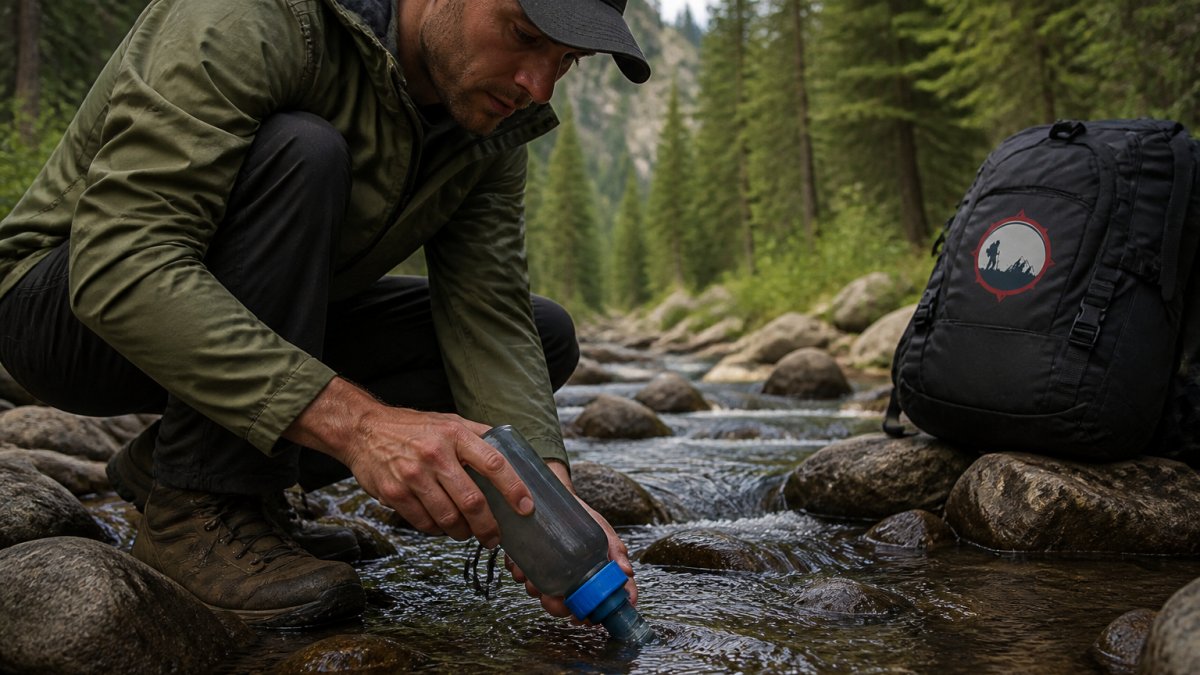
Every ounce in your pack has to earn its place, and a lightweight water filtration system is one of the few pieces of gear that pays you back in safety and convenience. This review cuts through the spec sheets to focus on what actually matters when you're miles from the trailhead: weight, flow rate, reliability, and how a filter holds up after weeks of hard use. Below, we break down the trade-offs that separate a filter you'll trust for years from one that clogs on day two.
The core tension in every lightweight water filtration decision is simple. The lightest options demand more care and have shorter lifespans, while heavier filters deliver speed and durability. Neither is "best" in a vacuum. The right call depends on how you travel, how often you go, and what you're willing to do at the water source.
We'll show you exactly how to weigh those trade-offs, compare the main filter types, and pick the system that fits your trips. First, here's what most gear guides get wrong: they rank filters by weight alone and ignore the maintenance burden that comes with the lightest models.
Best Backpacking Water Filters 2026: Quick Comparison
The best backpacking water filter for 2026 balances three things: low weight, dependable flow, and a lifespan that matches your trip frequency. No single design wins on all three, so the smart move is matching the category to your style rather than chasing the lowest number on a scale.
How We Evaluated These Filters
We scored each system type against the criteria that matter on real trips, not lab conditions. Here's a framework for comparing lightweight water filtration options:
| Filter Type | Typical Weight | Flow Speed | Lifespan | Best For |
|---|---|---|---|---|
| Squeeze filter | Very light | Moderate | Moderate | Solo hikers, ultralight trips |
| Pump filter | Heavier | Fast | Long | Groups, basecamp use |
| Gravity filter | Moderate | Slow | Long | Groups, camp water supply |
| Straw filter | Lightest | Slow | Short | Emergency backup, day hikes |
| UV purifier | Light | Fast | Battery-dependent | Clear water, virus concerns |
Each type trades weight against speed or longevity. A squeeze filter is the ultralight favorite because it packs small and works without batteries. A pump filter is heavier but fills a group's bottles fast. Gravity systems shine at camp where you can let physics do the work.
Backpacking Water Filter Weight: How Many Ounces Are Worth Carrying
Backpacking water filter weight is the number most hikers fixate on, but the useful question is how many ounces you're willing to carry for speed and reliability. A lighter filter saves your shoulders; a slightly heavier one can save your trip when flow slows or a seal fails.
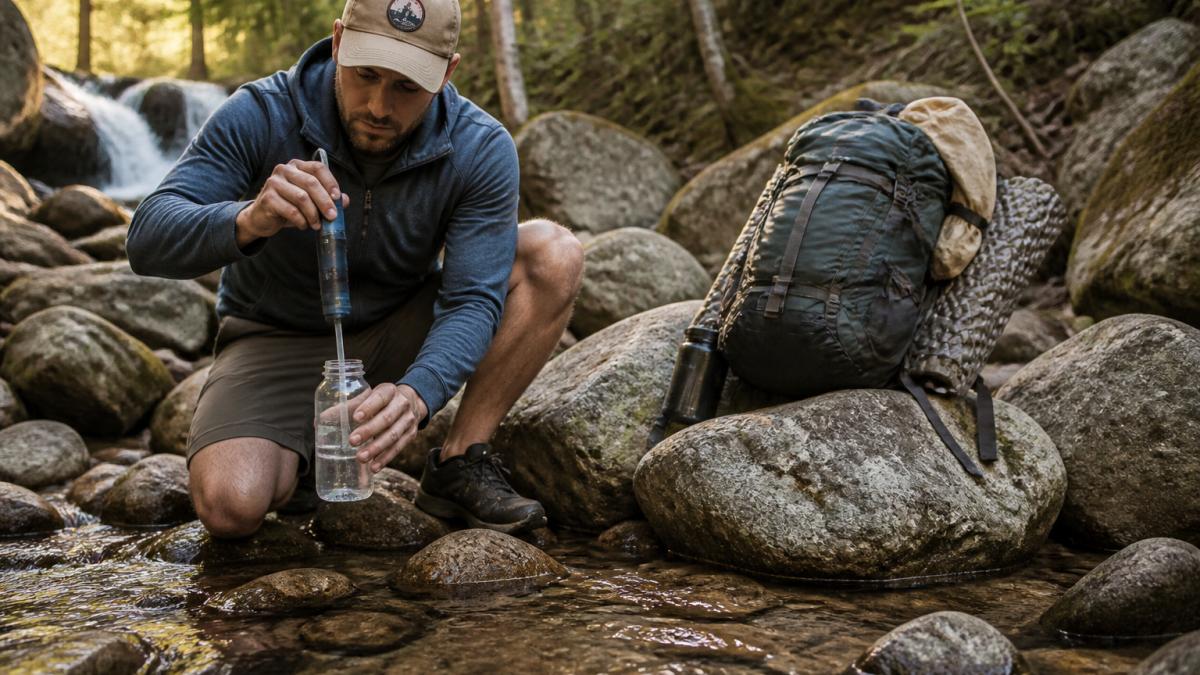
The ultralight crowd will tell you every gram counts, and they're not wrong on long thru-hikes. But ounces saved on a filter that clogs or breaks mid-trip cost you far more than the weight you trimmed. For weekend and section hikers, a few extra ounces for a faster, more durable design is usually the better bargain.
A practical way to think about it: weigh the filter, then weigh the effort of cleaning it. A filter that needs frequent backflushing adds time and hassle at every water stop. That hidden cost rarely shows up in a spec sheet.
Water Filter vs Water Purifier: Which One Belongs in Your Pack
A water filter removes bacteria and protozoa, while a water purifier also neutralizes viruses. For most backcountry water in North America, a filter is enough. A purifier matters when you're drawing from sources with higher viral risk or traveling internationally.
The distinction trips up a lot of buyers. Filters rely on physical pores small enough to trap pathogens. Purifiers add a chemical, UV, or other treatment step to handle viruses that are too small for standard filter pores. Neither approach removes dissolved chemicals or heavy metals unless the product specifically says so.
- Choose a filter for typical mountain streams, lakes, and taps in developed areas.
- Choose a purifier for questionable sources, international travel, or when viral risk is a real concern.
- Carry both functions if you want one system that covers all scenarios.
Backpacking Water Filter Lifespan: When to Replace Your Filter
Backpacking water filter lifespan depends on the cartridge's rated capacity and how dirty your water sources are. Most filters are rated for a set number of liters, and that rating assumes reasonably clear water. Muddy or silty sources shorten life fast.
Replace your filter when flow slows dramatically after cleaning, when the rated liter capacity is reached, or when the manufacturer's replacement interval passes. A filter that's been frozen can also be compromised, since ice can crack the internal pores and let contaminants through.
Store your filter properly between trips and it will last closer to its rated capacity. Let it dry fully with the caps off, and never store it sealed and damp. A little care at the end of each trip adds seasons of use.
Pros and Cons of Each Lightweight Water Filtration System Type
Each lightweight water filtration system type has honest strengths and real drawbacks. Here's the breakdown we'd give a friend before they buy:
- Squeeze filters: Light and packable, but flow slows as the cartridge loads up and the soft bottles can wear out.
- Pump filters: Fast and reliable for groups, but heavier and more parts to break or lose.
- Gravity filters: Great for camp water supply and low effort, but slow to fill and bulky to pack.
- Straw filters: The lightest backup option, but slow and impractical for filling bottles or cooking water.
- UV purifiers: Fast and effective against viruses, but useless without charged batteries and cloudy water reduces effectiveness.
The pattern is consistent. The lighter and simpler the system, the more you trade in speed or capacity. The heavier systems buy you flow and group-friendly output. Pick based on how you actually travel, not on the spec sheet that looks best.
Cleaning and Storing Your Filter Between Trips
Cleaning and storing your filter correctly is the difference between a tool that lasts seasons and one that fails when you need it. Backflush or follow the manufacturer's cleaning method after each trip, then let everything air-dry completely before storage.
A common mistake is storing a filter wet and sealed. That traps moisture and encourages mold and bacteria growth inside the cartridge. Another is skipping the backflush after a trip through silty water, which lets sediment harden and choke the flow.
- Backflush or clean per the manufacturer's instructions after every trip.
- Air-dry the filter and hoses fully with caps removed.
- Store in a dry, ventilated spot, never frozen.
- Check seals and O-rings before your next trip.
Which Lightweight Water Filtration System Should You Pick?
The right lightweight water filtration system for you comes down to trip style. Solo ultralight hikers should lean toward a squeeze filter. Groups and basecamp users get more value from a gravity or pump system. Preppers building a home or vehicle kit should keep a straw filter as a compact backup and a larger gravity system for family use.
We stock gear for both the trail and the emergency kit, and we aim to help you match a filter to your actual needs. Weigh your trips honestly, then choose the system that keeps water flowing when it matters.
Frequently Asked Questions
What is the best lightweight water filter for backpacking in 2026?
There is no single winner because the best pick depends on how you hike. Squeeze filters win on weight and packability for solo trips, gravity systems suit groups filtering several liters at camp, and pump filters make sense when you need to fill a bottle fast from shallow or silty sources. Compare rated pore size, ounces per liter treated, and replacement cost before buying.
How much should a lightweight backpacking water filter weigh?
Most lightweight backpacking filters land between roughly 2 and 8 ounces, and gravity setups climb higher once you count the bag and tubing. For solo trips, a filter under 4 ounces is easy to justify. For a group, a heavier gravity system often beats three people each carrying their own squeeze filter. Weigh the whole kit, not just the cartridge: hoses, bags, and adapters add up and change what your base weight actually looks like.
What is the difference between a water filter and a water purifier?
A filter physically strains out bacteria, protozoa, and sediment down to a rated pore size, usually 0.1 to 0.2 microns. A purifier goes further and neutralizes viruses, which are too small for most filters to catch, using chemicals, UV light, or a combination. In backcountry areas where human waste is present, a purifier is the safer choice. Read the label carefully, because many products sold as filters do not remove viruses at all.
How many gallons can a portable water filter treat before replacement?
Capacity varies widely by design. Squeeze and hollow-fiber cartridges commonly rate from around 100 liters up to 1,000 liters or more, while some gravity and pump filters list higher totals. Track how many liters you treat per trip and log it, because clogging and slow flow are the real signals that a cartridge is near the end. Always follow the manufacturer's rated capacity and replace the cartridge before flow drops to a frustrating trickle.
The challenge with lightweight water filtration isn't finding a filter. It's finding the one that fits how you actually travel, so it's still working on trip ten. Survive Nation carries reliable outdoor and preparedness gear with a fast, user-friendly shopping experience and a customer-service team that helps you choose right the first time. Browse our selection, compare the options, and get the gear that keeps you ready. Shop now with Survive Nation and build a kit you can trust.