 blog
blog
Best Sleeping Bags for Camping: 2026 Buyer's Guide
Table of Contents
- Best Sleeping Bags for Camping: What Matters Most
- Down vs Synthetic Sleeping Bags: Which Insulation Wins?
- Sleeping Bag Temperature Ratings Explained
- Matching Your Sleeping Bag to Your Sleeping Pad
- How to Store a Sleeping Bag for Maximum Loft
- Body Type and Fit: Finding the Right Sleeping Bag Shape
- Field Repairs and Maintenance: Extending the Life of Your Bag
- Conclusion: Your Next Camping Sleeping Bag
- Frequently Asked Questions
Last Updated: September 9, 2026
Best Sleeping Bags for Camping: What Matters Most
A sleeping bag is the difference between waking up rested and staring at the tent ceiling at 3 a.m. The best sleeping bags for camping balance warmth, weight, and packability. Car campers can tolerate extra bulk, while backpackers need every ounce to count. We offer a curated selection of essential supplies, including sleeping bags, food storage, and outdoor lighting, all at affordable prices to ensure accessibility for every adventurer. Whether you are camping in the wilderness or building a long-term emergency kit, we are committed to delivering the reliable goods you need to succeed. Choosing the right one comes down to matching its specs to your specific use case, not just picking the warmest option on the shelf.
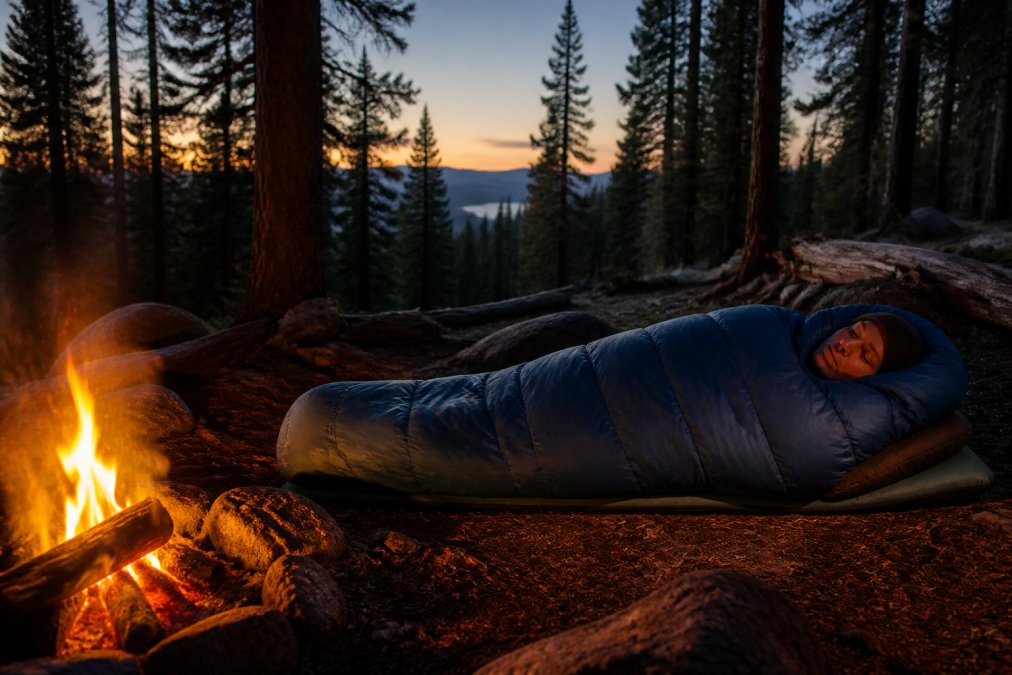
Most buyers overestimate the temperature rating they need. A bag rated for extreme cold is heavy, bulky, and miserable in mild weather. Identify the coldest conditions you realistically expect, then buy for that number.
Down vs Synthetic Sleeping Bags: Which Insulation Wins?
The insulation debate comes down to a trade-off between compressibility and resilience. Down insulation offers the best weight-to-warmth ratio, packing smaller than any alternative. High-quality down with a strong fill power (measured in cubic inches per ounce) traps heat efficiently and lasts for decades with proper care. Many manufacturers now treat down with a DWR coating to create hydrophobic down, which resists moisture far better than untreated versions.
Synthetic insulation is the pragmatic choice for wet conditions. It retains most of its loft when damp, dries quickly, and costs less. The trade-off is bulk: synthetic bags pack larger and weigh more for the same warmth. For a car camping quiver or an emergency kit bag that may sit unused for months, synthetic insulation is often the smarter pick.
| Insulation Type | Packed Size | Wet Performance | Best For |
|---|---|---|---|
| Down | Smallest | Poor unless treated | Backpacking, cold, dry climates |
| Synthetic | Larger | Retains warmth when wet | Car camping, wet weather, budget |
Sleeping Bag Temperature Ratings Explained
Understanding sleeping bag temperature ratings explained properly starts with the EN 13537 standard, now updated as ISO 23537. This testing protocol assigns three numbers: comfort limit, lower limit, and extreme rating (iso.org). The comfort limit is the temperature at which an average woman sleeps comfortably. The lower limit applies to an average man. The extreme rating is a survival figure, not a comfort figure, and it carries a risk of hypothermia.
Those numbers come from a specific laboratory scenario: a mannequin dressed in one base layer and one pair of socks, lying on a pad with an R-value of 4.8, inside a climate-controlled chamber (en.wikipedia.org). No tent, no wind, no humidity, no tossing and turning. Real conditions are rarely that forgiving. Most practitioners find a bag's lower limit is roughly 10°F to 15°F warmer than what a typical sleeper will actually feel comfortable in, especially if you sleep cold, use a lower-R-value pad, or camp in a breezy spot.
Here is how to translate those numbers into a buying decision:
- Comfort rating: This is your target if you sleep cold, are a woman, or are a side-sleeper who creates more dead air space. Buy a bag whose comfort rating matches the coldest night you expect.
- Lower limit: This is the survival edge for an average male sleeper. If you buy a bag based on this number, plan to wear a warm base layer, use a high-R-value pad, and add a liner on the coldest nights.
- Extreme rating: This is not a comfort figure. It is a hypothermia-risk warning. Never plan a trip around this number.
A "three-season" bag typically offers a lower limit around 20°F to 30°F, sufficient for spring through fall camping. A winter bag drops below 0°F. Most recreational campers overbuy warmth and then complain about the weight. Match the rating to your season, and remember that these standards assume you are wearing a base layer and using a sleeping pad.
The difference between a 20°F bag and a 0°F bag is often just a few ounces of insulation, but the real-world warmth gap can be significant. Down bags with higher fill power (800 or above) achieve the same warmth at lower weight than 600-fill down, which is why ultralight backpackers pay a premium. Synthetic bags degrade more predictably with compression and age: one stuffed tightly for a season may perform closer to 10°F warmer than its rating suggests, while a well-cared-for down bag will hold its rating for years.
Finally, check whether the bag you are considering is actually ISO-rated. Many budget bags list a single "temperature rating" that is not derived from the standardized test. Those numbers are often optimistic marketing claims. If a bag does not explicitly state that it meets EN 13537 or ISO 23537, assume the rating is a rough guideline at best, and size down by 10°F to 15°F for safety.
Matching Your Sleeping Bag to Your Sleeping Pad
Your sleeping pad determines whether your bag's rating means anything. A sleeping bag compresses beneath your body weight, destroying its loft and insulating value, and the ground conducts heat away rapidly. A bag rated to 20°F is useless on a pad with an R-value below 2 in cold weather.
Look for a pad with an R-value of 3 or higher for three-season use, and 5 or higher for winter camping (rei.com). Many modern bags include a pad sleeve or loops on the underside that strap the bag to the pad, preventing you from rolling off during the night. If your bag lacks these, a simple strap system works. Your sleeping pad integration is as important as the bag's fill, and ignoring it is the most common cause of cold nights in otherwise adequate gear.
How to Store a Sleeping Bag for Maximum Loft
Compression kills sleeping bags over time. Storing a bag stuffed tight in its compression sack crushes the insulation, reducing loft and thermal efficiency permanently. The correct method is to store the bag loose, either hung in a large cotton storage sack or laid flat in a breathable space.
When you return from a trip, air the bag out completely before storage. Moisture trapped inside promotes mildew and degrades down. For down bags, a few days of airing in a dry, shaded spot restores loft. Synthetic bags are more forgiving but still benefit from the same routine. A stuff sack is for transport only. Use a large breathable storage sack at home, and your bag will retain its warmth for many seasons.
Body Type and Fit: Finding the Right Sleeping Bag Shape
Sleeping bag shapes fall into three categories: mummy, rectangular, and semi-rectangular. Mummy bags taper sharply at the feet and hug the body, maximizing heat retention and minimizing weight. They are the standard for backpacking and cold weather camping. Rectangular bags offer room to move and are ideal for car camping or warm-weather trips, but they waste heat on empty space. Semi-rectangular bags split the difference, providing extra shoulder girth and hip girth without the full bulk of a rectangle.
The real question is not just which shape you prefer, it is how that shape interacts with your specific body.
Side-sleepers. A mummy bag with a tight hip girth will feel restrictive and can cause you to roll onto your back involuntarily. Look for a hip girth of at least 60 inches, or choose a semi-rectangular cut that gives your hips and knees room to bend. Some manufacturers offer "women's-specific" cuts that are narrower at the shoulders and wider at the hips, which suits many side-sleeping body types. If a mummy bag feels like a straitjacket, do not assume you need a full rectangle, a semi-rectangular bag with a generous hip girth often solves the problem without the weight penalty.
Broader shoulders and chest. Standard mummy bags often measure 58 to 62 inches around the shoulders, which is fine for a slim frame but restrictive for a broader build. Check the shoulder girth spec before buying. If it is under 60 inches and you have a wide chest or shoulders, you will feel compressed. Some brands offer "wide" versions with shoulder girths up to 65 inches. A semi-rectangular bag with a shoulder girth above 64 inches gives you the warmth efficiency of a taper without the squeeze.
Taller campers. A tall person needs a bag long enough to avoid compressing the footbox insulation, but not one that creates a huge dead air space above the head. Most manufacturers offer regular (up to 6 feet) and long (up to 6 feet 6 inches) sizes. If you are over 6 feet tall, always size up to long, a too-short bag will compress the insulation at your feet and create a cold spot. For those over 6 feet 4 inches, check the actual length spec; some "long" bags are barely 6 feet 6 inches and will still be tight.
Petite campers. A petite camper in an oversized bag will struggle to heat all the dead air space, leading to cold nights even in a bag rated for the conditions. Women's-specific bags often address this with a shorter length, narrower shoulder girth, and extra insulation in the footbox and torso. If you are under 5 feet 4 inches, look for a bag with a length around 66 inches rather than the standard 72 inches, the extra 6 inches of empty space is wasted warmth.
Hip and stomach sleepers. If you sleep on your stomach, you need a bag that allows some leg movement. A tight mummy bag will force your legs into an unnatural straight position. A semi-rectangular bag with a bit of extra room in the lower leg area is often the best compromise.
Here is a quick fit checklist to use before you buy:
- Measure your shoulder girth at the widest point and compare it to the bag's shoulder spec.
- Measure your hip girth and compare it to the bag's hip spec, especially if you are a side-sleeper.
- Check the bag's length against your height, leaving at least 6 inches of clearance beyond your head.
- If you are between sizes, size up for length but pay attention to the girth specs, a longer bag is not necessarily a wider bag.
- Try the bag in-store if possible. Zip it up and simulate your sleep position. If you cannot move your hips or shoulders enough to shift position, it is too tight.
Field Repairs and Maintenance: Extending the Life of Your Bag
A snagged zipper is the most common failure point. Carry a small tube of zipper lubricant, which resolves most jams without tools. For torn shell fabric, a patch kit with ripstop nylon and adhesive works on both down and synthetic bags.
A tear in the baffle construction of a down bag can allow feathers to escape. Seal small holes immediately with tape designed for gear repair, then perform a permanent patch at home. Wash your bag once per season, or more often if it sees heavy use, body oils and dirt degrade insulation over time. A clean bag lofts better and lasts longer.
Conclusion: Your Next Camping Sleeping Bag
Choosing the right sleeping bag for camping is a matter of honest self-assessment: where you camp, what season, and how you sleep. The best sleeping bags for camping are not the most expensive ones, but the ones that match your body, your pad, and your expected conditions. Whether you are a weekend car camper or a backpacker counting grams, the right bag makes every trip more comfortable. Survive Nation is your premier destination for high-quality outdoor and emergency preparedness gear designed to keep you ready for any situation. We offer a curated selection of essential supplies, including sleeping bags, food storage, and outdoor lighting, all at affordable prices to ensure accessibility for every adventurer. Our mission is to provide a fast, user-friendly, and customer-service-oriented shopping experience backed by years of industry expertise. Whether you are camping in the wilderness or building a long-term emergency kit, we are committed to delivering the reliable goods you need to succeed. Shop Now
Frequently Asked Questions
How do I choose the right temperature rating for a sleeping bag?
Match the bag's comfort limit to the coldest night you expect, not the average. Women generally sleep colder than men, so if you sleep cold, select a bag rated 10-15°F lower than the forecast. Look for the ISO 23537 standard on the label, which provides comfort, lower, and extreme ratings. For summer camping, a +35°F bag works; for three-season use, a +20°F bag is versatile. For cold weather camping, prioritize a 0°F or lower rated bag.
What is the difference between down and synthetic sleeping bags?
Down insulation offers the best warmth-to-weight ratio and packs down smaller, but it loses its loft and insulating ability when wet. Synthetic insulation is heavier and bulkier, but it continues to provide warmth even when damp, dries faster, and is more affordable. For backpacking and dry climates, down is often preferred. For car camping, wet conditions, or budget-conscious buyers, synthetic is a reliable choice. Hydrophobic down treatments now address some moisture concerns, but they are not a substitute for proper care.
What is the best affordable sleeping bag for camping?
The best budget sleeping bag focuses on the features you need without paying for extreme ultralight materials. Look for a synthetic-filled, rectangular or semi-rectangular bag with a comfort rating around 40°F for summer. Prioritize a durable shell fabric like ripstop polyester, a quality zipper that doesn't snag, and a draft tube to keep warmth in. These models are easy to care for and often cost less because they use heavier materials, making them perfect for car camping and emergency kits.
How should I store my sleeping bag to keep it lofty?
Never store your sleeping bag compressed in its stuff sack. This permanently damages the insulation and reduces its warmth. Instead, store it loosely in a large cotton or mesh storage sack, and hang it in a closet if space allows. This lets the insulation fully expand and maintain its loft. Before storage, ensure the bag is completely dry to prevent mildew. For long-term storage, avoid plastic bins which can trap moisture.