 How-to
7 Reasons Emergency Sanitation Supplies Are Essential
Last Updated: November 14, 2026
Quick Summary
Emergency sanitation supplies are essential because when taps run dry and toilets stop flushing, human waste becomes a public health problem within hours. They break the fecal-oral chain at the source by containing waste and enabling handwashing, protecting your household from cholera and salmonella. FEMA recommends preparing to manage on your own for at least three days, and many experts suggest two weeks.
- Build your kit in a sturdy plastic bin with a lid so supplies stay together, dry, and easy to find in the dark.
- Plan on two bags per person per day and one twist tie per bag when sizing your supplies.
- Store one gallon of water per person per day for drinking and basic hygiene, in addition to your drinking supply.
- Bury outdoor waste 6 to 8 inches deep and at least 200 feet from water sources, wells, and drainage paths.
- Check expiration dates on hand sanitizer, gel powder, and disinfectant twice a year and restock to the 14-day level before storm season.
Table of Contents
- When the Water Stops: Why Emergency Sanitation Supplies Matter
- How Fast Disease Spreads Without Sanitation
- The Health Risks of Poor Sanitation: Cholera, Salmonella, and Cross-Contamination
- Building Your Emergency Sanitation Kit: What Goes In
- Your Emergency Hygiene Kit List: Handwashing, Disinfectant, and Personal Care
- The Emergency Poop Kit for Adults: Dignity and Privacy When It Counts
- How to Store Water for Emergency at Home: Quantity, Containers, and Rotation
- Safe Disposal by Location: Where to Put Human Waste When the Sewer Fails
- Stocking Up: How Much to Buy and How to Rotate Sanitation Supplies
- Frequently Asked Questions
When the Water Stops: Why Emergency Sanitation Supplies Matter
Most households plan for food and water. Far fewer plan for the toilet. That gap is the biggest blind spot in family preparedness.
Emergency sanitation is the set of supplies and systems that let a household manage human waste, handwashing, and personal hygiene when plumbing, water service, or sewer service is unavailable.
FEMA's guidance on disaster supply kits recommends households prepare to manage on their own for at least three days, and many preparedness experts suggest two weeks. Ready.gov emergency supply kit guidance
Below, we walk through the health risks, the kit contents, the water math, and the disposal rules.
How Fast Disease Spreads Without Sanitation
Disease spreads fast without sanitation because fecal-oral disease transmission needs only one contaminated hand, water source, or surface.
The chain is simple:
- Waste lands where it shouldn't
- Flies, hands, or runoff carry pathogens to food or water
- Someone ingests the bacteria
Cholera and salmonella are the classic threats. Both spread through contaminated water and poor handwashing. Both cause severe diarrhea, which then creates more waste and more contamination.
That is why emergency sanitation supplies are essential. They break the chain at the source.
The Health Risks of Poor Sanitation: Cholera, Salmonella, and Cross-Contamination
The health risks of poor sanitation go beyond a bad smell.
Cross-contamination is the quiet danger. It happens when hands touch waste and then touch food, a water bottle, or a doorknob.
Watch out: the most common mistake is storing waste bags next to food or water supplies.
Public health agencies treat safe waste handling as a core part of disaster response.
Building Your Emergency Sanitation Kit: What Goes In
An emergency sanitation kit holds the supplies needed to contain waste, clean hands, and protect surfaces for at least three to five days, with a stretch goal of two weeks. Build it in a sturdy plastic bin with a lid so everything stays together, dry, and easy to find in the dark.
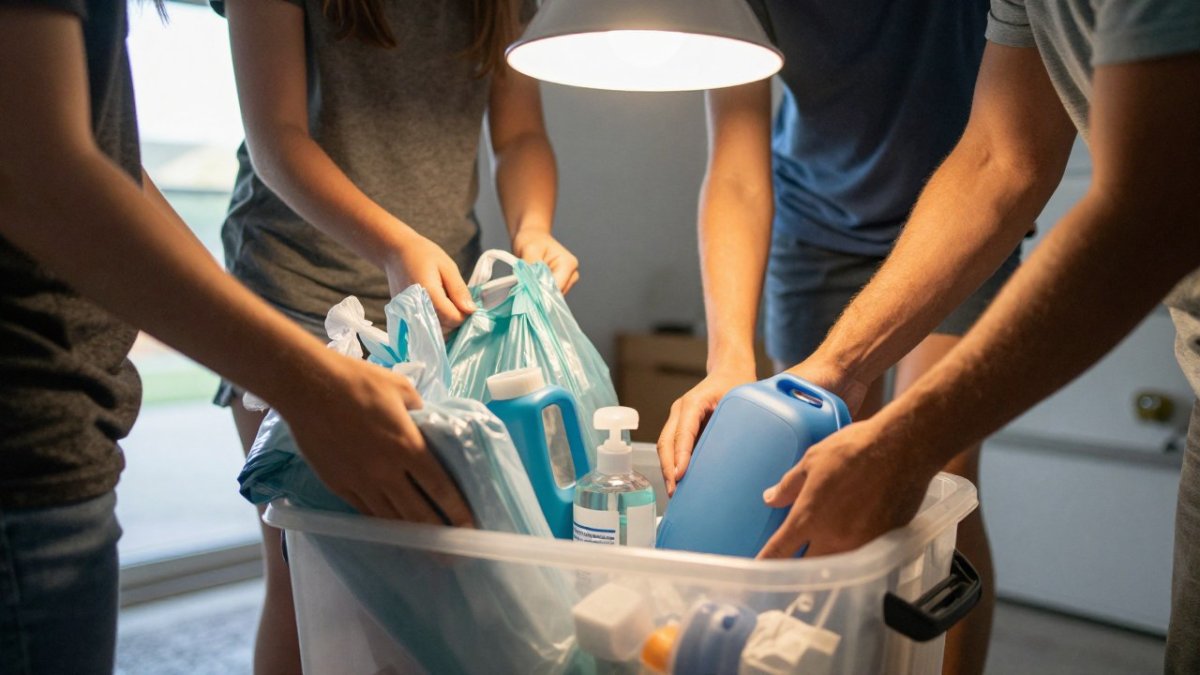
Core kit contents
| Supply | 3-day baseline (4 people) | 14-day stretch (4 people) | Purpose |
|---|---|---|---|
| Heavy-duty plastic bags | 24 | 112 | Line waste containers |
| Twist ties | 24 | 112 | Seal bags before disposal |
| Portable toilet or bucket with lid | 1 | 1 | Waste containment |
| Disinfectant | 1 bottle | 2 bottles | Clean surfaces |
| Hand sanitizer (60%+ alcohol) | 2 bottles | 4 bottles | Hand hygiene |
| Nitrile gloves | 1 box | 2 boxes | Safe handling |
| Toilet paper | 4 rolls | 14 rolls | Basic hygiene |
| Absorbent material or gel powder | 1 bag | 3 bags | Control moisture and odor |
| Bar soap and basin | 1 set | 1 set | Handwashing without plumbing |
How to size quantities by household and duration
Use a simple per-person-per-day formula, then round up:
- Bags: 2 per person per day (one per use, plus a spare for double-bagging)
- Twist ties: 1 per bag
- Toilet paper: 1 roll per person per week
A family of four planning for 14 days needs roughly 112 bags, 112 ties, 14 rolls of toilet paper, and 56 gallons of water for drinking and basic hygiene combined. Write the math on the bin lid so you can restock without recalculating.
Special needs and accessibility items
A kit that only works for healthy adults will fail the household members who need it most. Add:
- Infants: diapers, wipes, and a sealed diaper pail or bags
- Older adults and people with disabilities: a toilet seat riser or commode chair, grab bars if space allows, and extra gloves for caregivers
- Menstruating people: menstrual products and a sealed bag for disposal
Storage and rotation checklist
Supplies degrade and get borrowed. A twice-a-year check keeps the kit usable:
- Store the bin in a cool, dry place away from food and water storage
- Check expiration dates on hand sanitizer, gel powder, and disinfectant
- Replace anything opened or used during the year
Watch out: the most common failure is a kit that was raided for a camping trip and never restocked. Label the bin "emergency only" and keep a separate camping set.
If you want a ready-made setup, you can shop portable camping toilets built for off-grid use and emergencies.
Sanitation supplies needed for a 4-person household: 3-day vs 14-day
Your Emergency Hygiene Kit List: Handwashing, Disinfectant, and Personal Care
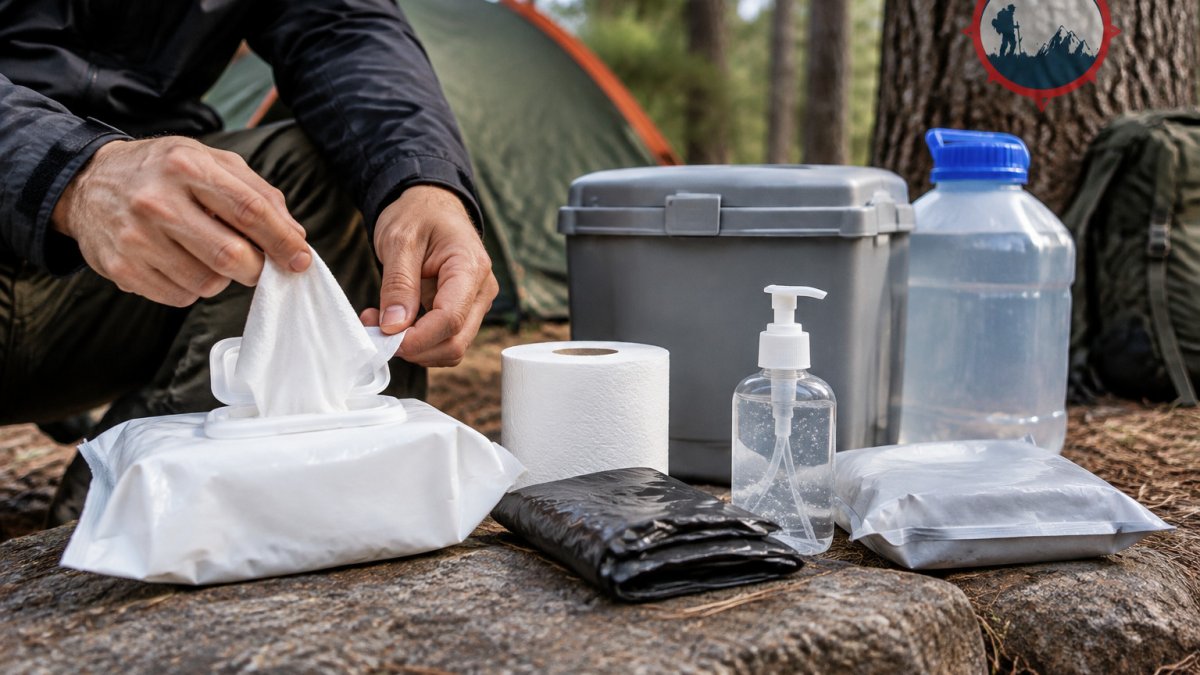
An emergency hygiene kit list should cover three jobs: clean hands, clean surfaces, and personal care. Handwashing is the single most effective disease prevention step you can take.
Stock these:
- Hand sanitizer with at least 60% alcohol
- Bar soap and a small basin for handwashing
- Disinfectant wipes or spray
- Toothbrushes, toothpaste, and soap for bathing
For bathing when plumbing is down, shop portable camping shower bags that heat in the sun.
The Emergency Poop Kit for Adults: Dignity and Privacy When It Counts
An emergency poop kit for adults is about dignity as much as hygiene.
Why does this matter? Because people avoid using inadequate setups. They hold it, get uncomfortable, and sometimes get sick. A setup that feels private and clean gets used properly.
A complete kit includes:
- A portable toilet with a stable seat
- A pop-up privacy tent
- Gel bags that solidify waste and control odor
- Toilet paper and hand sanitizer within reach
You can shop a camping toilet with a pop-up privacy tent and gel bags as a single bundle.
How to Store Water for Emergency at Home: Quantity, Containers, and Rotation
How to store water for emergency at home starts with the math: plan on one gallon per person per day for drinking and basic hygiene.
Store water in food-grade containers, keep them out of direct sunlight, and rotate the supply regularly. Label each container with the date you filled it.
A simple rotation system:
- Fill containers on a set date each spring and fall
- Mark the fill date on each one
- Use and refill the oldest containers first
- Never store water near waste bags or chemicals
To see containers built for this job, shop emergency water storage containers.
Safe Disposal by Location: Where to Put Human Waste When the Sewer Fails
Safe disposal depends on three variables: whether the sewer line is intact, whether water service is on, and whether you are sheltering in place or evacuating. Most guides treat "the sewer fails" as one situation. It is not. The right procedure changes with each scenario, and getting it wrong can contaminate your home, your yard, or a shared water source.
Work through this sequence before you need it, so the decision is already made when stress is high.
Step 1: Confirm what actually failed
- Water off, sewer intact: the toilet still drains when you pour water into the bowl. You can flush waste in small amounts using a bucket of stored water.
- Sewer backup or blockage: water or waste rises in drains. Stop flushing immediately. Switch to a lined portable toilet.
- Flood or standing water: assume the sewer is compromised. Do not flush, do not use drains, and keep waste bags above the flood line.
- Evacuation: use sealed gel bags and carry them out with you; do not leave open waste in a vehicle or shelter.
Watch out: if you are unsure whether the sewer is intact, treat it as failed. A single flush into a blocked line can back up into the home.
Step 2: Contain waste at the source
Line a portable toilet or bucket with a heavy-duty bag, add absorbent material or gel powder, and seal each bag with a twist tie after use. Keep the container lidded between uses and store sealed bags away from food, water, and sleeping areas. Double-bagging is reasonable when waste is liquid or when the bag will be stored for more than a day.
Step 3: Dispose by scenario
- Sewer intact, water off: flush small amounts (roughly one bucket pour per flush), then refill the bowl to restore the trap seal. Do not flush bags, wipes, or absorbent material.
- Sewer down, sheltering in place: seal bags, store them in a lidded bin outdoors or in a garage away from living space, and hold them until service returns or collection is available.
- Sewer down, trash collection active: double-bag, seal, and place in regular trash only if your local health department or waste hauler permits it. Many jurisdictions ask that human waste be kept separate from regular refuse during a declared emergency.
- Outdoors: bury waste in a shallow hole 6 to 8 inches deep, at least 200 feet from water sources, wells, and drainage paths, and well away from camp or shelter areas. Pack out bags where burial is not allowed.
Step 4: Check local rules before you dump
Disposal rules are set locally and can change during a declared emergency. Before putting sealed human waste in curbside trash, check your city or county health department guidance and any emergency notices from your waste hauler.
A practical pattern many households use: keep one lidded waste bin dedicated to sealed bags, label it clearly, and stage it away from the kitchen and water storage. That single habit prevents most cross-contamination mistakes.
Stocking Up: How Much to Buy and How to Rotate Sanitation Supplies
Buy for duration, not for a feeling of safety. Match quantities to your household size and the number of days you plan to cover.
Use this formula:
- Bags: 2 per person per day
- Twist ties: 1 per bag
- Hand sanitizer: 1 bottle per 2 people per week
- Toilet paper: 1 roll per person per week
Rotation keeps supplies usable.
If you are still building your broader plan, our complete emergency kit essentials guide shows how sanitation fits alongside food, water, and lighting.
When the taps stop and the toilet won't flush, your family's health depends on what you stocked ahead of time.
Frequently Asked Questions
Why is sanitation essential during an emergency?
When water and sewer service are disrupted, human waste can contaminate water sources and spread fecal-oral diseases like cholera and salmonella. Emergency sanitation supplies, including portable toilets, heavy-duty bags, and disinfectant, create a barrier between waste and your family. Preparedness guidance generally recommends keeping a multi-day supply of sanitation items on hand before an evacuation or sheltering-in-place order.
What emergency sanitation supplies should you keep at home?
A basic emergency sanitation kit should include a portable toilet or bucket with a lid, heavy-duty plastic bags and twist ties, disinfectant, hand sanitizer, toilet paper, and gloves. Add a dedicated emergency poop kit for adults with privacy items and waste bags. Pair this with stored clean water for handwashing and a written disposal plan so every household member knows what to do when the toilet stops working.
How much water should you store for emergency hygiene?
Plan for at least one gallon per person per day for drinking and basic hygiene, with extra for handwashing and cleaning. A four-person household sheltering in place for five days needs roughly 20 gallons minimum. Store water in food-grade containers, rotate it every six months, and keep a separate supply for sanitation tasks so you do not dip into drinking water to wash hands or rinse waste containers.
How often should you check and replace emergency sanitation supplies?
Review your emergency sanitation kit every six months. Check expiration dates on hand sanitizer, disinfectant wipes, and sealed water. Replace worn or punctured bags, confirm twist ties and gloves are still sealed, and verify that portable toilet chemicals have not leaked. Rotating supplies on the same schedule as your smoke alarm checks keeps the kit ready without last-minute scrambling.