 how-to
How to Keep Food Cool: A Complete 2026 Guide
Table of Contents
- How to Keep Food Cool: The Basics of Temperature Control
- How to Keep Food Cold in a Cooler
- How Long Does Food Stay Cold in a Cooler?
- How to Keep Food Cold in a Car
- How to Keep Food Cold During a Power Outage
- Keep Food Cool Without a Cooler: Backup Methods
- Common Mistakes That Let Food Get Warm
- Conclusion
- Frequently Asked Questions
Last Updated: October 13, 2026
How to Keep Food Cool: The Basics of Temperature Control
Knowing how to keep food cool comes down to one number: 40°F. The U.S. Department of Agriculture draws a hard line there, and food held above it for more than two hours enters the danger zone, where bacteria multiply fast enough to make people sick. This guide covers coolers, cars, power outages, and backup methods.
Why 40°F Is the Number That Matters
The danger zone is 40°F to 140°F. Bacteria there can double in as little as 20 minutes.
That is why the two-hour rule exists: cold food left above 40°F for more than two hours should be thrown out. Above 90°F, that window shrinks to one hour.
The USDA guidance on the food danger zone is blunt about the outcome: bacteria that cause food poisoning grow fastest in this range and often leave no smell or taste behind.
So keep food at or below 40°F from fridge to plate.
How to Keep Food Cold in a Cooler
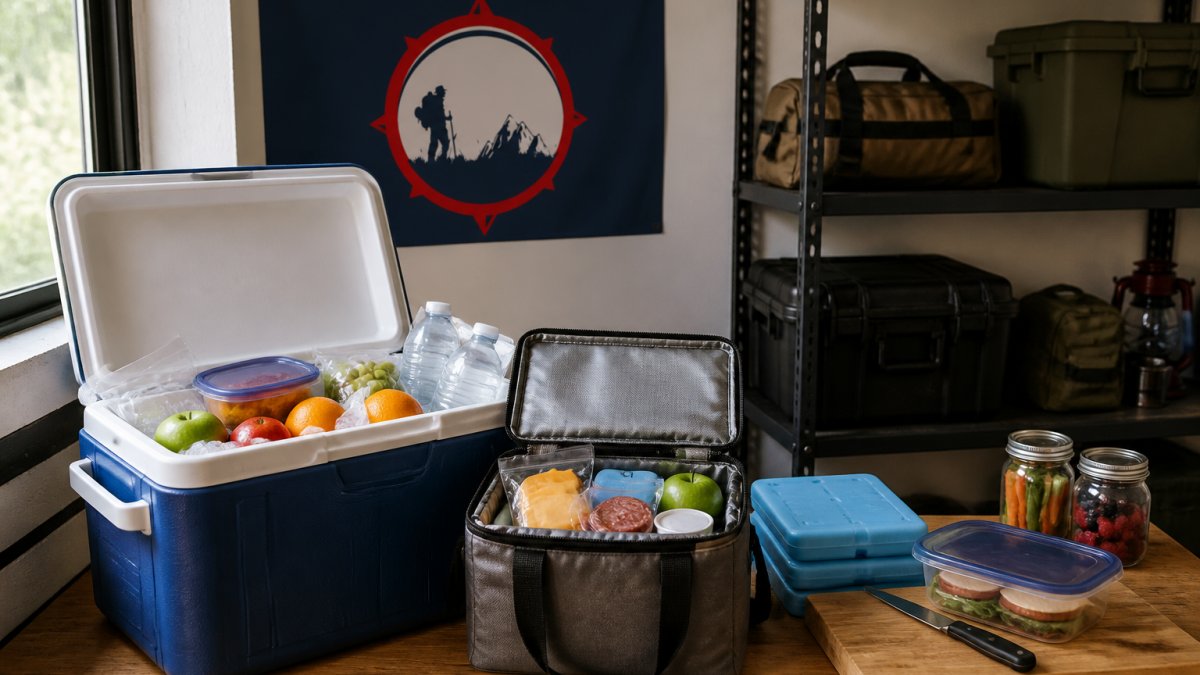
Learning how to keep food cold in a cooler is mostly about what happens before the lid closes. Pre-chilled food and a pre-chilled cooler hold cold far longer than warm food in a warm box.
Pre-Chill Everything Before It Goes In
Start with the cooler: add a bag of ice the night before, let it sit, then dump the meltwater before packing. A cold box does not spend its first hour cooling its own walls.
Then chill the food. Refrigerate or freeze everything ahead of time; frozen meat and water bottles double as ice blocks.
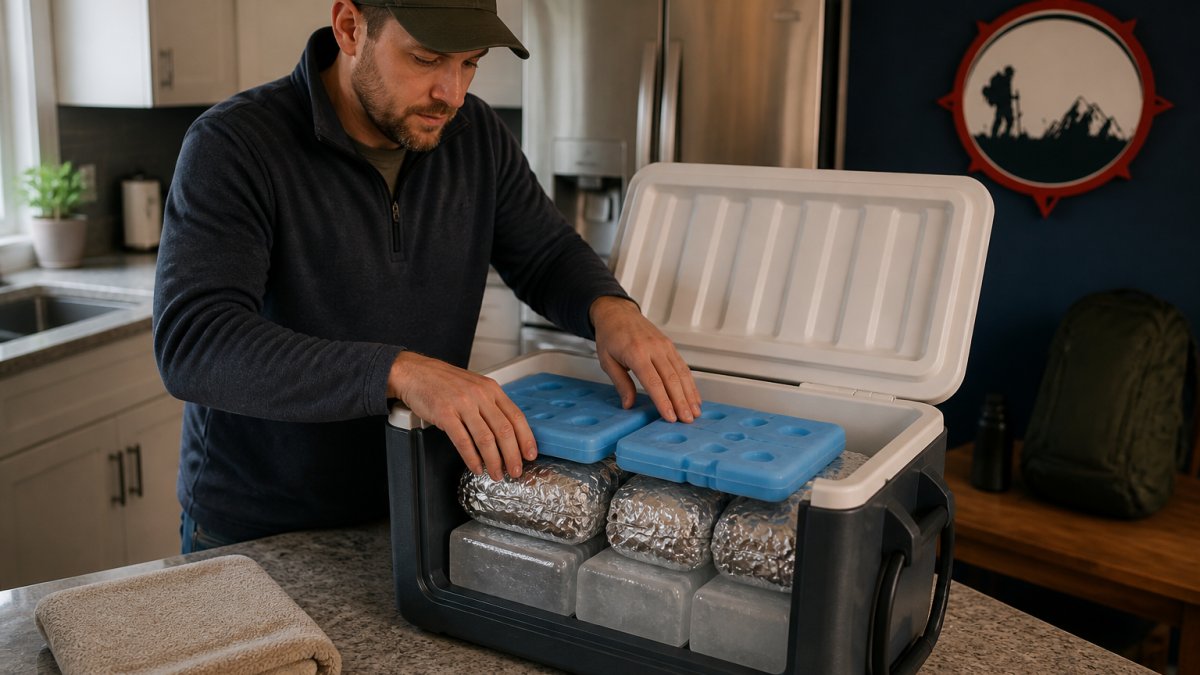
Packing Order: Bottom, Middle, Top
Pack in layers, heaviest and coldest at the bottom:
- Bottom: ice blocks, frozen water bottles, or bags of ice cubes
- Middle: the food itself, in sealed containers
- Top: a final layer of reusable ice packs
- Gaps: fill empty space with a towel or newspaper
Air is the enemy. A full cooler stays cold longer than a half-empty one.
How Long Does Food Stay Cold in a Cooler?
There is no single answer, because a cooler is a slow heat exchanger. How long it holds safe temperatures depends on how much cold you put in, how well the box resists heat, and how often you open it. A quality rotomolded cooler packed correctly holds food at or below 40°F for roughly 24 to 48 hours; a thin-walled picnic cooler with a loose lid may manage only a few hours.
The variables that decide it:
- Cooler quality: thick, gasketed insulation buys you time; a cheap lid gasket that never seals costs you hours
- Fill level: a full cooler beats a half-full one, because cold mass holds cold and air does not
- Opening frequency: every lid lift dumps the cold air that was sitting on top of your food
- Outside temperature: a hot car trunk is worst case; a shaded, air-conditioned cabin is best
The Number to Check Is the Food, Not the Air
A cooler can feel cold inside and still hold food above 40°F. Air temperature swings every time the lid opens; food temperature lags behind and tells the truth.
Log the food temperature when you pack and every couple of hours. At 40°F or below, you are fine. In the low 40s, add ice and cut the clock short. Above 40°F for more than two hours, one hour above 90°F, discard the food.
What to Do When Food Warms Above 40°F
If your reading crosses the threshold, act in this order:
- Add cold fast. Drop in fresh ice blocks or frozen water bottles and close the lid.
- Move the cooler out of the sun and into shade, an air-conditioned space, or the coolest spot you can find.
- Separate the risky items. Raw meat, poultry, seafood, dairy, cut produce, and cooked leftovers are the first to go. Whole uncut fruit, unopened shelf-stable drinks, and hard cheeses have more margin.
- Restart the clock only if the food was still at or below 40°F when you caught it. Once it has been above 40°F for the two-hour window, the clock has run out.
For a day trip, one layer of ice plus a pre-chilled cooler is plenty. For an overnight or weekend, pack it full, keep the lid shut, and check food temperature twice a day.
How to Keep Food Cold in a Car
The answer for how to keep food cold in a car is placement, not more ice.
Keep the cooler in the cabin, the footwell behind a seat or the floor where AC reaches it, never in direct sun through a window.
A few habits that help:
- Run the AC on the cooler, not just the passengers
- Crack a window if you stop briefly
- Park in shade whenever you can
- Cover the cooler with a blanket or reflective tarp
For longer road trips, a 12-volt cooler plugged into the car outlet holds steady cold without ice and removes the meltwater problem entirely.
How to Keep Food Cold During a Power Outage
How to keep food cold during a power outage comes down to one rule: keep the doors shut.
A refrigerator stays cold roughly four hours with the door closed. After that, move what you can into coolers packed with ice.
What to do, in order:
- Leave fridge and freezer doors closed
- Move dairy, meat, and leftovers into coolers with ice
- Group items tightly to trap cold air
- Add frozen water bottles as backup ice
- Check food with a thermometer before eating it
The FoodSafety.gov power outage food safety chart lists which foods to keep and which to toss after an outage. When in doubt, throw it out.
Keep Food Cool Without a Cooler: Backup Methods
When there is no cooler, insulation and shade do the work. Slow heat transfer with whatever you have on hand, and match the method to the situation, a wet towel that works for a two-hour picnic will not carry a barbecue through an afternoon. Here is how the common stand-ins compare.
Improvised Cold Storage, Compared
- Insulated grocery bag or soft-sided tote: line it with a towel, add ice packs or frozen water bottles, and it holds cold for roughly two to four hours. Best for short trips, lunch runs, and carrying a few items from the store.
- Plastic storage tote wrapped in a blanket or sleeping bag: a rigid tote with a lid, packed with ice and wrapped in insulation, can hold cold for several hours to most of a day. Best for parties and gatherings where you need volume rather than portability.
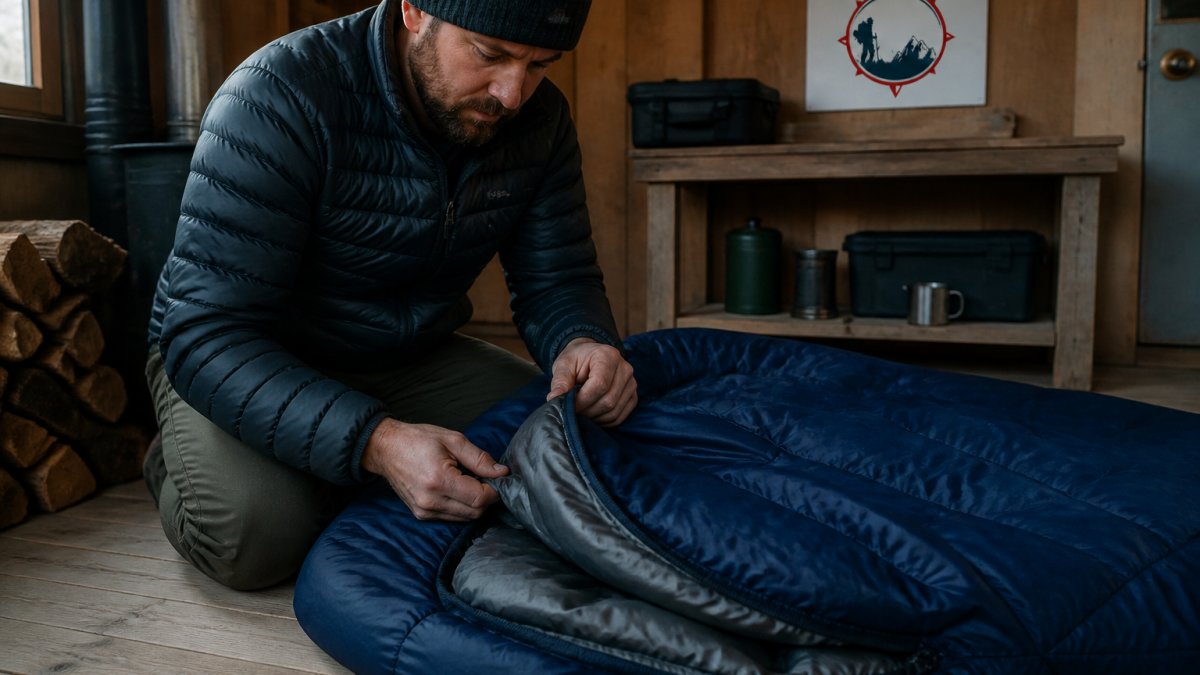
- Sleeping bag or moving blanket: zip food and ice inside and it becomes a makeshift cooler with real insulation value. Best for overnight car camping or a power outage when you need to keep a full load cold.
- Wet towel and evaporation: wrap a container in a soaked towel and keep it in moving air or shade. Evaporation pulls heat away, but the effect is modest and short-lived, think one to two hours, not a full afternoon. Best as a supplement, not a primary method.
- Shaded footwell or floor of a car: the coolest spot in a parked car is the shaded footwell, especially with the air conditioning running. Best for short errands and as a holding spot while you set up.
Match the Method to the Use Case
Picnics and short trips (under four hours). An insulated bag with two frozen water bottles and a towel is enough.
Road trips and car travel. The cabin, not the trunk, is your cooler.
Power outages and emergencies. A sleeping bag or moving blanket wrapped around a packed tote, plus frozen water bottles, can carry a full load through the first day.
The Rules That Apply to Every Method
- Pre-chill first. No improvised method can cool warm food; it can only slow warming.
- Separate raw meat. Keep raw proteins in sealed containers at the bottom so juices cannot reach ready-to-eat food.
- Drain meltwater. Standing water soaks packaging and warms food faster than dry cold air.
- Keep it out of the sun. Shade and airflow matter as much as insulation.
- Check the food, not the container. A probe thermometer in the thickest part of the food is the only reliable read.
For a home emergency kit, a few reusable ice packs and a good insulated bag take up almost no space and cover most outages. That is the kind of gear we stock at Survive Nation, because the simplest tools are the ones people actually use when the power is out.
Common Mistakes That Let Food Get Warm
The biggest mistake is packing warm food. A warm casserole pulls cold from everything around it and drags the whole cooler up into the danger zone.
Other repeat offenders:
- Using crushed ice when blocks would last longer
- Leaving the cooler in the sun or a hot trunk
- Overfilling with warm drinks that never got chilled
- Forgetting to drain meltwater, which soaks and warms food
- Skipping a thermometer and guessing at temps
A cheap dial thermometer takes the guesswork out of it. Check the food, not the air, before you serve it.
One more thing most guides skip: cross-contamination. Raw meat juices in meltwater can spread to ready-to-eat food.
Conclusion
Keeping food cool is a chain: pre-chill, pack in layers, keep the lid shut, and watch the clock. Break one link and the whole cooler warms faster than you expect.
When you are building a kit for camping, road trips, or a power outage, the right gear makes the job easier. Survive Nation carries insulated bags, reusable ice packs, food storage, and outdoor lighting, all at prices built for real budgets.
Shop now at Survive Nation and pack with reliable goods when the temperature is on the line.
Frequently Asked Questions
How long can food stay cold in a cooler?
A well-packed cooler with block ice can hold food at 40°F or below for 24 to 48 hours, depending on outside temperature, how often you open the lid, and how full the cooler is. A full cooler stays cold longer than a half-empty one because there is less air to warm up. Keep the cooler in the shade and limit openings to extend that window.
How do you keep food cold in a car?
Start with a hard-sided cooler or insulated bag, pre-chilled the night before. Place it in the air-conditioned cabin, not the trunk, and cover it with a blanket or tarp to block direct sun. Use block ice or reusable ice packs rather than loose cubes, and keep the lid closed between stops. On long drives, a 12-volt cooler helps maintain cold temperature without stopping for ice.
How can you keep food cool during a power outage?
Keep your refrigerator and freezer doors closed as much as possible. A full freezer holds a safe temperature for about 48 hours, and a refrigerator for about 4 hours, if left unopened. Move items you plan to use soon into a cooler with ice or frozen water bottles. A refrigerator thermometer helps you confirm food stays at 40°F or below before you eat it.
How should you pack a cooler to keep food cold longer?
Chill all food and drinks in the refrigerator overnight first. Line the bottom with block ice or frozen water bottles, add the most perishable items next, then a layer of reusable ice packs, and fill empty space with a towel or newspaper. Keep drinks in a separate cooler so the food cooler stays closed. A full cooler with minimal air space holds cold far longer.