 how-to
How to Pack a Family Survival Bag: Complete 72-Hour Kit
Table of Contents
- Why Every Family Needs a Survival Bag Ready to Go
- Building Your Family Go Bag Checklist: Core Items Everyone Needs
- Creating a 72-Hour Emergency Kit Checklist for Your Household
- Go Bag Essentials for Kids: Age-Specific Packing Tips
- Choosing the Right Backpack and Distributing Weight
- Emergency Kit Maintenance Checklist: Keep Your Bag Ready
- Special Considerations: Pets, Older Adults, and Medical Devices
- Frequently Asked Questions
Last Updated: October 5, 2026
Why Every Family Needs a Survival Bag Ready to Go
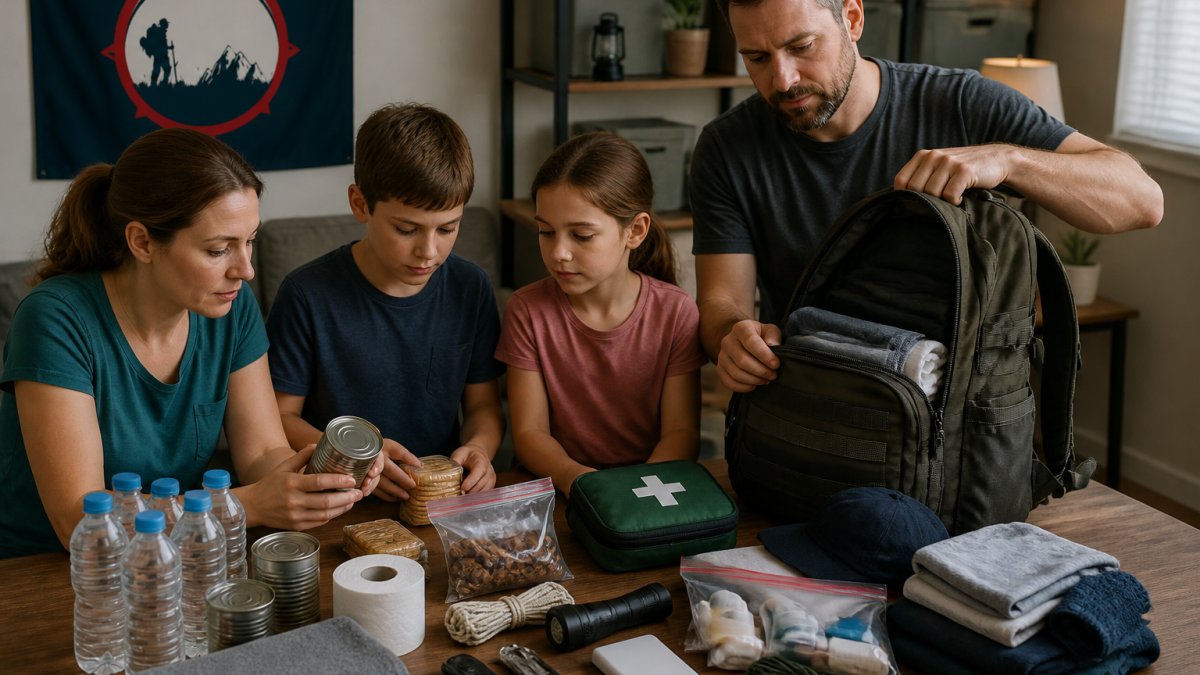
A family survival bag is a packed backpack of essential supplies your household can grab in minutes during an emergency, evacuations, power outages, or natural disasters.
Preparation is the difference between families who weather emergencies well and those who struggle.
Whether you're preparing for hurricanes, earthquakes, winter storms, or evacuations, this guide walks you through how to pack a family survival bag that actually works.
Building Your Family Go Bag Checklist: Core Items Everyone Needs
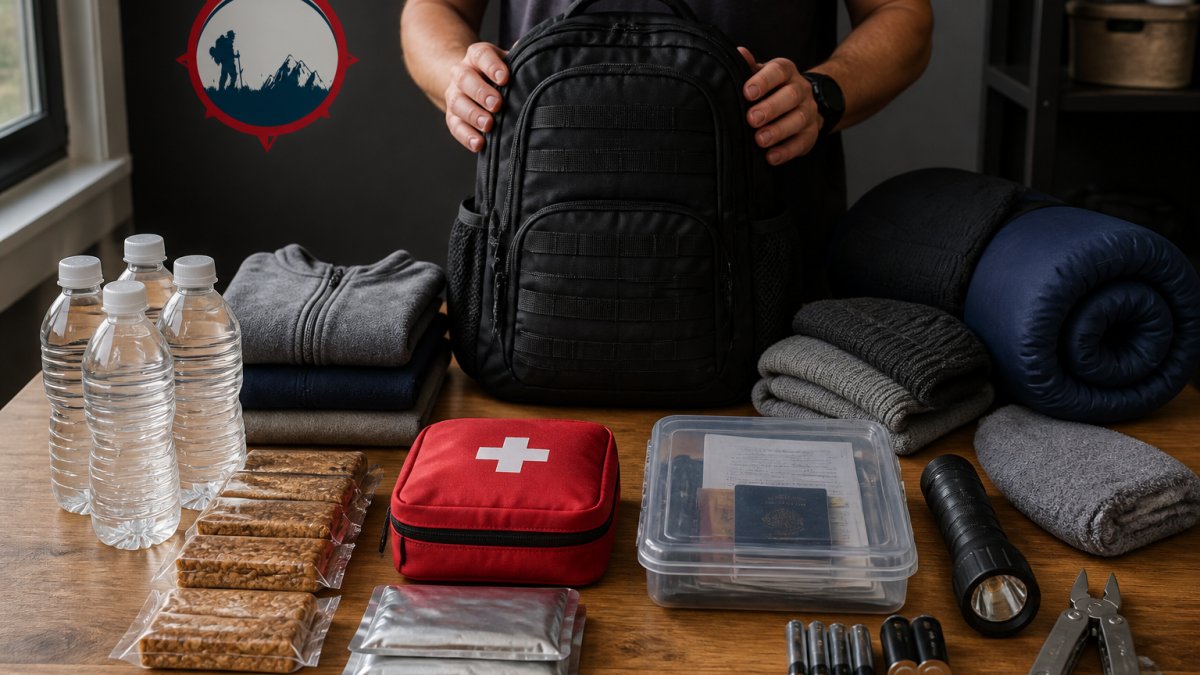
Your go bag essentials fall into six categories, with quantities based on household size, ages, and how you'll carry the load. Every family member should understand what's in the bag and why, that shared knowledge helps kids stay calm.
Water and Water-Purification Supplies
Plan on one gallon of drinking water per person per day, plus a half gallon per pet. For a family of four with a dog, that's roughly 13.5 gallons for 72 hours, over 100 pounds, far too heavy for one backpack.
Add at least two purification methods so you are not dependent on a single failure point:
- Water-purification tablets or drops, lightweight, long shelf life, but need 30 minutes to 4 hours of contact time.
- A portable pump or squeeze filter, reusable, removes bacteria and protozoa, but not viruses, so pair it with tablets for questionable sources.
- Boiling supplies, a metal pot and a way to make fire or use a camp stove. Boiling kills pathogens but not chemical contamination.
Rotate stored water every six months, marking the fill date on each container; replace commercial bottled water past its printed date.
Food and High-Calorie Snacks
Pack foods that need no cooking, refrigeration, or added water. Aim for roughly 2,000 calories per adult per day and 1,400 for younger children, about 6,000 calories per adult across 72 hours.
- Granola bars and energy bars (check for melt-resistant varieties in summer)
- Nuts, trail mix, and peanut butter packets
- Dried fruit and fruit leather
Avoid salty foods that drive thirst and anything needing a can opener. Include one or two comfort items per child, a familiar snack reduces anxiety better than any gear.
First-Aid Kit and Prescription Medications
A basic first-aid kit handles cuts, sprains, and minor illness. Build it around the American Red Cross's recommended contents:
- Adhesive bandages in multiple sizes
- Antibiotic ointment and antiseptic wipes
- Pain relievers (adult and children's formulations)
For prescriptions, keep at least a 7-day supply of every medication in the original labeled bottles, and ask your pharmacist about a partial early refill for emergencies. Store a printed list of each medication, dose, prescribing clinician's name and phone number, and allergies, plus copies of recent prescriptions.
Lighting, Batteries, and Communication
Darkness multiplies fear and slows every task. Pack at least two independent light sources per adult and one per child old enough to hold one:
- A primary flashlight with spare batteries
- A headlamp so hands stay free
- Glow sticks (no batteries, no failure points)
Add a battery-powered or hand-crank NOAA weather radio, the most reliable way to get National Weather Service alerts when cell networks are down. A whistle on a lanyard signals for help if someone is trapped.
For phones, pack a power bank rated 10,000 mAh or higher per adult, plus the correct cable for each device, that capacity recharges a smartphone two to three times.
Important Documents and Cash
Store copies, not originals, of critical documents in a waterproof pouch or sealed bag:
- Photo IDs for each family member
- Insurance policies (health, home, auto)
- Property deed or lease
Keep cash in small bills, ones, fives, and tens. ATMs and card readers often fail during outages, and small bills are easier when change is scarce. A common practice is $100 to $300 per household, adjusted for your area's cost of living.
Tools, Hygiene, and Shelter Basics
Round out the bag with items that turn a pile of supplies into a working kit:
- A multi-tool and a fixed-blade knife
- Duct tape and paracord (50 feet is a good starting length)
- A manual can opener as a backup
These items are cheap, light, and cover the gaps a food-and-water-only kit leaves open. Pack them in a labeled stuff sack for easy finding in the dark.
Creating a 72-Hour Emergency Kit Checklist for Your Household
A 72-hour emergency kit checklist goes beyond your grab-and-go bag: this larger kit stays home and holds items too heavy or bulky for a backpack.
Your household kit should include:
- Two weeks of shelf-stable food (beyond the three days in your go bag)
- 14 gallons of water minimum (more if you have pets)
- Extra medications and medical supplies
Store the household kit in a cool, dry closet, basement, or garage. Label everything and rotate perishable items every six months.
Go Bag Essentials for Kids: Age-Specific Packing Tips
Children's needs vary by age. Packing thoughtfully reduces stress for the whole family.
Infants and toddlers:
- Diapers and wipes (double what you think you'll need)
- Infant formula and bottled water
- Baby food and spoons
Young children (ages 3-8):
- Favorite snacks and comfort foods
- Coloring books and crayons (calming activities)
- Change of clothes sized for their current size
Older children and teens:
- Phone chargers and power banks
- Important school documents or medical records
- Medications they manage themselves
Involve kids in packing. Let them choose comfort items and help organize supplies. Children who understand the bag's purpose handle emergencies better. Explain that the bag keeps them safe and that you're prepared.
Choosing the Right Backpack and Distributing Weight
The wrong backpack makes evacuation harder, and a bag too heavy for its carrier gets abandoned. The real work is matching each bag to its carrier and splitting shared gear so no one is overloaded.
Sizing the Pack to the Carrier
Backpack capacity is measured in liters. Match the pack to the person, not to the gear:
- Children under 50 pounds: 10-15 liters. Enough for a change of clothes, a snack, a small flashlight, and one comfort item. Nothing more.
- Children 50-100 pounds: 15-25 liters. Can add a water bottle, a small first-aid pouch, and a light layer.
- Teens and smaller adults: 25-35 liters.
Fit matters as much as size. The hip belt should carry most of the weight, not the shoulder straps. Tighten the hip belt first, then the shoulder straps, then the sternum strap. If the pack sags below the hips or the straps dig into the collarbone, the fit is wrong.
How Much Weight Each Person Should Carry
A widely used guideline in hiking and emergency-preparedness circles is that a healthy adult can carry roughly 20 percent of their body weight over distance, and a child no more than 10 to 15 percent. That means:
- A 180-pound adult: about 36 pounds maximum
- A 90-pound child: about 9 to 13 pounds
- A 60-pound child: about 6 to 9 pounds
A full 72-hour kit for one adult, water, food, clothing, gear, often weighs 25 to 35 pounds, near the limit for many adults, so shared gear must be distributed deliberately.
Who Carries What
Assign shared items to the strongest carriers and keep personal items with each person:
- Tent, tarp, or large shelter: split between two adults, poles with one, fabric with the other.
- Cooking gear and fuel: one adult.
- Shared first-aid kit and medications: one adult, ideally the person most likely to stay calm.
Plan for People Who Cannot Carry a Full Load
Infants, toddlers, older adults, and people with mobility limitations can't carry their own supplies. Their gear rides in someone else's pack, an off-road stroller, a wagon, or a carrier worn on an adult's front or back.
- Infants: one adult carries the baby in a carrier and a smaller pack on the back. The other adult carries the bulk of the family gear.
- Toddlers: a lightweight stroller or wagon can carry both the child and a small bag of their supplies.
- Older adults: reduce their pack to a small daypack with medications, documents, and a layer. Distribute the rest.
Test the Kit Before You Need It
A bag that has never been carried is untested. Once a season, do a dry run:
- Load every bag as it would be packed in a real evacuation.
- Have each person put on their bag and walk a half mile, around the block, to a park, or to your planned meeting point.
- Note who tires first, where straps rub, and which items nobody used.
- Repack, shifting weight off the weakest carrier and removing anything that proved unnecessary.
A family that has walked the route once moves twice as fast as one opening the bag for the first time in the driveway. The dry run also confirms kids can lift and wear their own packs, if not, the load moves to an adult.
Emergency Kit Maintenance Checklist: Keep Your Bag Ready
A survival bag sitting in a closet for two years loses effectiveness: water expires, medications lose potency, batteries die. Regular maintenance keeps it functional.
Maintenance schedule:
Check your bag every six months:
- Rotate water supplies
- Replace expired food items
- Test flashlight and replace dead batteries
Mark maintenance dates on your calendar, spring and fall work well, or tie it to daylight saving time changes. Keep a log noting the date and what you checked, and replace items immediately after use: if you open the first-aid kit for an injury, restock it right away.
Special Considerations: Pets, Older Adults, and Medical Devices
Standard survival bags don't fit everyone. Families with pets, older adults, or people with medical conditions need customized planning.
Pet supplies:
- Carriers or crates for transport
- Food and water for at least 72 hours
- Medications and medical records
Older adults may need:
- Extra medications and copies of prescriptions
- Mobility aids (canes, walkers) that fit in the bag
- Glasses or hearing aid batteries
People with medical devices require:
- Extra supplies (insulin, test strips, lancets)
- Device chargers and backup batteries
- Medical alert identification
Emergency preparedness isn't about predicting the future, it's about taking simple steps today to protect your family tomorrow.
At Survive Nation, we stock the high-quality gear that makes preparedness practical, from durable backpacks and water storage to first-aid supplies and emergency food.
Frequently Asked Questions
What are the most important items to include in a family survival bag?
Water, food, first-aid supplies, flashlight with batteries, important documents, and a multi-tool are non-negotiable. Add prescription medications, a whistle, a waterproof container for documents, and a phone charger. The specific items depend on your family's medical needs and local hazards, but these core supplies cover most emergency scenarios for 72 hours.
How much water and food should I pack in a 72-hour emergency kit?
Pack one gallon of drinking water per person per day, so three gallons per person for 72 hours. Include high-calorie, non-perishable foods like granola bars, peanut butter, crackers, and canned goods with a manual opener. Aim for 2,000 calories per person daily. Store water in a cool, dark place and rotate food every six months to prevent spoilage.
Should I include cash in my family go bag?
Yes. Include small bills and coins in a waterproof container. During power outages and network failures, ATMs and card readers don't work. Cash lets you buy supplies or pay for transportation if needed. Keep at least $100-$200 in small denominations separate from your regular wallet.
How often should I check and update my family survival bag?
Review your emergency kit maintenance checklist every six months. Check expiration dates on food, water, medications, and first-aid items. Replace expired supplies, update important documents, and refresh batteries. After any evacuation or emergency use, restock immediately. Seasonal updates are also important: add extra layers in fall and winter, update sunscreen and insect repellent in spring and summer.