 blog
blog
Durable Tents for Wilderness Excursions: 2026 Guide
Table of Contents
- What Makes a Tent Durable for Wilderness Camping
- Best Backpacking Tents 2026 for Extended Wilderness Use
- Four-Season Backpacking Tent Essentials for Cold Weather
- Backpacking Tent Materials That Last
- How to Maintain a Camping Tent for Long-Term Durability
- Repairability and Replacement Parts Availability
- Selecting the Right Tent for Your Wilderness Conditions
- Frequently Asked Questions
Last Updated: October 7, 2026
What Makes a Tent Durable for Wilderness Camping
What makes durable tents for wilderness excursions 2026 combines three elements: abrasion- and moisture-resistant fabric, poles engineered for wind and snow load, and construction that keeps water out during extended exposure.
Wilderness camping demands more than car camping: wind tests pole strength, rain penetrates weak seams, and terrain threatens floor punctures.
Fabric Construction and Weather Resistance
The rainfly material determines how well your tent sheds water. High-denier nylon (70D to 210D) resists punctures better than lighter fabrics but adds weight, while polyester resists UV degradation better than nylon.
Coatings matter as much as fabric: silicone coatings on the rainfly's interior outlast polyurethane, which degrades faster in sunlight and heat.
The bathtub floor, a raised edge where floor meets walls, prevents water from pooling inside during heavy rain or when pitched in a depression. Floors of 70D polyester or higher-denier nylon resist punctures from rocks and roots better than thin materials.
Pole Strength and Wind Stability
Pole diameter and material determine wind resistance. Aluminum poles (typically 7075-T6 alloy) offer the best strength-to-weight ratio for backpacking tents; steel is stronger but too heavy for multi-day trips.
Pole count and crossing pattern determine wind stability: X-pattern crossings distribute stress better than parallel poles, and four-pole designs handle wind better than three-pole designs, though they add weight.
Pole sleeves (fabric tubes holding poles) outlast pole clips in harsh conditions: sleeves prevent shifting during storms, while clips can slip or break under sustained wind pressure.
Seam Quality and Waterproofing
Seams are a tent's weakest points. Factory-taped seams last longer than field-applied liquid sealant. A durable tent for wilderness excursions has sealed seams on the rainfly and body where water pressure is highest.
Stitch density affects durability and waterproofing: tents with 6-8 stitches per inch on critical seams resist leaking better than those with 4-5.
Many wilderness-grade tents reinforce stitching at pole attachment points and floor corners, the highest-stress areas in wind or snow load. This adds minimal weight but significantly extends field life.
Best Backpacking Tents 2026 for Extended Wilderness Use
Choosing a backpacking tent means matching it to your conditions: a three-season tent works for spring through fall in temperate regions, while a four-season tent is necessary for winter camping, high-altitude mountaineering, or extended expeditions.
The best tents for multi-day wilderness trips shed water reliably, resist wind, and hold up to repeated setup and breakdown cycles.
Three-Season Tents for Most Conditions
Three-season tents balance weight, weather protection, and interior space for late spring through early fall.
A good three-season tent weighs 3-5 pounds and ventilates enough to manage condensation on cool nights. The rainfly should cover most of the body, leaving only the lower sides exposed for airflow while blocking wind-driven rain.
Packed size matters on longer trips: a three-season tent that compresses to the size of a large water bottle fits a backpack more easily than one needing external straps.
Ultralight and Fastpacking Shelters
Ultralight tents weigh under 2 pounds and suit thru-hikes or speed-focused trips where every ounce matters. They sacrifice interior space and sometimes weather protection, so they're not ideal for extended wilderness camping.
Fastpacking shelters often use single-wall construction, combining body and rainfly. This saves weight but requires careful ventilation; single-wall tents work well in dry conditions but feel damp in extended wet weather.
The trade-off with ultralight shelters is durability: lighter fabrics and thinner poles mean shorter field lives. For multi-year expeditions, a slightly heavier tent built for durability makes more sense than an ultralight shelter that may fail mid-trip.
Four-Season Backpacking Tent Essentials for Cold Weather
Four-season tents are engineered for winter camping, high-altitude mountaineering, and extreme expeditions. They feature reinforced poles, reduced ventilation to retain heat, and stronger fabrics for heavy snow load, costing and weighing more than three-season models but essential for cold-weather wilderness excursions.
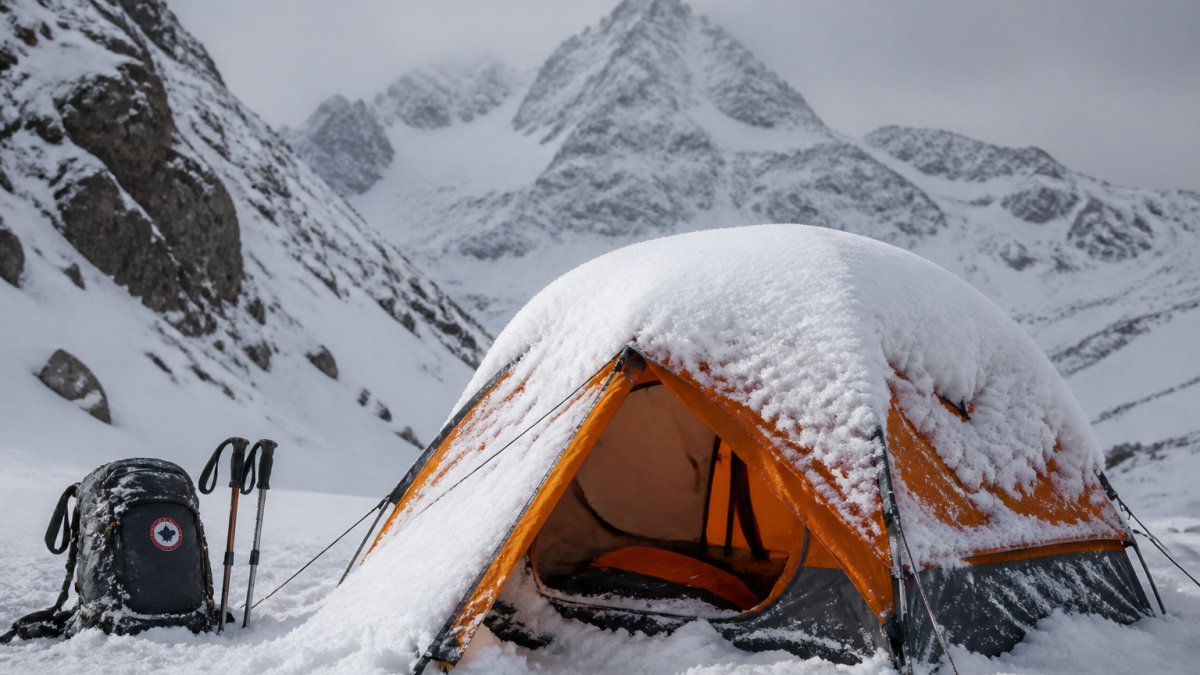
A durable four-season tent must handle snow accumulation on the rainfly without collapsing, requiring steeper roof angles and stronger poles than three-season tents. Its reduced ventilation retains heat but demands careful management to prevent condensation.
Snow Load and Storm Resistance
Four-season tents for wilderness expeditions have reinforced poles that support 50-100 pounds of snow without deforming, typically thicker aluminum poles or extra segments. The extra weight is justified where snow load is a real risk.
A four-season rainfly extends to the ground on most sides, reducing wind exposure and trapping heat. This feels warmer but requires active ventilation to prevent condensation from freezing inside.
Guylines and staking become critical in extreme wind.
Ventilation in Extreme Cold
Managing condensation in a four-season tent means balancing heat retention and airflow: too much ventilation lets cold air in, too little freezes moisture from your breath on the interior. The best wilderness expedition tents include adjustable ventilation ports.
Condensation management is critical on extended trips spent 12+ hours inside during storms.
Sleeping pads and insulation matter as much as the tent: a high-quality pad creates an air gap that insulates you from ground cold and reduces the temperature differential causing condensation.
Backpacking Tent Materials That Last
Materials determine how long your tent serves you in the field. Premium fabrics and construction cost more upfront but deliver better durability and longer service life. Understanding these trade-offs helps you choose which durable tents for wilderness excursions fit your budget and needs.
Fabric Durability and Abrasion Resistance
High-denier fabrics resist abrasion better than lightweight alternatives: a 70D nylon rainfly resists puncture and tearing better than 20D, though it weighs more.
Polyester maintains its waterproof coating longer than nylon under UV light. If you store your tent outdoors or in a vehicle between trips, polyester degrades more slowly, important for tents used regularly over multiple seasons.
Ripstop weave, reinforced threads woven into the fabric, stops small tears from spreading. Tents without it can develop long tears from small punctures, especially in high winds or rough handling.
Bathtub Floors and Puncture Protection
The tent floor sees the most abrasion and puncture risk in wilderness camping.
Floor material should be at least 70D polyester or nylon to resist punctures from rocks, roots, and sharp debris; some premium tents use 150D or higher. The extra weight is minimal, but the durability gain is significant on long trips.
A footprint, a separate ground tarp under the tent, protects the floor from rocks and sharp objects. It adds minimal weight but can double floor lifespan, making it worthwhile for extended wilderness trips.
How to Maintain a Camping Tent for Long-Term Durability
Proper maintenance matters as much as material quality. The best durable tents for wilderness excursions 2026 require careful storage, regular cleaning, and prompt repair; neglect can cut a quality tent's lifespan from 10+ years to just 2-3.
Field Care and Setup Best Practices
Setup technique affects durability: pitching on level ground with stakes angled at 45 degrees distributes stress evenly, while slopes or loose stakes create uneven tension that stresses seams and poles.
Avoid pitching on sharp rocks or dead branches.
Guylines should be taut but not over-tensioned: over-tight lines stress fabric at attachment points and can tear it, while proper tension creates a stable shelter without excessive stress.
During storms, monitor your tent: brush off heavy snow on the rainfly before it overloads the poles, and adjust guylines if wind gusts start shifting the tent.
Storage, Cleaning, and Repair
Store your tent dry in a cool, dark, well-ventilated place. Moisture promotes mold and mildew that permanently damage fabrics, so avoid sealed plastic containers that trap humidity.
Clean your tent after trips by rinsing with fresh water and air drying completely, removing dirt and debris that cause abrasion during storage.
Address minor repairs immediately: seal small rainfly holes with adhesive patches, and sew and seal small body tears.
Reseal seams every 2-3 years to maintain waterproofing, since sealant degrades with UV exposure and temperature cycling. Fresh sealant restores waterproofing without replacing the tent.
Repairability and Replacement Parts Availability
A durable tent for wilderness excursions should be repairable.
Before purchasing, check whether the manufacturer offers replacement poles, fabric patches, and repair kits. Some provide them at reasonable cost; others charge premium prices or have limited availability, affecting total cost of ownership.
Pole failures are the most common damage requiring replacement. Quality manufacturers stock replacement poles at modest cost; tents from defunct brands or discontinued models become difficult to repair.
Fabric damage can be repaired with adhesive patches or sewing, and seam failures resealed, repairs that significantly extend tent life but require available materials.
Selecting the Right Tent for Your Wilderness Conditions
Matching your tent to your conditions is the most important decision for wilderness camping success: a tent perfect for mild summer backpacking may be dangerously inadequate for winter mountaineering. Knowing your typical conditions helps you choose a durable tent for wilderness excursions that serves your needs.
| Condition | Tent Type | Key Features | Best For |
|---|---|---|---|
| Spring-Fall, temperate regions | Three-season | Moderate weather protection, good ventilation | General backpacking trips |
| Winter, high altitude, extreme weather | Four-season | Heavy snow load capacity, minimal ventilation | Mountaineering, winter camping |
| Speed-focused, dry conditions | Ultralight/Fastpacking | Minimal weight, single-wall design | Thru-hikes, fast trips |
| Extended wilderness trips | Durable three or four-season | Premium fabrics, reinforced seams, strong poles | Multi-week expeditions |
Weight, Packability, and Multi-Day Trips
Tent weight becomes critical on extended trips where you carry all your gear for days. A 5-pound tent feels manageable on a weekend but burdensome on a three-week expedition.
Packed size matters as much as weight: a tent compressing to water-bottle size fits easily in a backpack, while one needing external lashing complicates pack organization. Measure packed dimensions before purchasing.
For multi-day trips, the durability-to-weight ratio matters more than absolute minimum weight. A slightly heavier, durable tent will outlast multiple ultralight shelters over your wilderness career, long-term value often favors quality over weight savings.
Interior Space and Sleeping Capacity
Interior space affects comfort on extended trips: enough headroom to sit upright makes bad weather tolerable, while a tent where you can barely roll over feels claustrophobic after days of confinement.
Vestibule space, the area outside the tent proper but under the rainfly, stores gear without bringing it inside.
Choosing a durable tent for wilderness excursions means prioritizing materials and construction that survive repeated use in harsh conditions. The right shelter makes the difference between a successful adventure and a dangerous situation.
Frequently Asked Questions
What makes a tent durable for wilderness camping?
Durable tents combine high-denier fabrics (70D and above), reinforced seams sealed with waterproof tape, strong pole construction, and bathtub floors that prevent punctures. Field-tested models show durability through abrasion resistance, tension-rated stitching, and weather-resistant rainflies. Reputable manufacturers provide warranty coverage and replacement parts availability, which signals confidence in long-term performance across multi-day trips and harsh conditions.
What tent materials last the longest in wilderness conditions?
High-denier nylon and polyester fabrics (70D minimum) resist abrasion better than lighter materials. Polyester rainflies outperform nylon in UV resistance, preventing degradation from sun exposure. Reinforced bathtub floors using thicker base materials protect against punctures from rocks and roots. Sealed seams with waterproof tape prevent water ingress that causes mold and fabric breakdown. Aluminum or fiberglass poles with shock-cord construction absorb stress better than single-wall designs, extending the tent's service life across multiple seasons.
How do you maintain a camping tent so it lasts longer?
Set up your tent on prepared ground free of sharp objects, and use a tent footprint to protect the floor. After each trip, allow the tent to dry completely before packing to prevent mold growth. Store in a cool, dry place away from direct sunlight. Clean mud and debris gently with a soft brush and mild soap, then rinse thoroughly. Inspect seams and fabric regularly for damage, and repair small tears with tent-specific patches before they spread. Check pole shock cords and replace them if they lose tension.
Are four-season tents worth it for wilderness trips?
Four-season tents are essential for cold-weather and ski touring expeditions where snow load, wind stability, and extreme temperature protection matter. They feature reinforced poles, reduced ventilation to retain heat, and streamlined designs to shed snow. However, they are heavier and more expensive than three-season models. For summer backpacking and thru-hiking, three-season tents offer better ventilation and packability. Choose a four-season tent only if your wilderness excursions regularly occur in alpine, winter, or high-altitude environments where all-weather performance is non-negotiable.