 blog
blog
Best Sleeping Bags for Beginners: A Practical Guide
Table of Contents
- What Makes a Good Beginner Sleeping Bag
- Understanding Sleeping Bag Temperature Ratings Explained
- Synthetic vs Down Sleeping Bags for Beginners
- Shape, Size, and Fit: Getting the Right Sleeping Bag for Your Body
- Weight, Packability, and Seasonality
- Sleeping Bag Care and Maintenance Tips
- Rental vs. Buying: What First-Time Campers Should Know
- Sustainable and Eco-Friendly Sleeping Bag Options
- Frequently Asked Questions
Last Updated: October 4, 2026
What Makes a Good Beginner Sleeping Bag
Finding the best sleeping bags for beginners for your first camping trip matters more than most realize. The difference between a bag that keeps you warm and dry versus one that leaves you shivering at 2 AM can make or break your outdoor experience.
The best sleeping bags for beginners do three things well. It keeps you warm at the temperatures you'll actually encounter. It fits your body properly so heat doesn't escape around the edges. And it's built to last through multiple seasons of regular use without falling apart at the seams or losing its insulation.
Why sleeping bag choice matters for your first trip
Your sleeping bag is your barrier between you and the cold ground. Get it right, and you sleep well enough to enjoy the next day. Get it wrong, and you're miserable, no matter how beautiful the scenery is. Most new campers underestimate how much colder it gets at night, especially at higher elevations or near water.
The real cost of a poor choice isn't just discomfort. It's that many first-time campers buy cheap bags that fall apart after one or two trips. Zippers snag and break. Seams split. The insulation compresses and stops working. Then they're out money AND they've given up on camping entirely.
The sleep system: why your sleeping pad is just as important
Here's what most guides miss: your sleeping bag alone doesn't keep you warm. Your sleeping pad does half the work.
Heat escapes downward through compression. When your body weight squashes the insulation beneath you, that area stops insulating. A sleeping pad underneath your bag prevents this.
Think of it as a system. The bag traps warm air around your body. The pad prevents heat loss to the ground. Together, they create an effective sleeping system. Many beginners buy a great bag but skimp on the pad, then wonder why they're still cold.
Understanding Sleeping Bag Temperature Ratings Explained
Temperature ratings tell you the coldest conditions where a bag will keep you warm. But the numbers can be misleading if you don't understand what they actually mean.
Comfort limit vs. extreme rating
Sleeping bags carry two temperature ratings. The comfort limit is the lowest temperature where an average sleeper stays warm and comfortable.
For beginners, focus on the comfort limit. That's the real-world number. If you're camping in fall when nighttime temperatures drop to 35°F, you want a bag rated to at least 35°F comfort limit.
Different sleepers feel cold differently too. Women typically sleep colder than men at the same temperature. Heavier people retain heat better than lighter people. If you sleep cold naturally, choose a bag rated 10°F colder than your expected low.
Choosing the right temperature rating for your climate
Start by knowing your destination's nighttime lows during the season you'll camp. Spring and fall camping means 30-50°F nights. Summer can range from 40-60°F depending on elevation. Winter camping requires bags rated to 0°F or colder.
A 3-season bag rated to 20°F covers most beginner camping scenarios. It handles spring, summer, and fall trips across most climates.
National Weather Service climate data can help you find average nighttime temperatures for your camping areas. Check those numbers, then pick a bag rated at least 10°F colder than the coldest night you expect.
Synthetic vs Down Sleeping Bags for Beginners
The insulation inside your bag determines warmth, packability, and how it performs when wet. Two main types dominate the market, and each has tradeoffs.
Down insulation: warmth and packability
Down comes from duck or goose feathers. It's the gold standard for warmth-to-weight ratio. A down bag compresses smaller than synthetic and weighs less, making it ideal for backpacking where every ounce matters.
Down's weakness is moisture. When down gets wet, it clumps and loses all insulating ability. If your bag gets soaked, you're in trouble. Down also takes longer to dry than synthetic. For car camping where your bag stays dry, down is excellent. For backpacking in wet conditions, synthetic is safer.
Down bags also cost more upfront. The longevity is excellent, a good down bag lasts 10+ years with proper care.
Synthetic fill: durability and moisture resistance
Synthetic insulation is petroleum-based material engineered to trap air. It doesn't compress as small as down, but it keeps insulating even when damp. If your bag gets wet, synthetic retains about 60-70% of its warmth.
Synthetic bags are more affordable than down, making them ideal for beginners who haven't committed to camping yet.
The tradeoff is weight and packability. A synthetic bag rated to 20°F weighs more and packs larger than an equivalent down bag. For car camping and casual trips, this doesn't matter.
Synthetic bags typically last 5-7 years with regular use before the insulation starts compressing and losing effectiveness.
Shape, Size, and Fit: Getting the Right Sleeping Bag for Your Body
Fit determines how well your bag insulates. A bag that's too roomy lets warm air escape. A bag that's too tight compresses the insulation under pressure and reduces warmth.
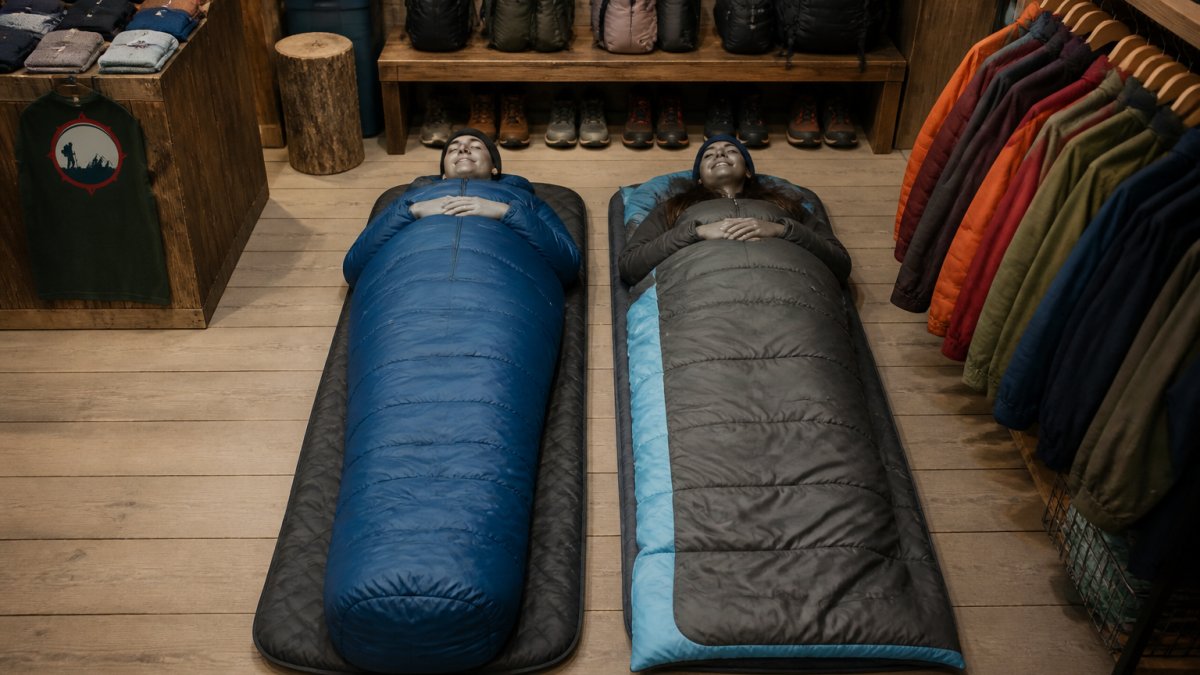
Mummy vs. rectangular: which shape works for you
A mummy bag tapers from shoulders to feet, matching your body's shape. This design minimizes dead space where warm air can escape. Mummy bags are warmer for the weight and pack smaller.
The tradeoff is comfort. Some sleepers feel claustrophobic in a mummy bag's snug fit. If you move around a lot at night or sleep hot, a mummy bag might feel restrictive.
Rectangular bags are wider and offer more room to move. They're comfortable for casual sleepers and allow better ventilation if you sleep warm.
For beginners, a mummy bag is the better choice if you'll backpack or camp in cold weather.
Sizing for different body types
Sleeping bags come in regular, long, and sometimes short lengths. Measure yourself from the top of your head to your toes, then add 4-6 inches. That's your ideal bag length.
Width matters too. You want about 4-6 inches of space on each side when you lie down. Too much extra width means wasted space and reduced warmth. Too little means you can't move comfortably.
Wider sleepers should look for bags with a wider girth measurement, usually listed in the specifications. Some manufacturers offer wider cuts specifically for this reason. Don't squeeze into a standard bag if you need more room.
Weight, Packability, and Seasonality
Two factors determine whether you'll actually take your bag camping: how much it weighs and whether it's appropriate for the season.
Balancing weight and warmth for backpacking
Every ounce matters when you're carrying your gear on your back. A 5-pound sleeping bag versus a 3-pound bag means 2 extra pounds to carry all day. Over a week-long trip, that adds up.
Lightweight bags use premium materials, usually down or advanced synthetic blends, to minimize weight while maintaining warmth. They cost more but are worth it if you backpack regularly. For casual car camping, weight doesn't matter. You're loading it into a vehicle anyway.
A good rule: if you backpack more than twice a year, invest in a lighter bag. If you car camp occasionally, weight is less important than durability and comfort.
3-season vs. winter bags: what beginners actually need
A 3-season bag handles spring, summer, and fall. It's rated between 15-30°F and covers 90% of beginner camping scenarios. These bags balance warmth, weight, and cost effectively.
Winter bags are rated 0°F and colder. They're heavier, bulkier, and more expensive. Most beginners don't need one. If you're camping only in summer and early fall, a 40°F bag is actually sufficient.
Start with a 3-season bag. Once you know your camping patterns and climate preferences, you can add a winter bag later if needed. This approach spreads the cost and ensures you're buying what you actually need.
Sleeping Bag Care and Maintenance Tips
A quality bag lasts years with proper care. Neglect it and even an expensive bag deteriorates quickly.
Cleaning and storage to extend lifespan
Dirt and oils from your skin break down insulation over time. After trips, air out your bag in sunlight for a few hours. This removes moisture and odors without washing.
For actual cleaning, use a gentle soap and lukewarm water. Hand wash only, machines damage seams and insulation. Rinse thoroughly and dry completely before storing. Never dry-clean a sleeping bag; the chemicals destroy insulation.
Store your bag loosely in a large mesh bag, not compressed in its stuff sack. Compression permanently damages loft, the fluffiness that traps warm air. A compressed bag loses insulation ability over months.
Protecting your investment from zipper snags and wear
Zippers are the most common failure point. Before each trip, run a graphite pencil along both sides of the zipper track. This lubricates it and prevents snags. Never force a stuck zipper, apply more lubricant and work it slowly.
Check seams periodically for small tears. Repair them immediately with seam sealer before they expand. Most outdoor retailers sell repair kits specifically for sleeping bags.
Keep your bag away from sharp objects and rough surfaces. Lay it on a tent floor or pad, not directly on rocky ground. Small punctures can be patched, but repeated damage compounds.
Rental vs. Buying: What First-Time Campers Should Know
Not sure if camping is right for you? Rental is a smart first step. But there's a point where buying makes sense.
A quality beginner bag from Survive Nation costs more upfront but can be a worthwhile investment. Plus, you own something that works exactly how you want it.
Rental bags are often older and compressed, which means they don't insulate as well. They may not fit your body perfectly. And you're limited to whatever the rental shop has available.
Buy if you're committed to camping at least twice a year. Rent if you're testing whether camping is for you.
Sustainable and Eco-Friendly Sleeping Bag Options
Environmental impact matters to many outdoor enthusiasts. Some manufacturers now offer bags made with recycled materials or sustainable down sourcing.
Recycled synthetic insulation performs nearly as well as virgin material while reducing waste. Responsibly sourced down comes from suppliers that follow ethical animal treatment standards.
Look for certifications like Responsible Down Standard (RDS) or Global Recycled Standard (GRS) when shopping. These verify environmental claims.
Choosing your first sleeping bag doesn't have to be overwhelming. Start by understanding your climate and camping style.
REI's sleeping bag buying guide offers additional technical details if you want to dive deeper.
Frequently Asked Questions
What's the difference between a sleeping bag's comfort limit and extreme rating?
The comfort limit is the lowest temperature at which a typical sleeper stays warm and comfortable all night. The extreme rating is the survival threshold, you won't freeze, but you'll be cold and uncomfortable. For beginners, always buy a bag rated for temperatures 10-15 degrees lower than your expected conditions. If you camp in 40-degree weather, choose a 25-30 degree bag to stay genuinely comfortable.
Should I choose a down or synthetic sleeping bag as a beginner?
Down insulation packs smaller and weighs less, making it ideal for backpacking. Synthetic fill costs less, dries faster when wet, and performs better in humid conditions. For car camping or emergency preparedness at home, synthetic bags offer better value and durability. For backcountry trips where weight matters, down is worth the investment. Consider your climate and how often you'll use the bag before deciding.
How do I know what sleeping bag size is right for my height?
Most bags come in regular (up to 6 feet) and long (6 feet and taller) lengths. Measure your height and check manufacturer sizing charts, having 6-12 inches of extra length prevents your feet from pressing against the bag's end, which reduces insulation. Shoulder girth also matters: narrower mummy bags save weight but feel restrictive if you're broad-shouldered. Consider retailers with easy returns.
Why is my sleeping pad just as important as my sleeping bag?
Your sleeping bag traps heat above you, but your body weight compresses insulation underneath, leaving you exposed to ground cold. A sleeping pad provides insulation below and prevents heat loss to the earth. Together, they form a complete sleep system. Without a pad, even the warmest bag won't keep you comfortable. Beginners often overlook this and end up cold despite owning a quality bag.