 blog
How to Decide if a 72 Hour Kit Is Worth It for Urban Dwellers
Last Updated: October 30, 2026
Quick Summary
A 72 hour kit is worth it for urban dwellers because it covers the three-day gap when power, water, and stores are down after an outage, storm, or boil-water notice. It is not built for wilderness survival, so keep it compact and add layers only as space allows.
- Store one gallon of water per person per day, nine gallons for a three-person household.
- Buy a pre-made kit as a base, then add extra water, medications, and pet food.
- Refresh supplies every six months and check water and food first.
- Shelter in place for outages and boil-water notices; evacuate when officials order it.
- A 72 hour kit falls short when outages last a week or your building is unsafe.
Table of Contents
- What a 72 Hour Kit Actually Does for City Residents
- The Real Risks Urban Dwellers Face in the First Three Days
- Your 72-Hour Emergency Kit Checklist: What Earns Its Space
- How Much Water for 72 Hours When Storage Space Is Tight
- Pre-Made Emergency Kit vs DIY: Cost, Effort, and Quality
- Building an Apartment Emergency Kit That Fits Your Square Footage
- Shelter in Place or Evacuate: Deciding Before the Lights Go Out
- When a 72 Hour Kit Is Not Enough
- Frequently Asked Questions
What a 72 Hour Kit Actually Does for City Residents
A 72 hour kit is a self-contained set of emergency supplies built to keep one person or household running for three days without outside help. That is the whole promise: three days of food, water, light, and basic medical care when normal services stop.
A common question from city residents is whether a 72 hour kit is worth it for urban dwellers, or whether it is just shelf space you'll never touch? The honest answer depends on what you expect it to do.
Most people picture a wilderness scenario. The real job is narrower. A city kit buys you time during a power outage, a boil-water notice, or the first days after a hurricane or tornado when stores are shut and roads are blocked.
Three days is not a random number. It reflects how long basic services often take to come back online after a major disruption. For a household that is self-sufficient for that window, the kit covers the gap between the emergency and the response.
Here's what most guides get wrong: they sell the kit as a lifestyle. It isn't. It's insurance you store in a closet and hope stays boring.
The Real Risks Urban Dwellers Face in the First Three Days
The biggest mistake city residents make is preparing for the wrong disaster. You are far more likely to lose power than to face a total evacuation.
The first three days after a natural disaster usually bring the same short list of problems:
- Power outage that kills lights, refrigeration, and phone charging
- Boil-water notice that makes tap water unsafe to drink
- Closed stores with empty shelves and long lines
- Blocked roads that slow deliveries and emergency crews
- Dead phone batteries when you need information most
Notice what's missing: none of these require you to survive in the woods. They require light, clean water, a working radio, and a way to keep your phone alive.
That's why a crank or solar radio with a built-in power bank earns its place in a city kit. When the grid is down, information and a charged phone matter more than a camp stove.
The risks are real, but they're modest and predictable. That shapes what the kit should hold.
Your 72-Hour Emergency Kit Checklist: What Earns Its Space
An emergency kit checklist for a home should fit in one bin. If it needs a whole closet, you've overbuilt it.
Here's the short list that covers the first three days for most city households:
- Water: one gallon per person per day, three days minimum
- Food: shelf-stable, no-cook, three days per person
- Manual can opener
- First aid kit and a week of essential medications
- Flashlight or headlamp plus spare batteries
- Crank or battery radio for news and alerts
- Power bank for phones
- Sanitation: wipes, hand sanitizer, trash bags, toilet supplies
- Copies of important documents in a waterproof bag
- Warm layer, rain shell, and sturdy shoes per person
- Cash in small bills
- Pet food and supplies if you have animals
What earns its space is anything you'd actually reach for on night one. Everything else is clutter. For a full walkthrough of packing a complete bag, compare the list above against your own household needs.
The checklist is the easy part. The hard part is water, and that's where apartment dwellers hit a wall.
How Much Water for 72 Hours When Storage Space Is Tight
The standard answer is one gallon per person per day, so nine gallons for a three-person household over three days. That's the baseline for drinking, basic cooking, and minimal hygiene.
Nine gallons is a lot of closet space. That's the real constraint for city residents, not the cost.
A few practical ways to solve it:
- Store water in stackable, sealed containers rather than loose bottles
- Keep a collapsible container you can fill at the first warning of a storm
- Rotate stored water every six months so it stays fresh
- Add purification tablets or a filter as a backup for boil-water notices
If floor space is your bottleneck, a collapsible water container can solve the storage problem without eating a shelf. Fill it before a storm and it's ready; empty it and it disappears.
Watch out: don't count on the tap staying safe. A boil-water notice can land with no warning, and stored water is the difference between a minor inconvenience and a real problem.
Pre-Made Emergency Kit vs DIY: Cost, Effort, and Quality
The pre-made emergency kit vs DIY decision comes down to time, money, and how much you trust your own packing. Both work, and they fail in different ways.
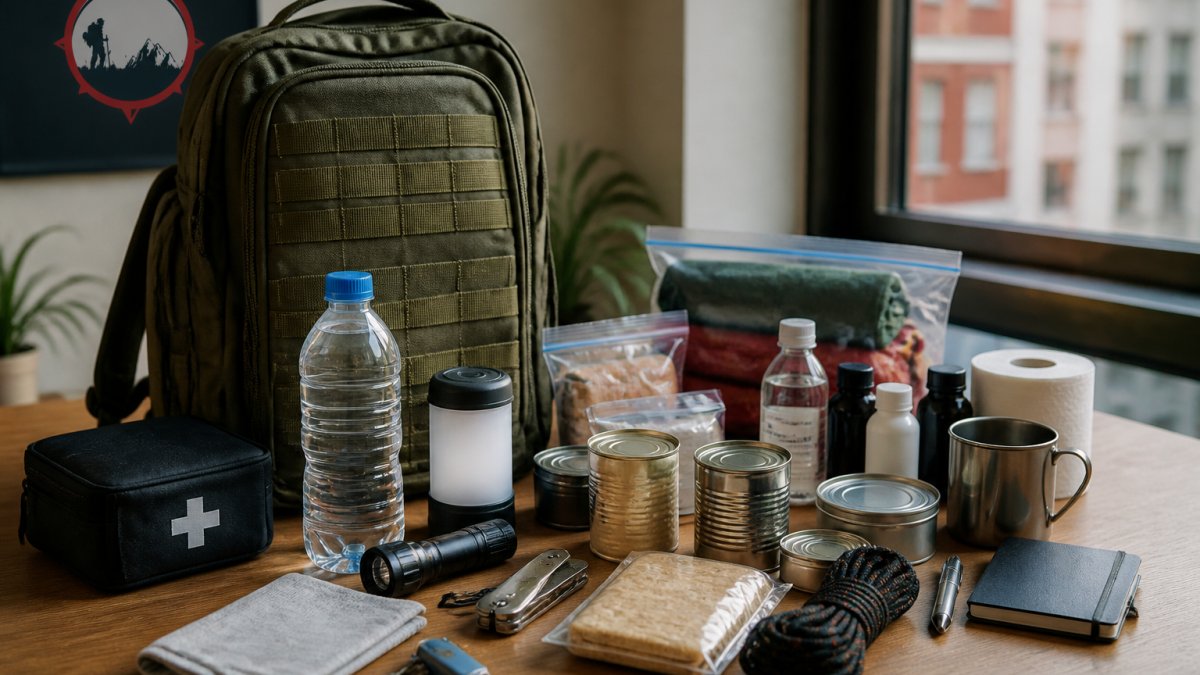
Start with what a basic three-day kit for one person actually contains: roughly three gallons of water, three days of no-cook food, a manual can opener, a first aid kit, a flashlight or headlamp with spare batteries, a crank or battery radio, a power bank, sanitation supplies, document copies, a warm layer, and cash in small bills. That list is the unit of comparison.
| Factor | Pre-Made Kit | DIY Kit |
|---|---|---|
| Time to assemble | Minutes | Several weekends of shopping and research |
| Upfront cost | Higher per item, bundled | Lower if you shop sales and buy in bulk |
| Quality control | Depends on the maker; some skimp on water and food | You choose every item and quantity |
| Fit for your household | Generic, often sized for one person | Custom to household size and medical needs |
| Maintenance | Easy to track as a single unit | Easy to forget expiration dates |
| Hidden cost | Replacement when cheap items fail | Duplicate purchases while you figure out what you need |
Pre-made kits win on speed. You buy once and you are covered.
DIY kits win on fit and budget. You buy exactly what you need, at your own pace.
A common mistake is buying a pre-made kit and never opening it. Supplies expire, batteries leak, and medications go out of date.
If budget is the deciding factor, a lower-cost approach can still produce a solid kit without overspending. The value question is not whether the kit costs more or less than a DIY build.
Building an Apartment Emergency Kit That Fits Your Square Footage
An apartment emergency kit works best when it's built around your limits, not against them. In a small space, the goal is one compact bin you can grab and carry, plus a plan for where it lives.
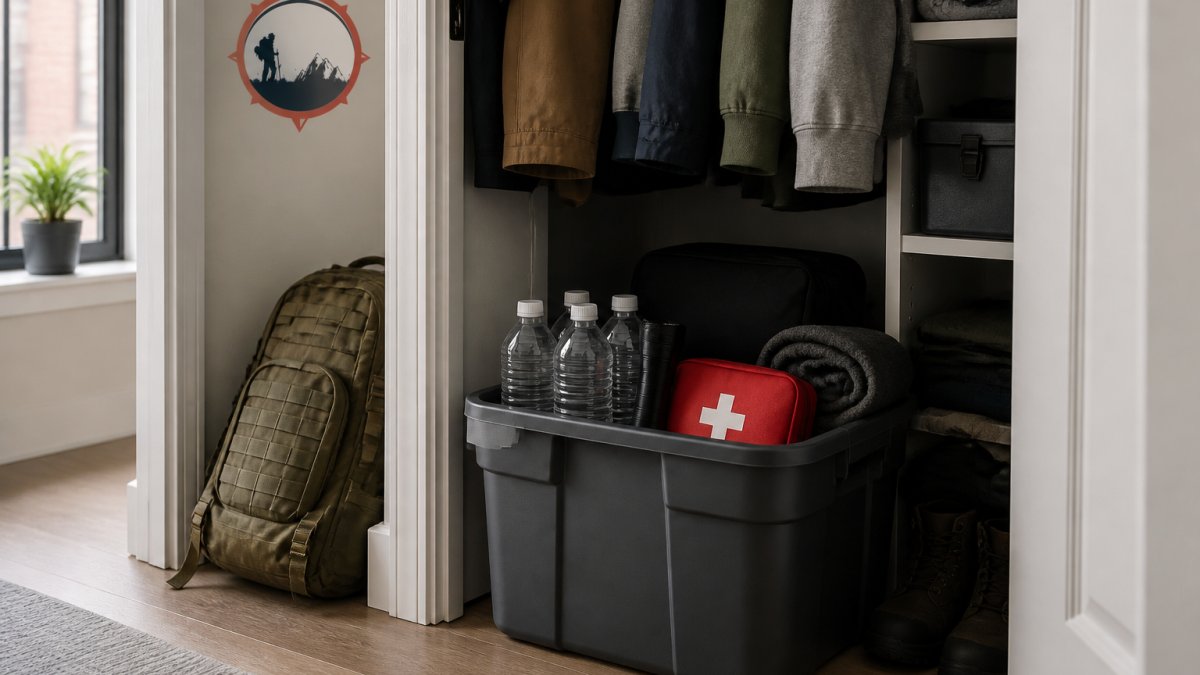
Think in three layers:
- The go-bag: one backpack per person with documents, medications, and a change of clothes
- The home bin: water, food, light, and radio stored in one reachable spot
- The overflow: bulky water and shelter gear kept wherever you have room
Where you store it matters as much as what's in it. Pick a spot you can reach in the dark, not the top shelf behind the holiday boxes. Under the bed, the bottom of a closet, or a hall cabinet all work.
For households with pets, older adults, or anyone with mobility needs, add their supplies and medications to the bin. A kit that ignores a household member isn't a kit.
Shelter in Place or Evacuate: Deciding Before the Lights Go Out
The shelter in place versus evacuation call is one you should make before an emergency, not during one. In a blackout or storm, you won't have time to weigh options calmly.
The general rule: shelter in place for power outages, boil-water notices, and most storms. Evacuate when officials order it, when your building is unsafe, or when you have no safe water or heat.
Decide now by answering three questions:
- What would make us leave? An official evacuation order, a gas leak, structural damage, or no safe water.
- Where would we go? A specific address, not a vague idea.
- How would we get there? A route and a backup if roads are blocked.
Write the answers down and share them with everyone in the household. Include emergency contacts and a meeting spot. A kit without an emergency plan is only half the job.
When a 72 Hour Kit Is Not Enough
A 72 hour kit is not enough when the disruption lasts longer than three days, or when you cannot shelter in your home at all. That is the honest limit, and it is worth knowing before you rely on a kit that was never designed for a week.
Three cases push past a basic kit:
- Extended outages or storms that keep services down for a week or more
- Evacuation where you need portable shelter and mobility
- Building damage that makes your apartment unsafe to stay in
What most guides do not say is that three days is a planning window, not a guarantee. Replenishment is the weak link. Stores may be closed, roads may be blocked, and deliveries may be delayed well past the point when services come back. A kit that covers exactly three days leaves no margin for a slow recovery.
The practical fix is to scale in layers rather than trying to build for the worst case all at once:
- Layer one: the 72-hour kit, built first and kept current
- Layer two: an extra week of water and no-cook food, added as space and budget allow
- Layer three: a portable go-bag and a shelter option for evacuation scenarios
For city households, the constraint on scaling is usually space, not willingness. Add water in stackable, sealed containers and rotate it every six months. Add shelf-stable food you already eat so it rotates through normal use instead of sitting until it expires.
If evacuation is on your list, it is worth planning shelter options in advance so you are not improvising in a parking lot. The goal is not to build for every possible disaster.
Frequently Asked Questions
What are the most important items in a 72 hour kit for an apartment?
Start with water and food: roughly one gallon of water per person per day and shelf-stable meals for three days. Add a first aid kit, a flashlight with spare batteries, a battery-powered or hand-crank radio, a phone charger, sanitation supplies, and copies of important documents. In an apartment, keep everything in one grab-and-go bin so you can move fast if the building is evacuated. A 72-hour emergency kit checklist helps you confirm nothing critical is missing before you seal the container.
How much water should you store for 72 hours in a small apartment?
Plan on one gallon per person per day, so three gallons per person for 72 hours, plus extra for pets. A two-person household needs about six gallons, which fits under a bed or on a closet floor in stackable containers. If space is very tight, store two gallons per person and keep a water filter as backup. Knowing how much water for 72 hours your household needs prevents both overbuying and running short.
Should you buy a pre-made 72 hour kit or build your own?
A pre-made emergency kit saves time and arrives complete, which matters if you have put off preparing. A DIY kit costs less per item and lets you match gear to your household, such as medications or pet supplies. Many city residents do a hybrid: buy a pre-made kit as the base and add personal items. Compare contents item by item, since pre-made kits vary widely in quality and quantity.
Is a 72 hour kit enough for an urban emergency?
For most short disruptions, such as a power outage or boil-water notice, three days of supplies covers the gap until services return. A 72 hour kit is not enough if an evacuation keeps you away from home longer or if a widespread disaster delays aid. In those cases you need a plan for extended displacement: cash, copies of documents, a contact list, and a route out of the city. Treat the kit as your first layer, not your only one.