 blog
Emergency Power Outage Supply List: 2026 Guide
Table of Contents
- Emergency Power Outage Supply List: What You Actually Need
- Water Supply and Storage: The Foundation of Any Power Outage Supply List
- Emergency Food Storage Ideas That Last Through an Outage
- Lighting, Communication, and Power: Keeping the Lights On
- First Aid, Sanitation, and Important Documents
- How Long Should Emergency Supplies Last? Maintenance and Seasonal Rotation
- Your Emergency Preparedness Checklist: Budget vs. Premium Tiers
- Frequently Asked Questions
Last Updated: October 15, 2026
Emergency Power Outage Supply List: What You Actually Need
A power outage rarely announces itself. The lights flicker, the fridge goes quiet, and suddenly you need an emergency power outage supply list you can trust. At Survive Nation, we offer high-quality outdoor and emergency preparedness gear designed to keep you ready for any situation. This guide covers exactly what to store, how much you need, and how to keep it ready.
The problem isn't buying supplies. It's buying the right ones, in the right amounts, before you need them.
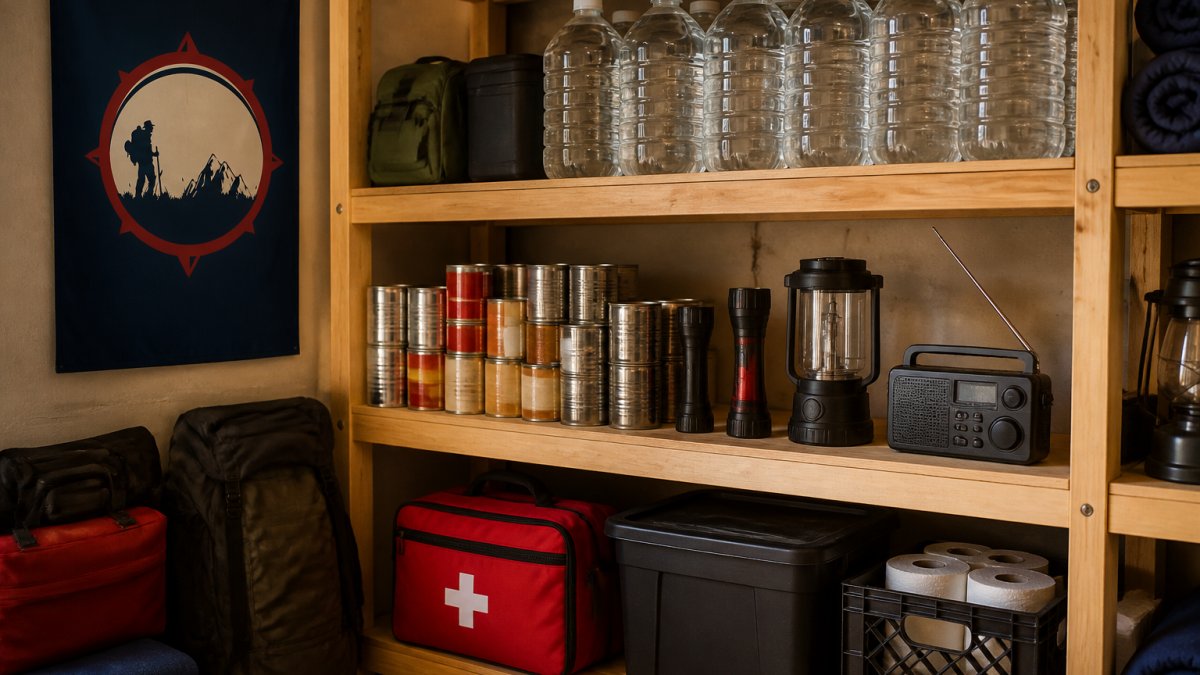
Here's the good news: you don't need a bunker. You need a plan.
Water Supply and Storage: The Foundation of Any Power Outage Supply List
Water is the first thing to run out and the hardest to replace. Store at least one gallon per person per day.
How Much Water to Store Per Person
Plan for a minimum three-day supply. That's three gallons per person. For a family of four, that's 12 gallons.
Store water in food-grade containers. Keep them out of direct sunlight. Rotate your stock every six months.
The CDC guidance on emergency water storage recommends storing at least a two-week supply if you have space. Start with three days, then build up.
Don't forget pets. Add one gallon per pet per day.
Emergency Food Storage Ideas That Last Through an Outage
Buy food you already eat. That's the rule most people break first.
Non-Perishable Staples and Manual Can Openers
Stock these basics:
- Canned beans, tuna, and vegetables
- Peanut butter and nut butters
- Crackers and dry cereal
- Dried fruit and nuts
- Shelf-stable milk
A manual can opener matters more than you think. Electric openers fail when the power does. Add one to every kit.
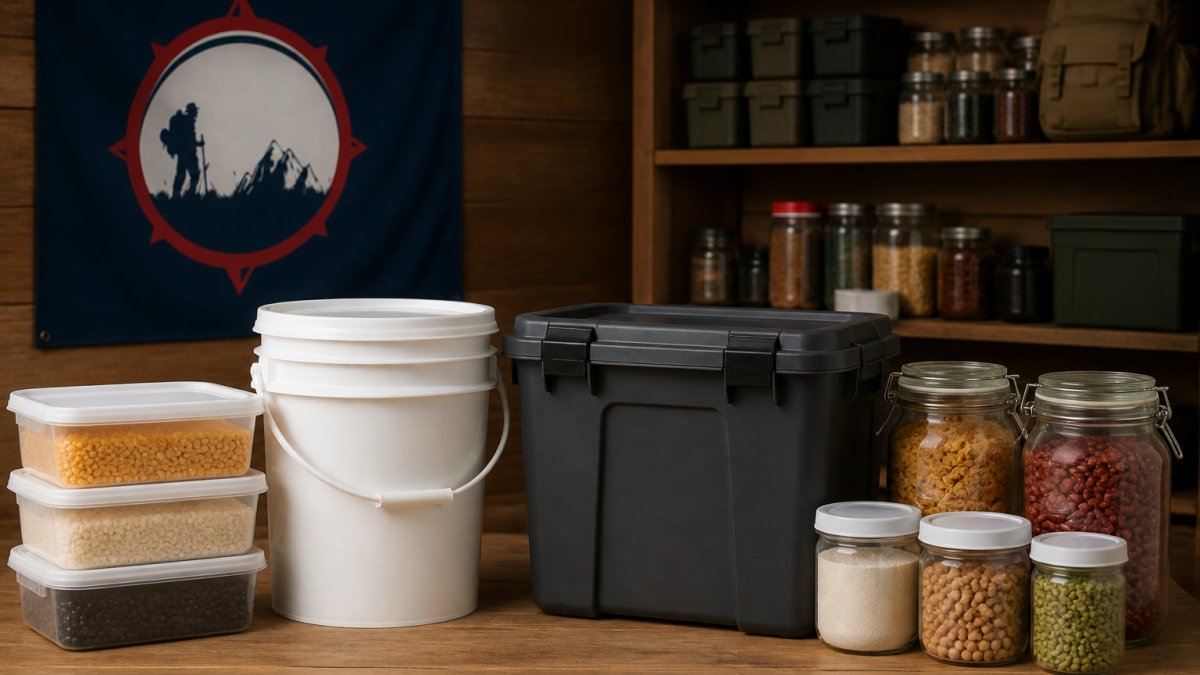
Store food in airtight containers. Keep it cool and dark. Check expiration dates twice a year.
Lighting, Communication, and Power: Keeping the Lights On
Light and information keep a bad night from becoming a dangerous one. But the difference between a kit that works and one that fails is knowing how much power each device actually draws, and how long your backup will carry it.
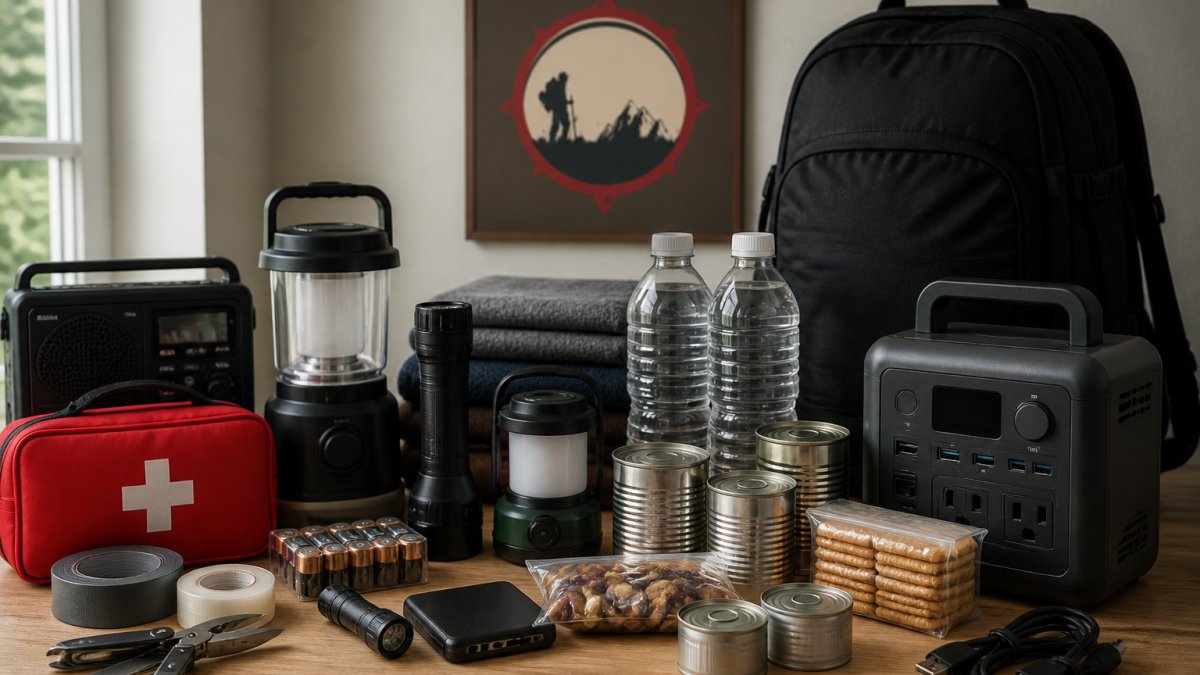
Pack these items:
- LED lantern for room lighting (most draw 1-3 watts and run 20-40 hours on a set of batteries)
- Headlamp for hands-free work
- Flashlight for each family member
- Battery-operated weather radio
- Extra batteries in every size
A weather radio gives you alerts when cell towers fail. The National Weather Service on NOAA Weather Radio explains how these broadcasts reach you when other systems go down.
How to Size a Portable Power Station for a Real Outage
A portable power station keeps phones, medical devices, and small appliances running, but only if its capacity matches your actual load. The unit that matters is watt-hours (Wh). A simple rule: divide the station's Wh by the device's watts to estimate runtime.
Common loads and rough draw:
- Smartphone: 10-20 Wh per full charge
- LED lamp: 5-10 watts
- Laptop: 50-60 watts
- CPAP without humidifier: 30-60 watts
- Full-size refrigerator: 100-200 watts running, but 800-1,200 watts at compressor startup
A 500 Wh station, for example, will recharge a phone roughly 25-40 times, run a 10-watt LED lamp for about 50 hours, or keep a laptop going for 8-10 hours. A refrigerator is a different problem, startup surge can trip a small station, so check the surge rating, not just the running watts.
Key features to check:
- Battery capacity in watt-hours, plus continuous and surge output in watts
- Number of AC and USB ports (USB-C Power Delivery charges phones fastest)
- Solar charging option and its input wattage, a 100-watt panel realistically adds 50-70 Wh per good sun hour
- Weight and portability
- Chemistry: lithium iron phosphate (LiFePO4) generally holds more charge cycles than older lithium-ion packs
Communication When the Grid Is Down
Cell towers often stay up for hours on backup power, but they congest fast. Text messages typically get through when calls won't. Keep phones in low-power mode, charge in short bursts, and agree on an out-of-area contact your family can check in with. A hand-crank or battery NOAA weather radio remains the most reliable way to receive official alerts when data networks fail.
First Aid, Sanitation, and Important Documents
A first aid kit handles small problems before they grow.
Your kit should include:
- Antiseptic wipes and ointment
- Sterile gauze pads and adhesive tape
- A thermometer
Sanitation supplies matter just as much. Pack moist towelettes, hand sanitizer, garbage bags, and plastic ties. These handle hygiene and waste when plumbing stops working.
Keep copies of important documents in a waterproof emergency binder. Include IDs, insurance cards, and local maps.
Cybersecurity and Digital Safety During Outages
Most guides skip this. You shouldn't.
Public charging stations and open Wi-Fi networks attract scammers. Follow these steps:
- Use your own power bank instead of public USB ports
- Avoid logging into bank accounts on public networks
- Turn on two-factor authentication before an outage hits
- Keep offline copies of key passwords
A charged portable charger protects your phone. Good digital habits protect everything on it.
How Long Should Emergency Supplies Last? Maintenance and Seasonal Rotation
Most guides tell you what to buy. Almost none tell you how to keep it working. That's the gap that sinks real kits: batteries corrode, water goes stale, medications expire, and solar panels sit uncharged until the night you need them. A kit is only as good as its last inspection.
A Maintenance Schedule You'll Actually Follow
Emergency supplies don't last forever. Most kits need a full check every six months, with the high-failure items checked more often. Build the review around two calendar anchors, daylight saving time changes in spring and fall, so it becomes automatic.
| Supply Type | Check Frequency | Action |
|---|---|---|
| Water (store-bought, sealed) | Every 6-12 months | Rotate; replace if cloudy or off-smell |
| Water (self-filled containers) | Every 6 months | Empty, sanitize, refill |
| Canned food | Every 6 months | Check dates, eat soonest, replace |
| Dry goods (rice, beans) | Every 12 months | Reseal in airtight containers |
| Batteries (alkaline) | Every 3 months | Test; replace before they leak |
| Rechargeable batteries | Every 3 months | Recharge to full |
| Medication | Every 3 months | Check expiration; rotate stock |
| Power station | Every 3 months | Recharge to full; test output |
| Solar panel | Every 3 months | Wipe clean; test charging |
| First aid supplies | Every 6 months | Replace opened or expired items |
| Weather radio | Every 3 months | Test batteries and reception |
A few maintenance rules that prevent the most common failures:
- Store batteries outside devices. Alkaline batteries left in a flashlight for years can leak and destroy the contacts. Keep them in the original packaging next to the device.
- Date everything. Write the purchase or rotation date on water jugs, food cans, and battery packs with a marker. You'll never remember otherwise.
- Test under load. A flashlight that turns on for two seconds may still die in ten minutes. Run each light for several minutes during the check.
- Cycle the power station. Discharge it partway and recharge it fully every few months to keep the battery healthy.
- Keep a written inventory. A one-page list taped inside the kit bin tells you what's missing at a glance.
Cold-Weather vs. Hot-Weather Kit Adjustments
Your kit should match your climate, and the same supplies behave differently across seasons. This is the customization most lists skip.
Cold weather needs:
- Extra blankets and sleeping bags rated for the local low
- Hand warmers and a safe, indoor-rated alternative heat source
- A way to keep water from freezing, store it inside, not in a garage
- Extra fuel, since cold drains batteries and increases heating demand
- Rock salt or sand for walkways if ice is a risk
Hot weather needs:
- More water, heat can double daily needs, so plan for one gallon per person per day as a floor, not a ceiling
- Electrolyte packets to replace what sweat takes
- Shade items: a tarp, a wide-brim hat, cooling towels
- Extra batteries, since heat degrades them faster
- Insect repellent, which matters more when windows are open
A kit built only for mild weather will underperform in both extremes. Rotate the seasonal items in and out at your spring and fall checks so the kit always matches the months ahead.
Your Emergency Preparedness Checklist: Budget vs. Premium Tiers
You can build a solid kit at any budget. Start where you are.
Budget tier:
- Three gallons of water per person
- Canned food and manual can opener
- Two flashlights and one lantern
- Basic first aid kit
- Battery-operated weather radio
Premium tier:
- Two-week water supply
- Freeze-dried meals and a camp stove
- Portable power station with solar panel
- Full first aid and trauma kit
- LED lanterns for every room
For a deeper look at readiness standards, the FEMA ready.gov emergency supply guidance covers official recommendations.
Frequently Asked Questions
What are the 10 most essential items for a power outage emergency kit?
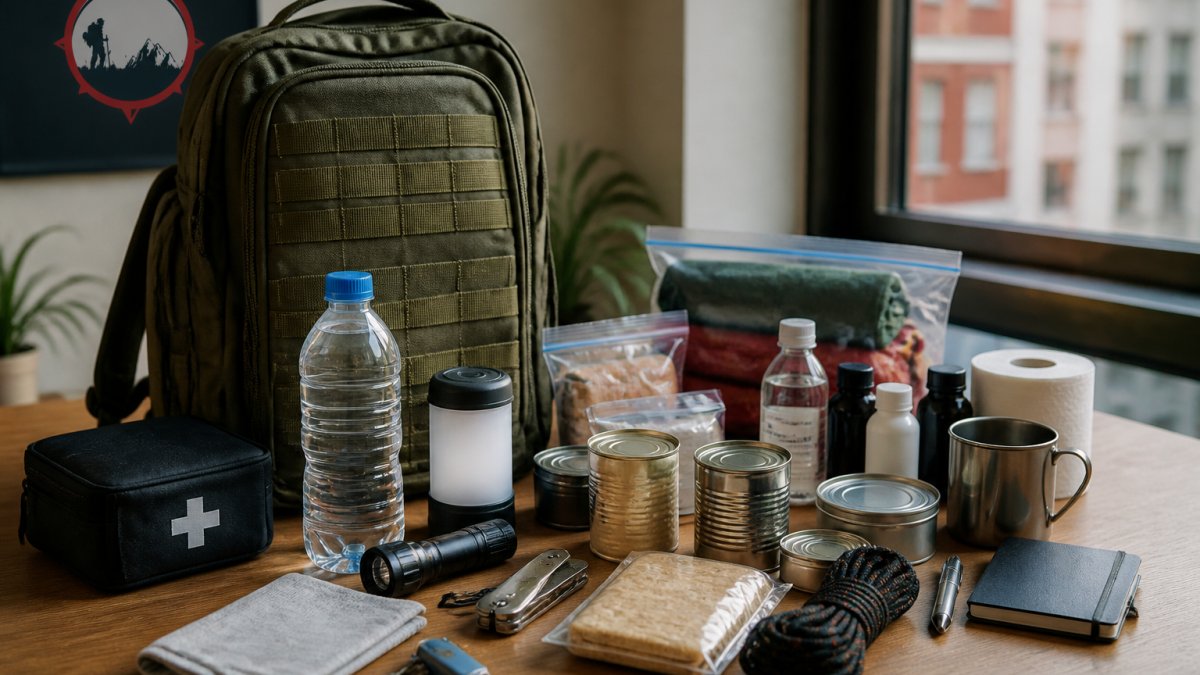
The core ten items are drinking water (one gallon per person per day), non-perishable food, a manual can opener, a battery-operated or hand-crank flashlight, extra batteries, an LED lantern, a weather radio, a first aid kit, a portable power bank or portable power station, and moist towelettes for personal hygiene. Store everything in one accessible location so you can grab it fast when the grid goes down.
How long should you be prepared to survive without power?
Plan for at least 72 hours, but a 14-day supply is a safer target for extended outages caused by storms or grid failures. Your power outage supply list should scale with your household size. Water and non-perishable food are the two categories that take the longest to replenish, so stock those first. After that, focus on backup power, emergency lighting, and communication devices that run on battery or solar.
Do I need a generator for a standard power outage emergency kit?
Not necessarily. A portable power station covers most household needs during a short outage: charging phones, running a small fan, powering an LED lantern, and keeping a weather radio going. Generators make sense if you need to run medical equipment, a refrigerator for days, or alternative heat in cold weather. If you do buy a generator, never run it indoors or in a garage because of carbon monoxide risk.
What food should I stock for a long-term power outage?
Choose non-perishable items that need no cooking or refrigeration: canned beans, tuna, peanut butter, dried fruit, nuts, crackers, and shelf-stable milk. Include a manual can opener and a few plastic ties and garbage bags for waste. If you want hot meals, a small camp stove with fuel works, but only use it outdoors. Rotate your emergency food storage every six to twelve months so nothing expires before you need it.
A power outage tests your preparation in ways you can't predict. The families who stay comfortable are the ones who built their kit before the lights went out. Survive Nation stocks reliable gear for every stage of readiness, from sleeping bags and food storage to outdoor lighting, all at prices that make preparedness accessible. Our fast, friendly shopping experience and years of industry know-how make building your kit simple. Shop now with Survive Nation and get ready before you need to.