 ultimate-guide
Is Expensive Camping Gear Worth It? A Practical Guide
Table of Contents
- When Expensive Camping Gear Actually Pays Off
- Best Sleeping Bags for Camping and Why Quality Matters
- The Cost-Per-Use Framework: Making Expensive Gear Affordable
- Camping Gear Budget Breakdown: Where to Splurge and Where to Save
- When to Splurge on Backpacking Gear and When to Hold Back
- Durability, Repairability, and Long-Term Value
- The Entry-Level Trap and Overpriced Gear to Avoid
- Rental vs. Buying: When Expensive Gear Isn't the Answer
- Frequently Asked Questions
Last Updated: September 23, 2026
When Expensive Camping Gear Actually Pays Off
The difference between a $150 sleeping bag and a $400 one isn't just brand prestige, it's whether you'll use it consistently or abandon it after one miserable night. Expensive camping gear is worth investigating when your usage pattern justifies the investment, not because a brand name is flashier.
Best Sleeping Bags for Camping and Why Quality Matters
The best sleeping bags for camping excel in insulation efficiency, temperature accuracy, and durability beyond five seasons. Since you'll spend roughly one-third of your camping trip in a sleeping bag, underinvesting here creates misery no other gear can fix.
Down vs. Synthetic Insulation
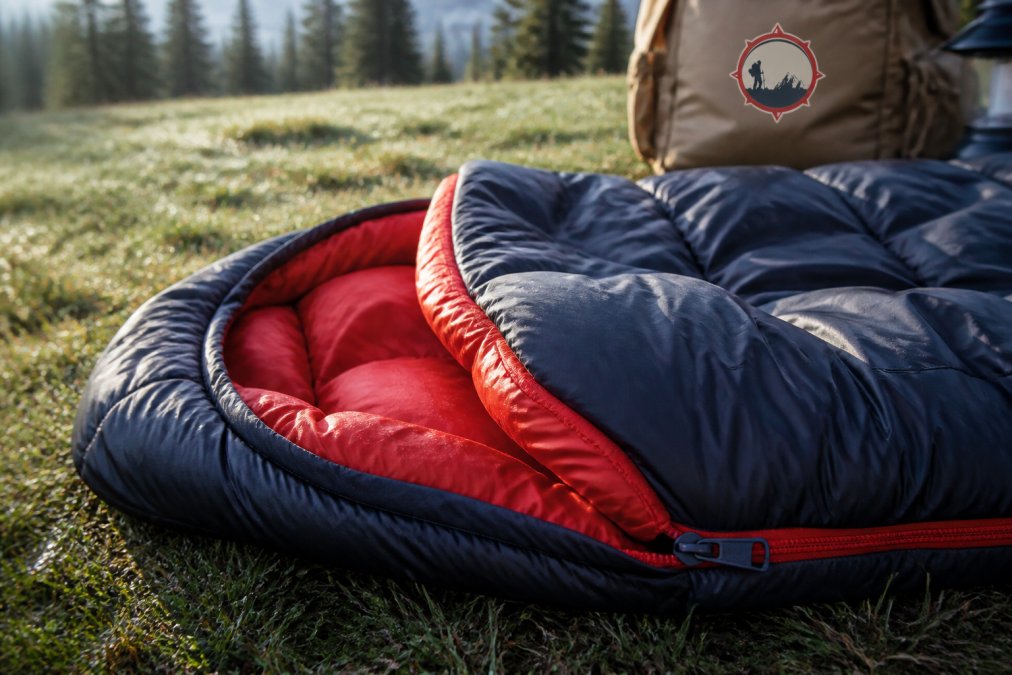
Down insulation offers superior warmth-to-weight ratio, compresses smaller, and lasts 15+ years with proper care. The tradeoff: it loses all insulation when wet and costs significantly more upfront.
Temperature Ratings and Real-World Performance
Sleeping bag temperature ratings indicate the lowest temperature for comfortable sleep, but a bag rated for 20°F often performs closer to 25-30°F in actual field conditions, especially if you're not a naturally warm sleeper.
The Cost-Per-Use Framework: Making Expensive Gear Affordable
Cost-per-use transforms the "is expensive camping gear worth it" question from emotional to mathematical, making it the most reliable way to evaluate whether premium gear justifies its price.
How to Calculate Cost-Per-Use
The formula is simple: Total Cost ÷ Total Nights of Use = Cost Per Night. You must estimate the gear's functional lifespan honestly, this is where most people fail.
Example 1: Sleeping Bag
- Premium down bag: $400 initial cost
- Realistic lifespan: 200 nights (with proper care, down bags last 15+ years)
- Cost-per-use: $400 ÷ 200 = $2.00 per night
Example 2: Budget Synthetic Bag
- Budget synthetic bag: $120 initial cost
- Realistic lifespan: 30 nights (synthetic degrades after 5-7 years, roughly 5-6 nights per year)
- Cost-per-use: $120 ÷ 30 = $4.00 per night
- Plus: you'll need to replace it, so add another $120 for a second bag
- True total cost over same 200-night period: $800 ÷ 200 = $4.00 per night
Example 3: Tent
-
Mid-range tent: $350 initial cost
-
Realistic lifespan: 80 nights (5-8 year lifespan at 10-15 nights per year)
-
Cost-per-use: $350 ÷ 80 = $4.38 per night
-
Budget tent: $150 initial cost
-
Realistic lifespan: 20 nights (seams fail, waterproofing degrades after 2-3 years)
-
Cost-per-use: $150 ÷ 20 = $7.50 per night
-
Plus replacement: $300 total ÷ 40 nights = $7.50 per night average
Estimating Functional Lifespan: The Hidden Variable
Functional lifespan is how long gear performs at acceptable standards. Down insulation lasts 15-20 years if stored properly; synthetic lasts 5-7 years. Quality tent fabric lasts 10-15 years; low-denier becomes brittle within 3-5 years. Sealed seams last 8-10 years; unsealed fail within 2-3 years. Quality backpack zippers last 10+ years; budget zippers fail within 2-3 years.
The Break-Even Analysis: When Premium Gear Becomes the Budget Option
Use this decision matrix to determine whether upgrading makes financial sense:
If you camp 5 nights per year:
- 10-year commitment = 50 total nights
- Budget bag ($120, 30-night lifespan) = $200 total cost ÷ 50 nights = $4.00/night
- Premium bag ($400, 200-night lifespan) = $400 ÷ 50 nights = $8.00/night
- Decision: Budget gear wins (you won't use the premium bag long enough to recoup the investment)
If you camp 15 nights per year:
- 10-year commitment = 150 total nights
- Budget bag ($120, 30-night lifespan) = $600 total cost ÷ 150 nights = $4.00/night
- Premium bag ($400, 200-night lifespan) = $400 ÷ 150 nights = $2.67/night
- Decision: Premium gear wins (durability advantage pays for itself)
If you camp 25 nights per year:
- 10-year commitment = 250 total nights
- Budget bag ($120, 30-night lifespan) = $1,000 total cost ÷ 250 nights = $4.00/night
- Premium bag ($400, 200-night lifespan) = $800 total cost ÷ 250 nights = $3.20/night
- Decision: Premium gear wins decisively (you'll buy the budget bag 8+ times)
Adjusting for Inflation and Gear Improvements
For 10+ year commitments, account for replacement cost inflation (2-3% annually). A $400 bag today might cost $480 to replace in 10 years. Premium gear also improves over time, favoring buying premium now rather than replacing budget gear repeatedly.
Camping Gear Budget Breakdown: Where to Splurge and Where to Save
Smart gear investment follows a clear hierarchy: the Big Three (tent, sleeping bag, backpack) demand quality because failures here create immediate problems. Secondary gear matters less because failures are usually inconvenient rather than dangerous.
The Big Three: Tent, Sleeping Bag, Backpack
These three items determine comfort or misery. Poor tent waterproofing ruins trips; failing backpacks strain your body; bad sleeping bags mean sleepless nights. Spend 60% of gear budget on the Big Three. Budget tents fail within 2-3 seasons; mid-range last 5-8 years; premium last 10+ years. The jump from budget to mid-range delivers massive durability gains; mid-range to premium adds features rather than durability.
Secondary Gear Worth the Investment
Sleeping pads deserve more budget than most allocate. Quality pads ($80-150) last 8-10 years; budget pads ($30-50) need replacement every 2-3 years. Since ground insulation is non-negotiable, cheap pads are false economy.
When to Splurge on Backpacking Gear and When to Hold Back
Splurge on gear affecting physical comfort or safety: sleeping systems, backpacks, and footwear. Blisters from cheap boots ruin trips; poor insulation risks hypothermia. Hold back on situational gear: ultralight everything, specialized tools, or premium versions of items you rarely use. A $200 ultralight stove saves 3 ounces but costs 5x more, wasteful unless you're counting every ounce.
Durability, Repairability, and Long-Term Value
Durability transforms expensive gear into an investment. A sleeping bag maintaining loft for 15 years becomes cheaper per-use than replacing budget bags every 3-4 years. Repairability extends functional lifespan dramatically, gear with replaceable zippers, available patches, and accessible seams lasts decades. Disposable gear becomes expensive when you're buying replacements constantly.
The Entry-Level Trap and Overpriced Gear to Avoid
The entry-level trap: buying the cheapest essential gear, discovering it's inadequate, then upgrading anyway. A $120 sleeping bag that makes you miserable forces you to buy a $300 bag, totaling $420 instead of $300. Jumping directly to mid-range gear avoids this.
Rental vs. Buying: When Expensive Gear Isn't the Answer
Renting, buying new, and buying used are three distinct financial strategies. The decision depends on frequency, budget, and long-term commitment.
The Rental vs. Buy Decision Matrix
Casual Camper (2-4 nights per year): Rental costs $80-320 annually; over 10 years, $800-3,200. Buying new costs $1,000+ upfront plus storage and maintenance. Optimal: Rent. Rental spreads cost and avoids depreciation and storage fees.
When Renting Makes Sense Even for Regular Campers
Rent even if you camp frequently for: Testing before buying (a $60 rental prevents a $300+ mistake), specialized conditions (winter gear for 2 trips per year), travel logistics (eliminates baggage fees), and gear you'll outgrow (beginners learning preferences).
Buying Used: The Hybrid Advantage
Used gear splits the difference between rental and buying new. Typical pricing:
- Used sleeping bag (5+ years of life remaining): $100-200 (40-50% of retail)
- Used tent (5+ years of life remaining): $150-250 (40-50% of retail)
- Used backpack (5+ years of life remaining): $75-150 (40-50% of retail)
Cost-per-use comparison:
- Used tent ($200) over 80 nights = $2.50/night
- Rental ($60) for 1 trip (2 nights) = $30/night
- New tent ($400) over 80 nights = $5/night
The Break-Even Point: When Buying Becomes Mandatory
Emergency preparedness: You need gear available immediately, not on a rental schedule. Rental companies have limited inventory and don't guarantee availability.
Frequently Asked Questions
Does expensive gear actually last longer?
Premium camping gear typically lasts 2-3 times longer than budget alternatives when properly maintained. High-end sleeping bags retain insulation performance after 100+ trips, while cheaper models degrade noticeably after 10-15 uses. The difference comes from material quality, construction methods, and warranty coverage. Calculate cost-per-use over the gear's lifetime, expensive gear often costs less per outing over time.
What are the best sleeping bags for camping if I'm on a tight budget?
Mid-range synthetic sleeping bags ($100-200) offer the best value for occasional campers. They provide adequate warmth, resist moisture better than down, and handle rough treatment. Splurge on temperature rating accuracy and reputable brands with warranty support. Save on lighter-weight ultralight options unless you backpack regularly. Focus budget on fit and comfort first, a $150 bag you'll actually use beats a $400 bag that sits in your closet.
How do I calculate if expensive gear is worth the investment?
Use the cost-per-use formula: divide total gear cost by expected number of trips over its lifetime. A $400 sleeping bag used 40 times costs $10 per trip; a $100 bag lasting 10 trips costs $10 per trip. Add maintenance costs, repairs, and replacement frequency. Premium gear with warranty coverage and repairability options often wins this calculation for regular outdoor enthusiasts. For casual campers, rental or entry-level gear may be more practical.
What camping gear budget breakdown should I follow as a beginner?
Allocate roughly 40% to the tent, 30% to sleeping bag, 20% to backpack, and 10% to accessories like lighting and cooking gear. This ratio prioritizes the items that directly affect comfort and safety. Don't buy everything at once, rent or borrow initially, then invest in quality versions of gear you'll use most. For emergency home storage, focus budget on food storage and lighting before investing in ultralight backpacking equipment.